French actress and animal rights activist Brigitte Bardot has died : NPR

Legendary screen siren and animal rights activist Brigitte Bardot has died at age 91. The alluring former model starred in numerous movies, often playing the highly sexualized love interest.

By Elizabeth Blair

Brigitte Bardot, the international sex goddess of cinema in the 1950s and ’60s, has died aged 91. Bardot’s animal rights foundation announced her death in a statement to news agency Agence France-Presse on Sunday, without specifying the time or place of death.

Stylish and seductive, Bardot exuded a kind of free sexuality, rare in the buttoned-up 1950s. She modeled, made movies, influenced fashion around the world and recorded albums. She married four times. Her list of lovers famously included Warren Beatty, Nino Ferrer and singer-songwriter-producer Serge Gainsbourg, with whom she recorded the French hit Bonnie and Clyde.

As an actor, Bardot worked with some of France’s leading directors including Henri-Georges Clouzot in La Vérité (The Truth), Jean-Luc Godard in Le Mépris (Contempt) and Louis Malle in Viva Maria!

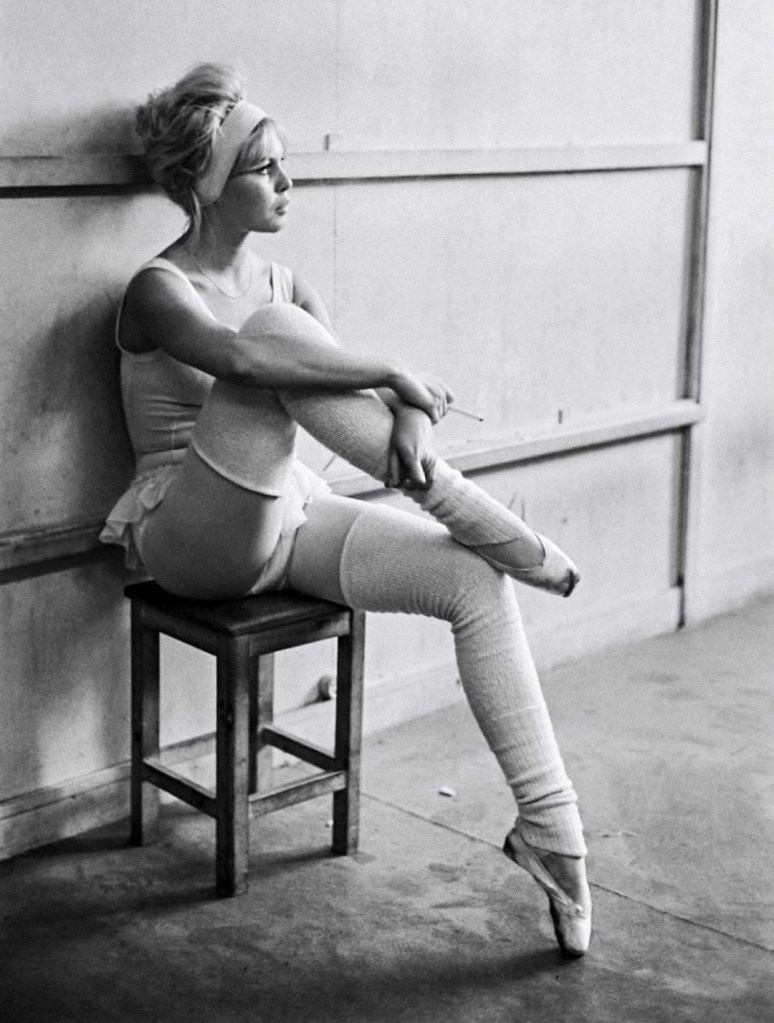
Born Catholic to an upper-middle-class couple in Paris in 1934, Bardot studied ballet and modeled before becoming an actor. As a teenager, she appeared several times on the cover of Elle magazine, attracting the attention of Roger Vadim who was six years her senior. The two married in 1952. Bardot’s parents made them wait until she turned 18.

Vadim, an aspiring director, has been credited with turning Bardot into the iconic sex symbol she became. In his 1957 film And God Created Woman, Bardot plays a provocative young woman on a quest for sexual liberation.

Vadim wanted Bardot’s appearances in his films to shake off sexual taboos. He once said that he wanted to “kill the myth, this odd rule in Christian morality, that sex must be coupled with guilt.”

Source: French actress and animal rights activist Brigitte Bardot has died : NPR

Movie review: ‘Young Mothers’ by Dardenne Brothers

In Young Mothers, we have four teenagers navigating their motherhood while dealing with addiction, love, unstable parents and absent partners

By Anuradha Vellat

No process tests the spirit like motherhood does. A body in continuous transition for nine months for humans. Even the non-mothers know that growing a fetus inside takes a toll and might even change the body’s anatomy for good. Add to this the cocktail of adolescence and you have an impending train wreck.

In Young Mothers, a French feature directed by Jean-Pierre Dardenne and Luc Dardenne – referred to as the Dardenne Brothers – and screened at the Dharamshala International Film Festival (DIFF) 2025, we have four teenagers navigating their motherhood while dealing with addiction, love, unstable parents and absent partners.

Perla, Julie and Araine are new mothers, their babies only a few weeks old. Perla pesters the father of the child, a teen himself, to be with them. He is dismissive of her. For Julie, the struggle is her own addiction. She distrusts herself with the responsibilities. Araine, meanwhile, understands the precarity of the life that lies ahead. Growing up with an abusive parent, she knows the repercussions her own baby might incur and wishes to give her away.

The girls – Jessica, Perla, Julie and Araine, played by Babette Verbeek, Lucie Laruelle, Elsa Houben and Janaina Halloy Fokan, respectively – live in the maternal home in Liege, Belgium, and are at the crossroads of adulthood. There is no pregnancy glow, no time for cravings, no partner to take turns to hold the baby. Just a few good women, symbolic of their own absent mothers, at a shelter, who have their backs to help them from falling into an emotional cesspool. Jessica is due any time soon, which is when she longs for her own mother who abandoned her as a child.

The girls want to assert themselves because they have just undergone a very adult process. However, they are scared of the consequences of their assertions which further confuse them. The girls see their relationships with their children as extensions of their longings in life, with fears of guilt and abandonment creeping in every now and then.

The phenomenal thing about Young Mothers is that the Dardenne Brothers do not delve into a singular state of being. They use the complexities of the community of teenage mothers to drive the plot. The directors are aware of the impossibility of describing the process of carrying a child so they stick to teen impulses and the actors deliver extraordinarily. Shot with a handheld camera, the scenes are intimate and often anxiety-inducing, especially because it involves weeks-old children in the arms of their “child mothers”.

The Dardenne Brothers trust their viewers with the intelligence of interpretations, which was evident from the ample conversations after the screening: Was the film about the universal question of motherhood? Was it particularly intense because of undetected post-partum showing up in individual ways? Was it about assertion of identities, which subverts the trope of a sacrificial mother?

It is difficult to arrive at conclusions after watching Young Mothers but the longing for closure is a closure in itself.

Source: DIFF review: ‘Young Mothers’ by Dardenne Brothers | Hollywood

Seduced by Bonjour Tristesse 

Otto Preminger’s classic ushered in a new wave of vibrant, Technicolour film-making

By John Patterson 

Renewed acquaintance with Otto Preminger’s Bonjour Tristesse, after 30 years, compels me now to re-rank it above Anatomy of a Murder as the Austrian exile’s supreme masterpiece. Based on Francoise Sagan’s scandalous novel about an enfant terrible and her forbidden games on the sun-drenched French Riviera, it offers the most compelling performance the brittle and tragic Jean Seberg ever gave; and it showcases all of Preminger’s virtuosity with CinemaScope framing and three-strip Technicolor.

Seberg is Cecile, half jaded sophisticate and seasoned casino denizen, half teenage naif and plotter, the over-indulged daughter of meretricious playboy Raymond (David Niven). Their emotional intimacy borders on the incestuous: they have “the perfect marriage,” says Raymond’s blowzy mistress Elsa, a remark humming with possibilities. The arrival of Raymond’s new lover, Anne (Deborah Kerr), who clearly sees herself as a replacement for Cecile’s dead mother, stirs up an intense and tragic sexual jealousy on Cecile’s part. Where this will all lead we can only imagine, but from the film’s wintry black-&-white framing sequences, set half a year after that Technicolor summer, we know it can’t be good (look out for the first, shocking dissolve to colour – it burns).

Preminger’s artistry came into full flower with the arrival of widescreen and blazing colour in the early fifties. His metier was always mise-en-scene over cutting, and the wide frame allowed him to depict his stories and relationships spatially, rather than through coercive editing – there are few full close-ups in Bonjour Tristesse. The arrival of Anne pushes Cecile out of the central space she has occupied so happily with her father, and suddenly, doorways, curtains and other visual obstructions exile her to the margins of the frame, her place cruelly usurped. In terms of colour, this is the war of the reds and the blues, their complex interplay telling us much about the strength or weakness of characters in any given moment; watch for Cecile, hungover in a blue shirt, a fiery red ice-bag on her sore, angry, scheming head. It’s amplified in the Mediterranean landscape of eternal, immovable red coastal rocks and the ever mutable blue seas and skies.

The casting hews closely to the performers’ abilities and personalities: Niven rakish and inch-deep, Kerr prim and wide-eyed, burning with suppressed sexual hunger, and Seberg the scorned child-woman, still recognisably the Iowa high-schoolgirl she’d been a year earlier, but also now a movie star and new-minted faux-Parisienne sophisticate – her thespian shortcomings, hesitancy and natural Midwestern diffidence all become advantages here. She’s magnificent – and her short-cropped bob foretells Mia by Sassoon in Rosemary’s Baby a decade later.

America hated Bonjour Tristesse, but the French went crazy for it. It’s a key wellspring-movie of the French New Wave – it gave Godard his iconic Patricia for Breathless and a visual scheme for Contempt; Rivette was an aficionado, and Truffaut an almost rabid fan – he originally wanted Seberg for Day for Night.

As usual, the French were right.


Source (Aug 2013): Seduced by Bonjour Tristesse | Film | The Guardian