Snubbed by the French film awards, the “Portrait of a Lady on Fire” star has been an active voice in the #MeToo movement.
In what felt like a statement against criticisms of the embittered French film academy, controversy magnet Roman Polanski won the Best Director prize at the 2020 César Awards in Paris on Friday for his Dreyfus Affair drama “An Officer and a Spy.” He beat out fellow nominees including Ladj Ly, whose “Les Misérables” ultimately won Best Film, and Céline Sciamma, whose wildly acclaimed “Portrait of a Lady on Fire” went home with just one award, for Best Cinematography. Polanski’s win did not sit well with “Portrait of a Lady on Fire” star Adèle Haenel, who could be seen in the telecast walking out of the ceremony at the Salle Pleyel when the award was announced. Watch below.
Haenel has been an active voice in the #MeToo movement which, as she outlined in a recent New York Times interview, she believes has failed in France. That claim appeared to resonate at the Césars — France’s equivalent to the Academy Awards — when Polanski, a convicted sex offender, won the top directing prize. In fall 2018, Haenel spoke about her own experience with sexual harassment while working with “The Devils” director Christophe Ruggia. Haenel was up for Best Actress at the French awards this year, but lost to Anaïs Demoustier for “Alice and the Mayor.”
Polanski was a no-show at the ceremony, as were his “Officer and a Spy” team members, all of whom boycotted the ceremony earlier this week.
"Well done paedophilia!" shouts French actress Adèle Haenel as she walks out of the César Awards after convicted rapist Roman Polanski won best director. She's not the only one: host Florence Foresti also didn't return to the stage, writing on Instagram that she was "disgusted". https://t.co/Zn6TXZzJGW
“Activists are threatening me with a public lynching. Some have called for demonstrations, others are planning to make it a platform,” he told Agence France Presse earlier this week. “This promises to look more like a symposium than a celebration of cinema designed to reward its greatest talents.”
Polanski, a convicted sex offender, has lived in exile in France since fleeing the United States in 1978. In France, his continuing body of work is well-received. Along with three César trophies for “An Officer and a Spy” on Friday night — directing, adapted screenplay, and costumes — the annual awards have past feted Polanski with Best Director in 2014 for “Venus in Fur,” Best Adapted Screenplay for “Carnage” in 2012, along with multiple prizes each for “The Ghost Writer,” “The Pianist,” and “Tess.”
As the César Awards were underway on Friday, women’s activist groups outside the venue protested Polanski’s inclusion among the nominees.
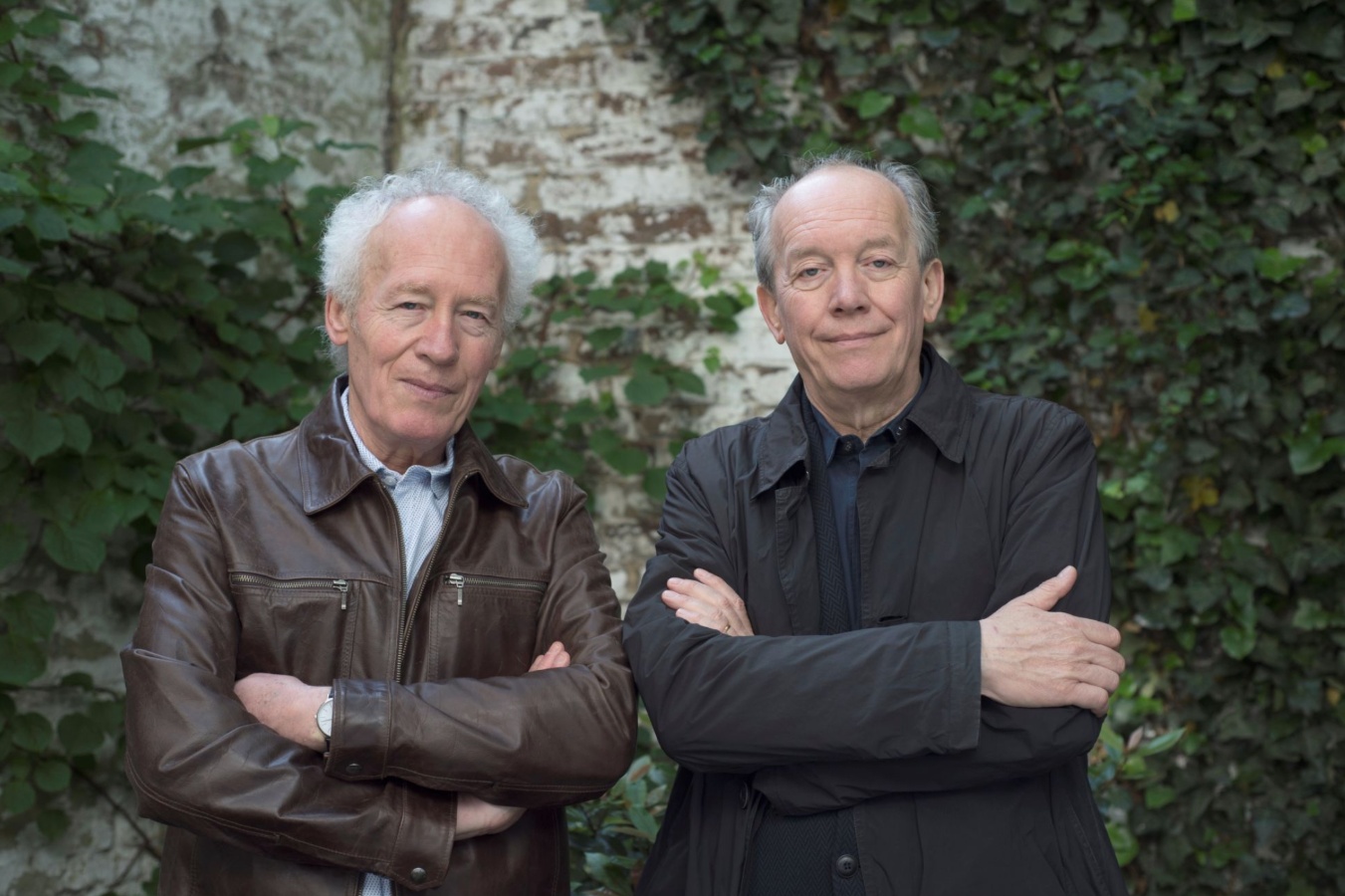
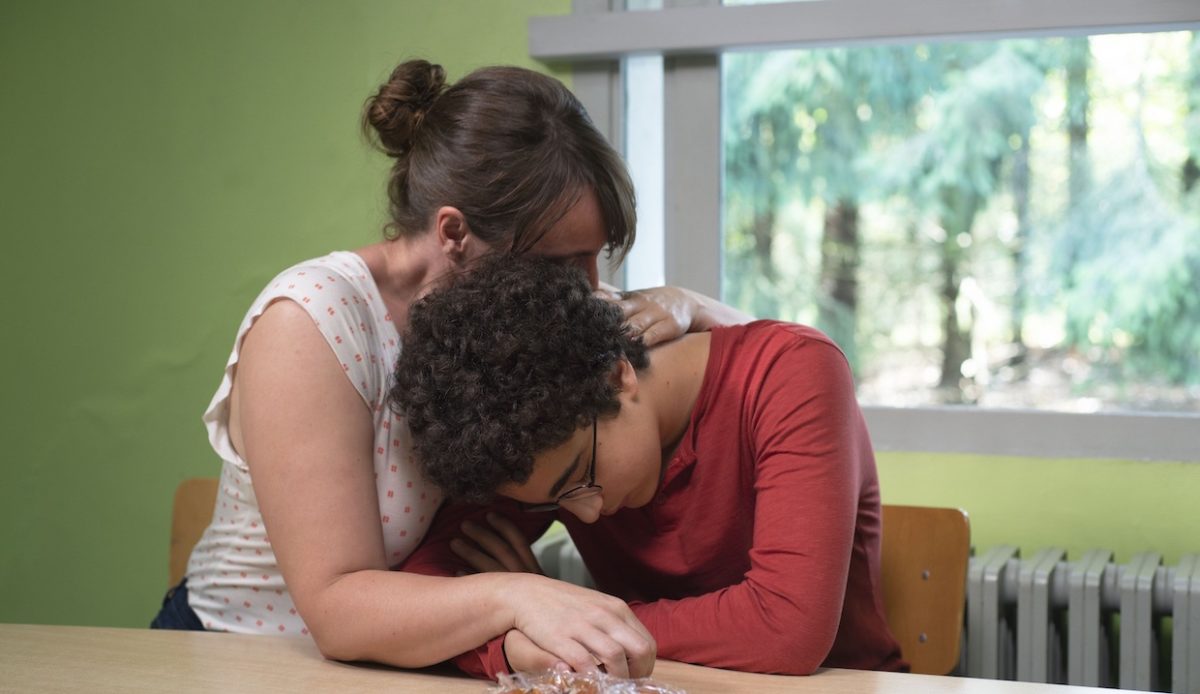
It may have taken nearly 25 years, but the typically admired Dardenne brothers have turned controversial and divisive–which, history tells us, is a common consequence of portraying radical Islam. How amply they’ve addressed the topic in Young Ahmed is not quite my territory–those seeking a discussion would be well-advised to read Soheil Rezayazdi’s Filmmaker interview–but in psychological portraiture it represents a revitalization from 2016’s narrative-dependent (albeit undervalued) The Unknown Girl. As played by Idir Ben Addi, Ahmed marks one of Jean-Pierre and Luc Dardenne’s most fascinating creations.
I was fortunate enough to sit with the duo at last fall’s New York Film Festival and pore over Young Ahmed‘s particulars: its conforming and deviating from the Dardenne visual palette, its reliance on Muslim communities, and how to gauge whether or not an audience’s response is in fact correct.
Thanks to Nicholas Elliott, who provided on-site translation.
The Film Stage: Let’s start with an easy topic I don’t think you’ve addressed: just after Ahmed’s been plucked from his normal life and is en route to the reeducation center, we hear a pop song on the radio. Maybe I’m forgetting something, but this is the first time I can recall any pop or contemporary music appearing in one of your films.
Luc Dardenne: Not the first time.
Jean-Pierre Dardenne: We have three groups in Lorna’s Silence. It’s true that it’s a different relationship to music, though, because in Lorna it’s when she goes into the apartment and Claudy has put on music. That happens three times. Here, playing the music is different. In Lorna’s Silence, the music we chose is Belgian and Asian.
Luc: In Young Ahmed, the use of music–as you probably know–you’re not allowed to listen to music when you’re radicalized. In this case we have the music because the social worker says to Ahmed, “Ah, before you would’ve told me I can’t play the music. The fact that you’re not tells me you’ve developed.” That’s the use of music there, and we chose that particular title because it’s something the actor who plays the social worker liked. So we said, “Why not?”
I love the sequence where Ahmed’s teacher leads a debate about learning Arabic from the Quran or a more contemporary, conversational style. More than being simply engaging, it’s a conversation I’ve never heard, never known about. In this writing-directing process, what are outlets for ensuring authenticity–is it speaking to people from those communities?
Jean-Pierre: I don’t know how things work here in the United States–in fact, I’m not even sure how it is in France, but I imagine it’s similar to how it is in Belgium. In Belgium, the teaching of Arabic has led to great debate among Arab people, whether they’re Muslim or non-Muslim. The not-even-fundamentalist teaching of Arabic, but the traditional, is that you learn this language through the Quran. It’s the sacred way of learning the language, and therefore you learn it at a mosque with the imam. As Luc was saying, they can’t learn this language in their family, because most Arabic families in Belgium do not speak “classical” Arabic. Besides that, there has been put into place–both through organizations, non-profits, and official Belgian public-education system–classes that teach, if I can say, “secular” Arabic. This other way of teaching Arabic was also set up because people started to notice that the teaching of Arabic in the classical sense took place in Mosques–some of which were also places of indoctrination, especially for little girls. So we did research on that. At the same time, we were already aware of this because we know people who are involved in teaching Arabic in this more contemporary, non-Quran manner.
Your regular camera operator, Benoît Dervaux, has made the transition to cinematographer. Why? And did you find anything unique about his approach? Your style is so well-ingrained, and I didn’t initially realize you’d made a DP change.
Luc: Good that you didn’t notice. [Laughs] Because Benoît Dervaux was both the camera operator and DP on this film–the reason being that our regular DP, Alain Marcoen, was ill. Alain Marcoen asked if it was possible for him not to do this film. We were very sad about it and asked Benoît if he could do both, and he did. For us it was a little difficult at times because we like to talk to our camera operator during the shot and let the DP do whatever they want, then give our opinion after the fact–therefore let the light be designed from the basis of the frame. But with Benoît, the frame is designed, or comes from, the light, because he knew where he’d place his instrument. We generally work on developing light design from what the frame is. Here we had to find something between the two, which at times was challenging for us, but in general I think our shot construction was how it’s always been. Normally, we work with Benoît as our camera operator and prepare the frame with him; then we tell the lighting designer–and this is a little exaggerated, what I’m going to say–”Figure out the light. Work it out so it’s invisible.” What we want is to not underline the places where things are going to happen, where actors are going to do things. We don’t want to announce the acting space. In our films the light is a little gray, neutral.
The opening scene follows Ahmed through his classroom, which necessitates these very quick twists and turns of the camera, which got me thinking of physical geography. How much are location selections dependent on the ability to move your camera freely, as you clearly prefer, and have you ever turned down a place because it’s restrictive to your visual style?
Jean-Pierre: The choice of sets for this film was guided by several things. Notably: as much as possible, we wanted the places we used to have a role, so to speak, in real life. Most of the places you see in the film–with the exception of the mosque–continue to be used in that way after we shot there. To take the specific case of the school, it’s what we call “a homework school”–an after-school place where students come when they’re having difficulties with not being able to study at home because of space or problems with their parents. It’s true that the space of the school, we filmed it as it exists. These two rooms in which you see Ahmed circulate as he’s leaving inspired the mise-en-scene; they inspired the direction. In general, we like complicated spaces that provide obstacles to overcome. Sometimes we don’t overcome them. We like difficulties with the space: it inspires us. It helps us to do our work. Luc will tell me if I’m wrong, because it goes back a year now when we filmed this scene, but I think it was the space that gave us the idea for how we filmed it. It generally went with our intuition of the film, which is that we’re trying to catch or capture this character who’s always escaping us.
You saw the massive, almost-to-capacity crowd at Alice Tully last night. The line where Ahmed asks Louise if she’d be willing to become a Muslim after she kisses him earned a big laugh.
Both: Yes.
This surprised me. I felt it was a great dramatic turn, troubling, sad, and true to the conflict of this character. Did you have a particular response in mind for that line? How do you feel about people responding positively, but not in the way you intended?
Luc: When we wrote the script, the question we asked ourselves about this kiss, this transgression, is: would Ahmed fall in love and let desire speak and leave fanaticism behind? Or if he became a fanatic, how could he transform this and make this sin somehow less serious, less bad? What we said to resolve this problem–how to maintain his love and desire for this girl, and at the same time make his sin less bad–he could ask the girl to become a Muslim, because then the sin would be less severe. On top of that, he would have converted someone. He’s quite self-confident, so he probably thinks he could convince someone to join him in fanaticism. That allowed us to take religion seriously, because we don’t want to show that you can just forget fanaticism. Fanaticism is not something that you do from 5-7; you don’t do it on office hours. It’s something that stays. And it’s true: people laugh everywhere when they hear that line. At Cannes they laughed, because it’s a kid, or young boy, asking a girl to marry him. That makes people smile. At Cannes–the only place we watched the film–we felt it wasn’t mocking laughter, but friendly laughter. It was with the character; they weren’t condemning him. But you can never predict audience reactions. We’ve had some surprises. I don’t remember them anymore, but I know there have been some.
Your filmography has covered a wide spectrum of issues: class, race, labor, faith, poverty, and now radicalization. Do you have a sense of subjects you still want to cover, that continue compelling you?
Jean-Pierre: What we try to do in our work is interest ourselves first in a character. That’s the starting point. A character who, in some way, corresponds with our era, and we try to understand through this character what’s happening today. We never try to understand with a subject, but with a character. Here, we had started with the idea of making the film about a young Muslim who’s 18 or 19 years old. We realized we wouldn’t be able to tell what we wanted to because, as we said last night, it would not be possible in the span of a single film to show a fanatic leaving fanaticism–that wouldn’t be credible. It wouldn’t be possible with a 19-year-old, which is why we decided to go with a boy.
Luc: What we tried to do was love this character to the end, to get him out of the night he was plunged into. We tried to find a way by which he would change–that was his fall at the end. We tried other options, but they weren’t credible. They were too romantic or too novelistic, too much like stories–to get him out of fanaticism through other characters, like the girl.
Jean-Pierre: It had to be through the body–it had to be this discombobulated, broken body.
In 1895 the Lumiere brothers held one of the first public film screenings. Viewers simply couldn’t believe the moving magic before their eyes. Today fact, fiction and debate continue to swirl around cinema.
The question of who invented film is something of a question for the ages. Was it really the French brothers Auguste and Louis Lumiere, who on February 13, 1895 patented the cinematograph for showing moving images? Or should the brilliant American inventor Thomas Edison with his peephole viewer be credited? And what about German brothers Max and Emil Skladanowsky, who screened films in Berlin on their own movie projector around the same time as the famous French siblings? There are several other American and British cinema pioneers who also deserve a mention.
At the end of the day, it’s probably a matter of how the advent of film is defined: Can a technological development be considered the starting point or should it instead be the first time a group of people sat in front of a screen as a film danced before their eyes?
And let’s not forget about flip books, which in the mid-19th century used layered still images to create the illusion of movement when the viewer rapidly flipped through them. Could this, too, be considered the start of modern movies?
When diving into the early years of cinematography, one encounters a multitude of inventors and technicians, of places and laboratories in which development and experimentation took place, complete with plenty of trial and error. One thing remains certain: In the last decade of the 19th century photography was taking off, and from it, new as it was, film was born.
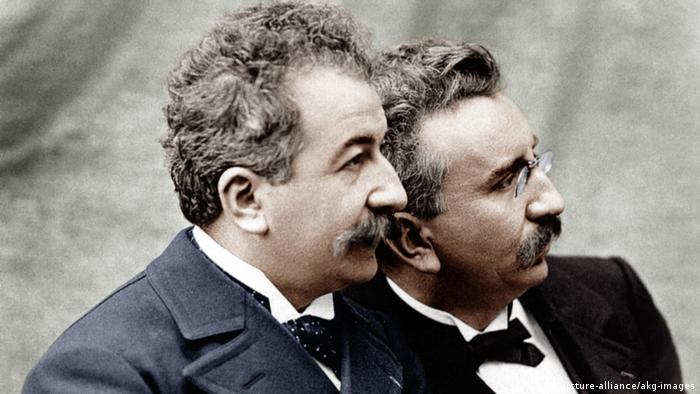
There were also others aside from the Lumiere brothers (pictured) who contributed to the start of the film industry, including Thomas Edison
The real inventors of cinema
The Lumiere brothers have a prominent position in most accounts on the history of cinema. They are customarily referred to as the inventors of film, despite the extensive preparatory work done by Thomas Edison and despite film screenings happening in other cities at nearly the same time as those of the brothers.
On December 28, 1895, the first commercial, public screening of the brothers’ films took place in the Grand Cafe in Paris. This evening is widely considered the start of moviegoing.
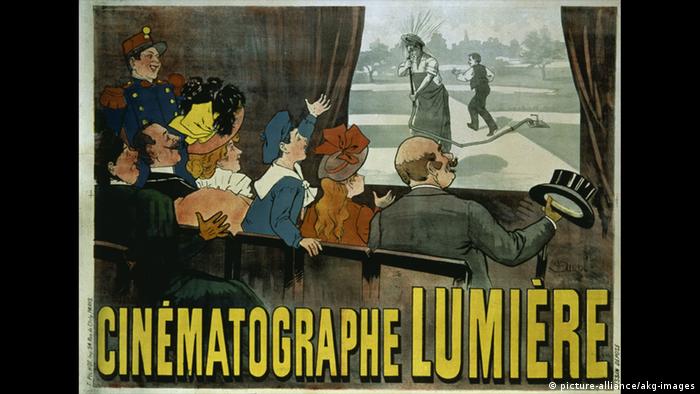
The Lumieres charged admission, and a few dozen visitors turned up to watch ten short films on the so-called cinematograph machine. The apparatus, which was both camera and projector, had been patented by the brothers a few months earlier. Visitors stared at the moving images in front of them, amazed the projections. They had never seen anything like it before.
Those who saw ‘Arrival of a Train’ are rumored to have believed the train was going to run them over
Fact or fiction? Panic at a screening
Legend has it that the following year, the audience panicked at the screening of Arrival of a Train at La Ciotat, a short film made by the Lumiere brothers. The film shows a train entering the station of the town of La Ciotat, growing larger and larger as it hurtles towards the viewers. The camera perspective used makes it appear as if they would be run over.
The oft-told story posits that members of the audience, thinking the train was actually entering the cafe, jumped out of their seats and fled in panic. Whether fact or myth, it is nonetheless a beautiful story about people experiencing an important innovation for the first time.
Today, as we remember the Lumiere brothers and their groundbreaking invention, the future of film, and in particular movie-going, provokes plenty of debate and uncertainty. In which direction will cinema develop? Will it even survive? What will happen to the standard feature film format and the shared experience of movie theater screenings in the face of streaming services like Netflix?
Only time will tell — and this leads back to the beginning of film history. It has always been an overwhelming medium, something spectacular and unbelievable that left people speechless above all else.
The Lumiere brothers are widely considered to be the forefathers of the film industry
Cinema is meant to overwhelm
“The cinema owes virtually nothing to the scientific spirit,” wrote the influential French film critic Andre Bazin in his legendary book What is Cinema? (1967). The fathers of film are not scholars, but rather “monomaniacs, men driven by an impulse, do it-yourself men or at best ingenious industrialists.”
People still thirst for spectacles, surprises and miracles, so the film industry will likely continue to thrive.
Hollywood still excels at meeting these human demands, and while its blockbusters may not be high art and may not attract everyone, the industry is doing well. It still draws viewers to the theaters and achieved record profits in 2019. You can, of course, watch almost all the films later on your smartphone if you like; in today’s film industry, anything is possible.
French film, Les Miserables, is nominated in Best International Feature Film category.
The 92nd Academy Awards are set to be held in Hollywood this weekend.
Among the favourites for Best Film Editing is South Korean thriller Parasite, and the first world war epic 1917. Parasite has also been nominated in the Best International Feature Film category where it will be up against, among others, Les Miserables, a French film about life in the poor suburbs of Paris made by an untrained filmmaker with a cast of mainly non-professional actors
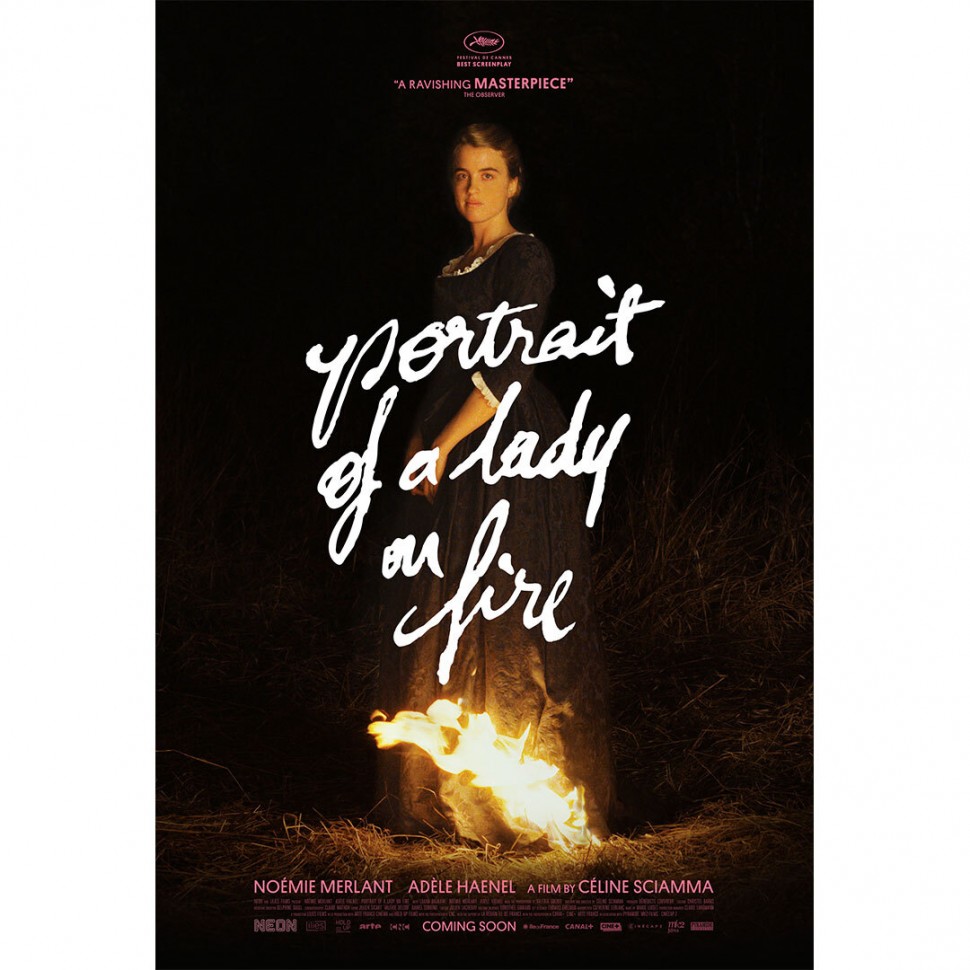
France, 1760. Marianne is commissioned to paint the wedding portrait of Héloïse, a young woman who has just left the convent. Because she is a reluctant bride-to-be, Marianne arrives under the guise of companionship, observing Héloïse by day and secretly painting her by firelight at night. As the two women orbit one another, intimacy and attraction grow as they share Héloïse’s first moments of freedom. Héloïse’s portrait soon becomes a collaborative act of and testament to their love.
Winner of a coveted Cannes prize and one of the best reviewed films of the year, Portrait of a Lady on Fire solidifies Céline Sciamma as one of the most exciting filmmakers working today.
Portrait of a Lady on Fire(2019)
Directed by:Céline Sciamma
Written by: Céline Sciamma
Cast: Adèle Haenel, Valeria Golino, Noémie Merlant, Luàna Bajrami
French with English subtitles
Runtime: 2h02
Distributor: Neon



 Pas De Merde