Jean-Luc and Pierre Dardenne: A Portrait of 2020’s Lumiere Awardees

When Jean-Luc and Pierre Dardenne gained the Palme d’Or for “Rosetta” in 1999 — upending such hotly fancied contenders as Pedro Almodovar’s “All About My Mom” — it wasn’t precisely an out-of-nowhere arrival. The Belgian brothers have been already of their mid-forties, having begun their profession in documentary filmmaking 20 years earlier than, and had already loved a fiction breakthrough with 1996’s award-winning “La Promesse.”

However it felt like an invigorating new wave all the identical. Towards the tip of a decade marked by auteurist flash and swagger, the empathetic, unvarnished realism of their working-class survival story gave world cinema a clean-scrubbed human face: intent on making audiences focus extra on the lives being introduced than the administrators’ fashion of presentation.

In a career-making efficiency, the 18-year-old Emelie Dequenne performed a teen struggling to help herself and her alcoholic mom with fleeting, fragile jobs: Although by the way a damning examine of Belgian labour legislation and social welfare, the movie was no political screed. With the sort of grainy on a regular basis element that solely comes by way of acute human curiosity and statement — all the way down to its wince-inducing depiction of interval ache amid poverty — the brothers plainly distinguished themselves from the filmmakers to whom they drew instant crucial comparisons, together with Ken Loach and Robert Bresson. Continue reading “Jean-Luc and Pierre Dardenne: A Portrait of 2020’s Lumiere Awardees”

In conversation: A French and American take on Emily in Paris

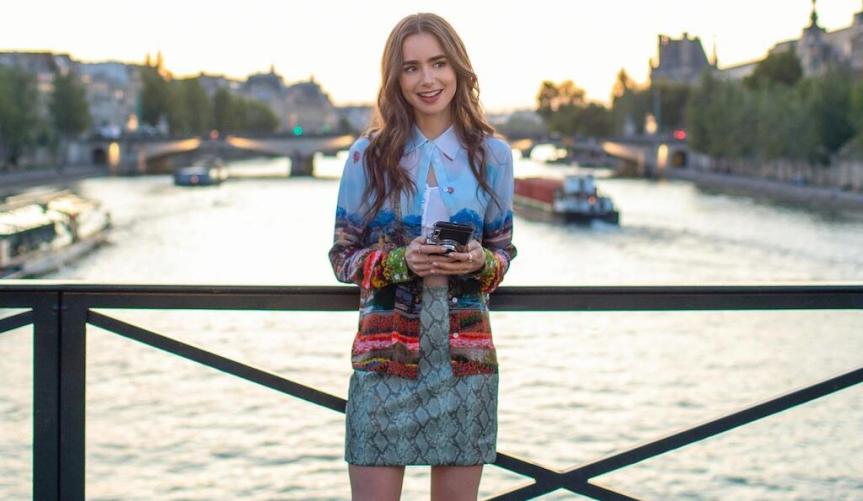
Emily in Paris is everywhere: causing people to rage on social media, making us dream of booking tix to Paris again (someday!) and paused on TV screens, as people WhatsApp their friends to moan about how unrealistic Emily’s (Lily Collins’) stratospheric social media success is – who gets 200 new followers after posting a photo of baked goods? – and then swooning over how gorgeous Frenchie Lucas Bravo (Emily’s neighbour, Gabriel), is.

Critics – in the US, UK and France – have complained that it’s clichéd, ridiculous, lacks diversity and is deeply culturally offensive. However, it’s also totally addictive, even if people are hate-watching it, with a viewership that includes teens, their parents, and every Sex and the City fan who was excited about the premise of sex – and Pat Field styling – in another city.

For those who haven’t seen it, Emily in Paris centres around Chicagoan Emily, who gets sent to Paris to work for a top French marketing agency when her boss falls pregnant. Clueless about the language and culture, she makes a series of faux pas that sees her branded a plouc (a hick) and ringarde (basic). But Paris is soooo beautiful and Emily’s boss, Sylvie (Philippine Leroy-Beaulieu) and friend, Camille (Camille Razat), are soooo stylish, and the men are soooo dreamy…

One reason that Emily’s got everyone talking is that it touches on the big cultural divide between France and America. Who better to discuss the show then a Frenchwoman (CW founder Eleonore Dresch) and an American, kids’ editor, Jennifer Barton.
Continue reading “In conversation: A French and American take on Emily in Paris”

WATCH: Deauville Film Festival: The winners unveiled

“The Nest” by director Sean Durkin scooped the top prize at the Deauville American Film Festival on Saturday, September 12, and claimed two other awards with jury president Vanessa Paradis praising the direction and the acting of its leads Jude Law and Carrie Coon.

Film Review: “My Donkey, My Lover and I”


Laure Calamy and Patrick the donkey steal the show in Caroline Vignal’s funny and original comedy, a work awarded the Cannes Official Selection Label and which is soon to hit cinemas in France

“It this your donkey? Is he giving you a hard time? It’s the same for everyone, you have to learn to get along.” When, on a romantic whim, the protagonist of Caroline Vignal’s My Donkey, My Lover and I – awarded the 73rd Cannes Film Festival’s Official Selection Label and distributed in French cinemas by Diaphana from 16 September – decides to embark on a trek for which she is in no way prepared, she has no idea that she’s simultaneously triggering an epic countdown which will lead to her own self-discovery. It’s an initiatory journey set to the tune of a romantic comedy and against vast, magnificent landscapes, but it’s also a hilarious “buddy movie” which unites a woman and a donkey, paints a moving portrait and magnifies the virtues of stripping back to the essentials and getting back to nature (without concealing the complications such a process involves).

“Et je sens la fièvre qui me mord”. Just like in Véronique Sanson’s song Amoureuse, which teacher Antoinette (Laure Calamy) performs, ablaze, before an audience of disconcerted parents at the school’s end of year celebration, our protagonist is in full emotional and sensual bloom, owing to her secret affair with Vladimir (Benjamin Lavernhe), the father of one of her Year 5 students. But their plans for a week of freedom in Paris are brutally upended: Vladimir, his wife (Olivia Côte) and their daughter have changed plans and are now trotting off into the Cévennes region to embark on a hike with a donkey. But never mind! Impulsive Antoinette sets off on their trail (without telling anyone) and on the path walked and described in 1879 by Scottish writer Robert-Louis Stevenson in Travels With a Donkey in the Cévennes… On the itinerary are six stages of roughly twenty kilometres a day, with nightly stopovers scheduled in gites with all their communal meals and shared dorms.

Suffice to say, Antoinette causes an immediate stir among the seasoned hikers, especially after swiftly confessing the sentimental reason behind her trip. Her fame grows as the days pass and as the exhausting (but also cruelly funny) hardships mount up behind her, starting with the need to make her partner – the donkey, Patrick – advance. But what will happen if Antoinette’s wish to cross paths with Vladimir (encumbered by his young family) actually comes true?

Carried by the sensational Laure Calamy, who is wonderful in her delivery of a comic-come-pathetic performance whilst also offering up a moving display of bravery in adversity, the film paints a very beautiful portrait of a woman through the mirror of the unexpected bond she slowly forges with Patrick; one which starts off strained given the animal’s contrary nature, but which sees them gradually grow accustomed to one another (with Antoinette telling him a bit about her life, notably her “gift for falling in love with the worst possible guy, at the worst possible time, in the worst possible place”). Together they form a duo which raises a lot of laughs, gracing a storyline which proceeds at the soothing pace of the walk and of the unexpected encounters they experience amidst nigh-on desert-like, breath-taking panoramas. It’s an ideal setting for re-centring oneself and for a feature film as charming as this one.

Source: Review: My Donkey, My Lover and I

‘Cuties’ review: Despite Netflix bungling, it’s worth seeing

Film Cuties

Maïmouna Doucouré’s prize-winning directorial debut is a smart, empathetic coming-of-age drama.

Early on in “Cuties,” Amy (Fathia Youssouf), an 11-year-old Senegalese immigrant living in Paris, hides under a bed and eavesdrops while her mother, Mariam (Maïmouna Gueye), makes a few difficult phone calls. Her husband has decided to marry a second wife, she tells her friends; yes, isn’t that wonderful news? Amy, from her partially obscured vantage, can’t see her mom’s tears, though she can hear the barely disguised anguish in her voice. At the same time, she has perhaps never seen Mariam more clearly, a woman whose long-suffering heart and tough exterior are finally on the verge of breaking. Continue reading “‘Cuties’ review: Despite Netflix bungling, it’s worth seeing”