Wine expert reveals the best French rosé wines, including a $5.50 supermarket pick

Charlotte’s rosés from Provence and beyond

By Charlotte Kristensen

Rosé dazzles as spring makes way for summer’s glow. France leads in global production, with Provence topping the regional charts, but this blissful blush is made all over the country. Here I spotlight four from three regions: Provence for classic elegance, Languedoc for fruit and affordability, and Tavel in the Rhône for depth and gastronomy. Continue reading “Wine expert reveals the best French rosé wines, including a $5.50 supermarket pick”

No Whey! Is The Future of French Cheese at Risk?

Could Camembert and Brie disappear? Scientists warn that France’s rich culinary heritage is at risk.

By Poppy Pearce

The very microbes that give some French cheeses their unmistakable flavours and textures are under threat, potentially jeopardising not only France’s food culture but also its economy. 

Microbes: the unsung heroes of French cheese

At the heart of traditional cheese-making lies an ecosystem of bacteria and fungi, crucial in shaping everything from Brie’s creamy texture to Camembert’s pungent aroma. However, a recent warning from France’s National Centre for Scientific Research (CNRS) suggests that the genetic diversity of these microbes is shrinking at an alarming rate. 

In particular, strains of Penicillium camemberti—the fungus responsible for that distinctive white rind—are now worryingly uniform, making them more vulnerable to disease and environmental changes. Similarly, Penicillium roqueforti, used in blue cheeses like Roquefort, is facing a decline in genetic variation.  

Jeanne Ropars, a researcher at the Ecology, Systematics and Evolution laboratory in Gif-sur-Yvette, said: “To date, only four populations of the fungus species P. roqueforti have been known in the world.” (CNRS The Newspaper)  

Such a lack of diversity increases the risk of these essential fungi being wiped out by new pathogens or shifts in climate 

French cheese is in jeopa-brie… © shutterstock

A culinary and economic crisis

The loss of Brie and Camembert would be more than just a gastronomic tragedy—it would be a financial disaster. France exported nearly €3.8 billion worth of cheese in 2022, with Camembert and Brie among the biggest contributors. From Michelin-starred restaurants to the humble boulangerie, these cheeses are fundamental to French cuisine. 

For many visitors, tasting authentic Brie in a Parisian café or slicing into a gooey Camembert during a countryside picnic is a rite of passage. Cheese tourism is a major industry, drawing food lovers from around the world. Imagine a future where a French picnic lacks its signature cheese—or worse, where a baguette has lost its best friend. 

Can science save French cheese?

The good news? Researchers are now racing to protect these microbes before it’s too late. Some scientists are exploring ways to reintroduce genetic diversity into the fungi populations through selective breeding or by searching for lost strains in traditional farmsteads. Others suggest that small-scale producers, who still use raw milk and traditional methods, may hold the key to preserving these vital organisms. 

Could cheese counters in France change forever? © Nella N / Unsplash

A call to arms (and forks)

Protecting French cheese isn’t just a job for scientists. Consumers can also play a role by supporting artisanal producers who prioritise microbial diversity over mass production. Opting for traditional, raw-milk cheeses rather than industrially mass-produced versions could help sustain the biodiversity that has made French cheese world-famous. 

The future of Brie and Camembert isn’t set in stone. But one thing is certain: if we want to keep enjoying the world’s best cheese, it’s time to act. Because a world without fromage? Is that really a world worth living in?!

Source: No Whey! Is The Future of French Cheese at Risk? – France Today

Trump tariffs sour future for some in wine industry

Wine industry

More than a third of the wine consumed in the U.S. is imported, mostly from Europe

By Ariel Wesler

LOS ANGELES — At Brentwood Fine Wines, sommelier Ferdinando “Ferdi” Mucerino stocks wines and spirits from all over the world. He says about 60% of his products are imports. Wines from France are currently among his bestsellers, not surprising since Italian and French wines are the most popular in the U.S.


What You Need To Know

    • All foreign wines now have minimum tariffs of 10% as part of President Donald Trump’s plan to rebalance global trade
    • Ferdinando “Ferdi” Mucerino at Brentwood Fine Wines worries prices will go up and never come down again, even if the tariffs are lifted at some point
    • Laura Gabriel, a small winemaker from Sonoma, California predicted that people will “probably drink even less, maybe go out less and just spend their money elsewhere”
  • Many wine distributors depend on imported wines, and Gabriel said that if they have to pay more, they might buy less or raise prices on American wines to make up for lost profits

But all foreign wines now have minimum tariffs of 10%. It’s part of President Donald Trump’s plan to rebalance global trade.

“What he’s trying to do, in my opinion, is equal that playing field by really charging the same tariffs that we’re charged when our wine goes into those other countries,” said Craig Ledbetter, a wine grape grower from Lodi, California.

While winemakers and sellers are grateful it wasn’t the 200% tariff the president had previously threatened, that’s not off the table just yet, especially if Europe retaliates.

A 200% tariff would essentially triple the cost of European wines in the U.S., and that has some local wine shops concerned not only about their reputation, but how it would affect their customers.

Mucerino worries the industry could see a repeat of what happened during Trump’s first term.

“Prices are going to go up,” he said. “Then, once the tariffs are lifted or changed, prices are going to stay pretty much the same, so it’s a lose-lose for the for the consumer.”

“People are already drinking less, and so I think it’s just going to make people probably drink even less, maybe go out less and just spend their money elsewhere,” said Laura Gabriel, a small winemaker from Sonoma, California.

She started the company Paper Planes with her husband about 10 years ago. She said that even though the tariffs are designed to encourage people to buy American, there isn’t always a suitable substitute.

“You can’t make Champagne in the United States,” Gabriel said. “You can’t make Burgundy or Bordeaux in the United States.”

Many wine distributors depend on imported wines, and Gabriel said that if they have to pay more, they might buy less or raise prices on American wines to make up for lost profits.

“It’s going to affect wine shops,” she said. “It’s going to affect distributors.It’s going to affect a lot of small businesses, but I just don’t think that they can take it financially right now.”

It’s a complex puzzle that is leaving the minds of many in the wine industry swirling.

Source: Trump tariffs sour future for some in wine industry

French Restaurant Review: Benoît, Paris 

Benoit Restaurant

Opened since the 1910s, Benoit is a institution in the Parisian dining scene. Sometimes, nothing beats a cosy, traditional restaurant and its honest and delicious French food.

By Alexander Lobrano

Since traditional bistro cooking has increasingly become an expensive heirloom dining experience in Paris, Benoit is a place I happily keep close tabs on, regularly returning to revalidate its reputation as one of the capital’s great gastronomic institutions since it opened in 1912. Sitting in the Metro on my way to my most recent dinner here, I couldn’t help but feel nostalgic as I mused on my first meal in this charming dining room, with its brass coat racks, globe lamps and big service bar in the original dining room.

On a chilly wet September night in 1986 when the stone pavements of Paris were covered with slippery yellow appliqués of fallen chestnut and poplar leaves, I pulled back the heavy red velvet breeze-blocking curtains at Benoit and stepped inside. Newly arrived in Paris, I was living in a (now long-gone) hotel on the Rue Boissy d’Anglas, which meant I had to dine out every night, a daily inevitability I deeply dreaded.

Aside from an occasional lunch seated on a stool at an American coffee shop, I’d never eaten alone in a restaurant dining room, and I found this public display of my solitude excruciating. I squirmed non-stop, imagining that people thought I was pitifully friendless or eccentric – or both. I bolted through these meals as quickly as I could and avoided eye contact as well.

inside Benoit


Still, since I was living on a company expense-account it would have seemed foolish not to make the best of things, so I was working my way through the addresses found in a popular restaurant guidebook to Paris and had booked a table for one at Benoit.

Though I especially loathed what seemed like the eternity of standing by the reservation stand by myself, I was immediately mesmerized by the soft, glowing light of this intimate dining room, its velvet banquettes and the framed black-and-white photograph of a natty old man in a beret on the wall. I was greeted and seated immediately, though, and my waiter was an avuncular man with an immaculate white apron tied with a small tight knot in the middle of his barrel-like girth.

For some unknown but lucky reason, he was instantly amused by me, and after bringing me the menu, he returned with a flute of champagne, which panicked me, because I hadn’t ordered it and didn’t want my new employer to accuse me of extravagance. I fumblingly tried to wave the bubbles away, but he shook his head.

Avec ce temps de merde, il faut boire du champagne,” he insisted (‘with this crappy weather, one must drink champagne’); he was right, too, and the drink never showed up on my bill either. When he returned to take my order, he told me what I would be eating instead – leeks vinaigrette with toasted hazelnuts, boeuf aux carottes, and tarte Tatin (my first), washed down with a bottle of Cairanne. I was dumbstruck by his gastronomic domineering, but it was one of the best meals I’ve ever eaten. Why was he so kind to me? I’ve often wondered, but I can’t help but think that I may have reminded him of himself the day he’d climbed on a train somewhere deep in the French countryside as an innocent young man to move to Paris and make his way in the world.

In any event, Benoit has been a fixture in my life for nearly 40 years, and through various changes in ownership – Alain Ducasse bought it from the Petit family in 2005 – it’s never failed me. Meeting a friend for dinner the other night, however, I was disappointed by the distracted and disorganised welcome from a rather off-handed young woman, because given its prestige, Benoit deserves a seasoned maître d’.

But the menu continues to deliver in the most marvellous of old-school ways. My spouse is from Valenciennes, a small industrial city on France’s border with Belgium that I’ve visited many times, so I was glad to see this proud, hard-working little town’s gastronomic speciality still on the menu: la langue de Lucullus fine slices of smoked tongue interleaved with pâté de foie gras a rich but sumptuous treat. Onion soup and escargots in garlic butter, which my friend had, were also excellent versions of these monuments of Gallic gastronomy. Skate wing with a grenobloise sauce (lemon, capers, brown butter and croutons) was outstanding, as was the cassoulet, a long-running favourite of the regulars here, and the tête de veau ravigote, or boiled calf’s head. Sadly, these great French dishes are increasingly difficult to find in Paris as younger French diners prefer ‘light’ eating, including sushi, hamburgers and pizza.

Alas, the tarte Tatin, the upside-down tart of caramelised apples that left me stunned with pleasure when I ate it with spoonful after spoonful of ivory-coloured crème fraîche many decades ago is no longer on the menu. But the savarin (sponge cake) with armagnac is an excellent stand-in and so is the delightful vanilla mille-feuille.

To be sure, Benoit has become rather pricey – plan on spending about €80 a piece at dinner here, but as long as its heavy, red velvet curtains on a ceiling-mounted half-moon of brass continue to block the damp breezes of an often rainy city, we’ll always have Paris.

20 rue Saint-Martin, 4th arrondissement, Paris

Tel. (33) 01 42 72 25 76


Source: French Restaurant Review: Benoît, Paris – France Today

France Buys Back Bordeaux

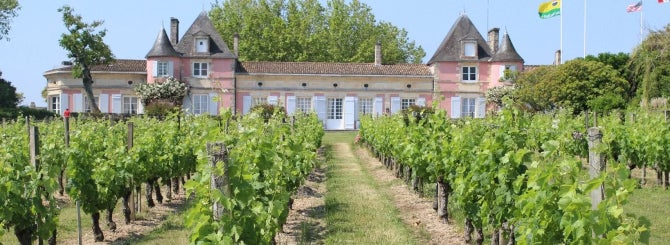
China’s love affair with Bordeaux properties is ending as more investors bring châteaux back into French hands. Read the latest wine news & features on wine-searcher

By James Laurence

In 2011, well-heeled Chinese businessmen made the leap from quaffing Bordeaux to owning Bordeaux.

Château de Viaud in Lalande de Pomerol was the first headline estate to be sold, purchased by a state-run agricultural conglomerate, the COFCO group. Subsequently, more than 150 properties changed hands between 2011 and 2019, including Château Latour-Laguens, Lezongars, Chenu-Lafitte, Richelieu and Monlot. At the time, many predicted this trend would continue for the foreseeable  – particularly if the château was pleasing to the eye.

However, the Chinese Communist Party decided in 2019 that enough was enough; restrictions on global capital flows were severely tightened, much to the chagrin of real estate companies like Vineyards-Bordeaux. As a result, the number of transactions plummeted and cash-starved estates had to look elsewhere for salvation. And then Covid-19 happened.

Yet not everyone wept tears over the diminishing influence of outside investors. Bordeaux ain’t no Paris – this is a largely conservative region that has made some concessions to modernity. Nevertheless, a mistrust of a sudden influx of newcomers, bordering on xenophobia, reached fever pitch after several properties were renamed by their new Chinese landlords; the late author Philippe Sollers even wrote to the erstwhile prime minister and Bordeaux mayor, Alain Juppé, to complain about this “sacrilegious” act.

Buy back better

The vineyards in question – Clos Bel Air, Châteaux Senilhac, Tour Saint Pierre and Larteau – were acquired by Mr Chi Keung Tong and his business partner between 2016-17 at a knockdown price; as per usual, families were forced to sell due to the prohibitively high French inheritance taxes (30 percent) and a lack of interest from the surviving children. Within a short time, however, Larteau had been renamed Imperial Rabbit and Senilhac was rebranded as Château Tibetan Antelope.  Eyebrows were raised higher than Mont Blanc, and many predicted this obvious gimmick would fail.

It turns out they were right: Chi Keung Tong sold his acquisitions to a French duo in 2022. “Initially, the foreign buyers did invest money to develop their châteaux, however, due to the Covid-19 period and the economic crisis in China, they were not able to continue to run them,” explains co-owner Denis Chazarain.

“Moreover, the renaming of historical châteaux, properties that boasted established reputations and long histories, created confusion for consumers, even in China. The truth is that Chinese consumers look for stately imagery and pedigree – it was commercial suicide to use these ‘funky’ names.”

Denis Chazarain, and his associate David Caillaud, set up the company Les Domaines de l’Emissaire in 2022 – they purchased the four estates for an undisclosed sum that same year. Their first task, after making an initial inspection, was to banish Imperial Rabbit and Tibetan Antelope to the history books and reinstall the original monikers. Then the hard work began.

“Our number-one priority was sourcing good permanent staff – this was a major challenge as the previous owners used third-party providers on an ad hoc basis,” says Chazarain. “Thankfully, we now have a good team in place – individuals who understand the vineyards and the terroir. One of our key objectives was to start working on a parcel-by-parcel basis, rather than the previous approach of simply vinifiying the entire crop.”

The portfolio certainly has real potential. Château Senilhac is a sizable Haut-Médoc estate with clay-limestone soils, while Clos Bel Air (2.3 hectares) offers an authentic slice of Pomerol garagiste winemaking – “We really do make wine in a garage,” enthuses Chazarain – and high-potential sandy/gravel terroir. Meanwhile, Château Tour Saint Pierre comes with 11.5 hectares of prime vineyards that were formerly owned by the mayor of Saint-Émilion; Larteau is classified as a Bordeaux Supérieur, located south of the Dordogne River close to the town of Arveyres. Like Bel Air, these are Merlot-dominant wines that slot nicely into the “affordable Bordeaux” category. Tourism is also a major focus for the owners, with ongoing renovations at Larteau to expand its potential as a wedding/seminar venue.

“We have also invested in the land, replanting around 5 hectares, in order to ensure the long-term sustainability of the vineyards, engaging them also in a process of environmental certification and biodiversity management, in all properties,” says Chazarain.

“In addition, we have upgraded the equipment, both for viticulture and winemaking, renovating the cellar of Clos Bel Air and constructing a brand new one for Tour Saint Pierre in Saint-Émilion Grand Cru. We have also created some new brands, such as a Cabernet Sauvignon rosé called l’Aerial, and a new Merlot wine l’Improbable.”

New markets

Meanwhile, Chazarain is busy planning for the Wine Paris trade fair in February 2024. But, the biggest priority is to expand distribution of Les Domaines de l’Emissaire’s collection of wines in a saturated global market fraught with geopolitical turbulence and falling consumption. Does that worry him?

“Competition is just an opportunity to improve and to be innovative – we believe in the expansion of new markets which are not yet familiar with wine consumption,” he replies.

“We are especially proud of the expansion we see in north Asia; we will complete the investments started in 2023, especially the completion of the new cellar in Tour Saint Pierre in Saint-Émilion and the opening of our renovated rooms in Château Larteau in March 2024. The replanting program continues apace and Wine Paris is the perfect opportunity to showcase our new labels.”

This ongoing project to resuscitate châteaux acquired by hands-off investors, and then left to decline, is likely to become a key theme of 2024. Ten years ago, Château Loudenne was sold to the Chinese group Kweichow Moutai who, it should be said, invested several million euros into the venture. Nevertheless, success eluded the firm and it was purchased by the French businessman Christophe Gouache in 2022.

Source: France Buys Back Bordeaux | Wine-Searcher News & Features