The Best French Restaurant In Every State

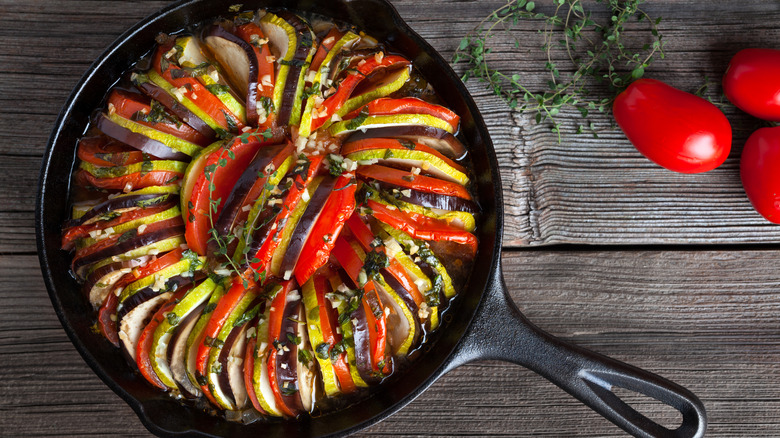
Colorful ratatouille in a skillet

Based on local and national customer reviews and food editor picks, awards received, and chefs’ reputations, these are the top French restaurants in each state.

By Khelil Bouarrouj

In recent years, French cuisine in France itself has earned a reputation for stuffiness due to codification. Fortunately, American chefs, some of whom are French transplants, are elevating this gastronomic tradition to new heights. Since American chefs are liberated from the pressure of tradition in France, they’re free to innovate as much as they want.

American-French restaurants, for instance, are often influenced by their regional environment — whether it’s New England or the Mississippi Delta — which means French fare stateside has wonderful touches of local ingredients and traditions. The classic dishes are still second to none, and refinement continues to get more and more impressive. A focus on seasonal ingredients, for instance, has become more common. Thus, when it comes to French food, we’re getting the best of both worlds: old-school methods with contemporary style. French cuisine is so esteemed, and so many chefs are trained in its traditions, that every American state has several French restaurants. But, in each state, there’s always one that stands out among the rest. [ . . . ]

Rhode Island: Pot au Feu

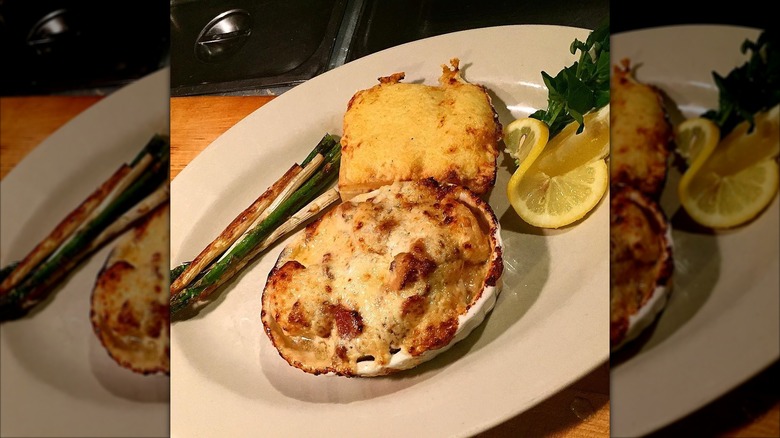
Coquilles Saint-Jacques, scallops with cheese, and crevettes Lorraine

The Providence Journal praises Pot au Feu as the most authentically French restaurant in the city. Ask about the Beaujolais Nouveau dinners, a November tradition marking red wine released right after harvest. Pot au Feu is the only New England restaurant to receive a shipment. Try the sampling of all three pâtés: truffled mushrooms, chicken liver, and smoked bluefish. Pair with lamb shank braised in wine.

potaufeuri.com

(401) 273-8953

44 Custom House St, Providence, RI 02903

Read the complete list, Alabama to Wyoming, at: The Best French Restaurant In Every State

Embattled Bordeaux winemakers see Trump’s tariffs as latest blow

The sun is shining, the grapes are ripe and a good harvest is expected but a heavy cloud is looming over Laurent Dubois’s vineyard in southwestern France.

“It’s not up to me to pay the Trump tax!” he fumes, faced with the 15 percent in customs duties that is to hit his products in US President Donald Trump’s trade war.

Trump’s long-threatened tariffs are just the latest blow to be sustained by Bordeaux winemakers, who are operating in an increasingly tough market as consumer tastes change.

The duties imposed could have been worse and on their own will not destroy the industry, winemakers emphasise, but they say they are an extra burden they could so without.

Dubois, 57, a major figure in the Bordeaux region famous for its fruity reds, exports 70 percent of his production to 25 countries, including 10 percent to the United States.

The ninth generation to lead the Chateau Les Bertrands in Reignac, north of Bordeaux, Dubois is already seeing the effects of the 15 percent levy, which is being imposed after the EU failed to secure an exemption for wines and spirits.

‘Narrow margins’

“For our last shipment, a client in Texas asked us to give him a price,” Dubois told AFP. “But I’m French, I didn’t vote for Trump. So it’s not up to me to pay, knowing that our margins are very narrow.”

The United States is by far the largest export market for Bordeaux wines, with sales of over 400 million euros ($469 million) or 20 percent of the total.

China comes next on 300 million euros and the UK on 200 million euros, according to the Bordeaux Negoce union.

Customs duties, combined with the weakness of the dollar against the euro, constitute “a double whammy” for the price of bottles on the American market, said Dubois.

He said he expects a “small drop” in his exports to the United States but remains phlegmatic: “It could have been worse because a few months ago, Trump announced taxes of 50 percent or even 200 percent.”

His opinion is echoed by Laurent Rousseau, a winegrower in Abzac, near Saint-Emilion in the Bordeaux region, for whom the US market represents 43 percent of sales.

“There will be a price adjustment but there is no expected market shutdown. After that, I don’t know what will happen in December” during the annual renegotiation of the contract with his importer, he said.

‘It’s scary’

Export difficulties have led to overproduction and a collapse in wholesale prices in recent years.

A subsidised uprooting plan has reduced the cultivated area to 90,000 hectares (222,000 acres), compared to 103,000 two years ago.

US customs duties add to these difficulties, against a backdrop of a chronic decline in wine consumption as lifestyles change in France and elsewhere.

“It’s bad news, yet again,” said Dubois. “We had to reduce our area by about 10 percent (to 130 hectares), we did the uprooting.

“And then we see a number of companies, winegrowers who are shutting down or are in receivership. It’s scary. We say to ourselves: ‘The next one will be me’.”

Further north, the vineyards of Cognac are also being hit by the customs duties, as the United States is the largest market for the famous spirit.

China — the second-largest destination for a sector that is 98 percent export-dependent — has previously imposed taxes or price increases.

Bertrand de Witasse, a winemaker who supplies the Remy Martin distillery, saw his orders drop by 25 percent during a renegotiation in May.

“We’re all affected,” he admitted. “But as they say in Cognac, ‘You’re a billionaire for one year and a poor man for 10’.

“So, the years you’re a billionaire, you have to save and avoid wasting money.”

French winemakers are far from being the only Europeans affected.

On Thursday, the Italian Wine and Spirits Federation (Federvini) expressed “its deep concern” at the lack of an exemption for “wines, spirits, and vinegars”.

“We are seeing a missed opportunity,” said Federvini president Giacomo Ponti, emphasising that “the agreement could have fully recognised the strategic importance” of our sectors “in transatlantic relations.”

Source: Embattled Bordeaux winemakers see Trump’s tariffs as latest blow

The Best Baguette in Paris

In a city where bread is both a point of pride and a daily ritual, being named the best baguette baker in Paris is a serious accolade

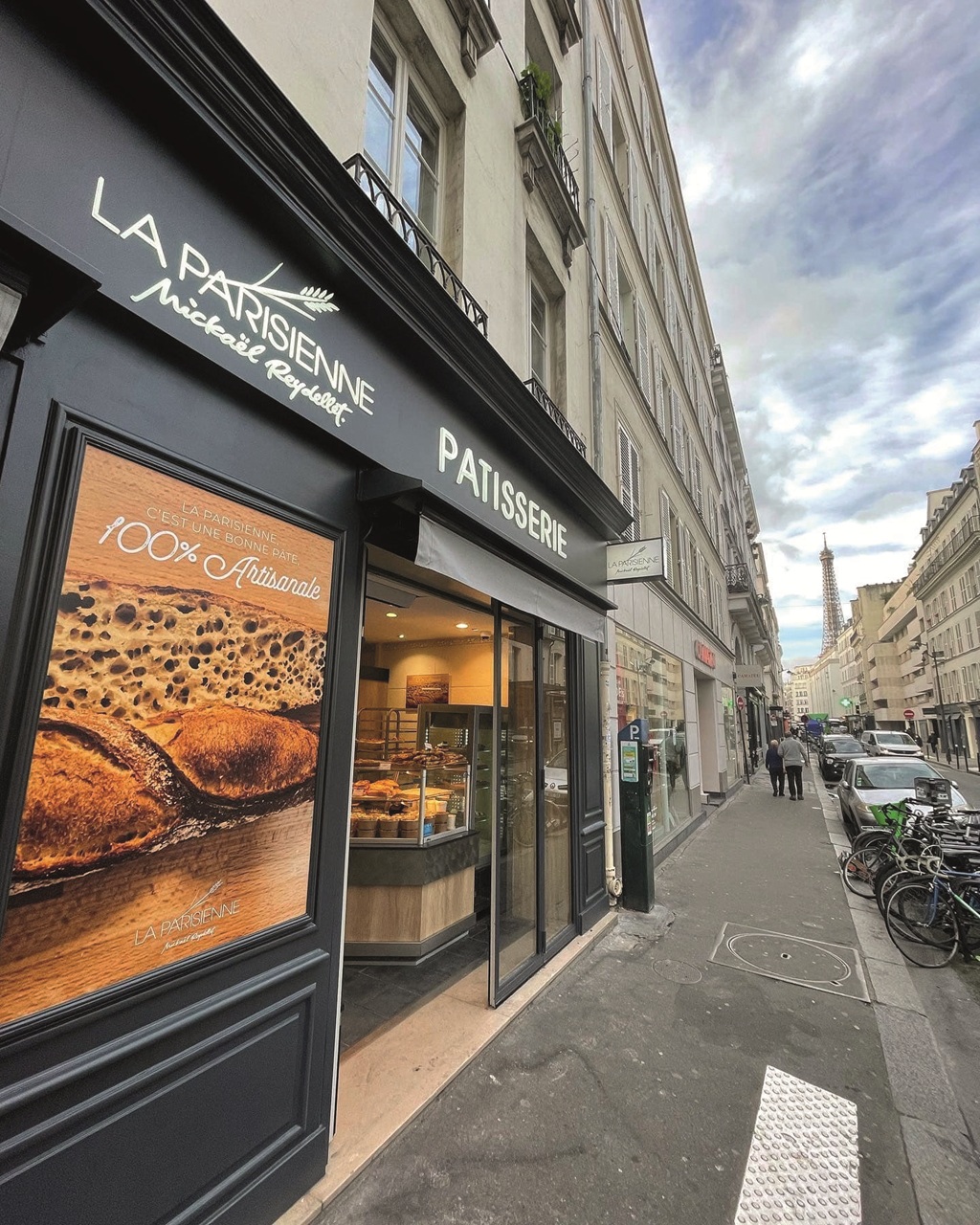
This year, that distinction belongs to Mickaël Reydellet, the man behind La Parisienne on Rue du Faubourg-Poissonnière in the 10th arrondissement, who has once again taken home the Grand Prix de la Baguette de Tradition Française.

It’s Reydellet’s second time claiming the title – his first win was in 2016 – underlining his standing as one of the capital’s top master bakers. Now in its 30th edition, the competition is run each year by the City of Paris in partnership with the Greater Paris Bakers’ Syndicate. Open exclusively to professional bakers within city limits, the contest comes with strict rules: baguettes must be between 50 and 55 centimetres long, weigh between 250 and 270 grams, and adhere to traditional French baking criteria in flavour, texture, and appearance. This year, 187 bakers entered, with each baguette judged blind by a panel of experts and enthusiasts.

La Parisienne COPYRIGHT La Parisienne_Facebook

Reydellet’s standout baguette – beautifully golden, with a satisfying crunch and springy interior – earned him not only a €4,000 cash prize but also the honour of supplying bread to the Elysée Palace for the next year. From now on, the President’s daily baguette will come straight from La Parisienne’s ovens. It’s all right for some! For anyone else keen to taste this award-winning loaf, La Parisienne welcomes visitors every day at its friendly spot in the 10th. The award was officially presented on May 7 during the city’s annual Fête du Pain, a celebration of French baking, which is held in the shadow of Notre-Dame Cathedral.

www.boulangerielaparisienne.com


Source: The Best Baguette in Paris – France Today

How World War Two changed how France eats

More than 80 years after D-Day, the recipes and ingredients introduced during France’s wartime occupation are slowly making a comeback.

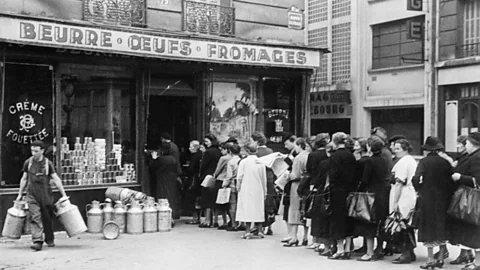
By June 1940, German forces had blitzed through France in just six weeks, leading more than half of the country to be occupied. As a result, French staples like cheese, bread and meat were soon rationed, and by 1942 some citizens were living on as few as 1,110 calories per day. Even after World War Two ended in 1945, access to food in France would continue to be regulated by the government until 1949.

Such austerity certainly had an impact on how the French ate during and just after the war. Yet, more than 80 years after Allied forces landed in Normandy to begin liberating the nation on D-Day (6 June 1944), few visitors realise that France’s wartime occupation still echoes across the nation’s culinary landscape.

In the decades following WW2, the French abandoned the staples that had got them through the tough times of occupation; familiar ingredients like root vegetables and even hearty pain de campagne (country bread) were so eschewed they were nearly forgottenBut as wartime associations have slowly faded from memory, a bevy of younger chefs and tastemakers are reviving the foods that once kept the French alive.

There aren’t many French residents old enough to vividly recall life in wartime France today, and fewer still would deign to discuss it. Author Kitty Morse only discovered her great-grandparents’ “Occupation diary and recipe book” after her own mother’s death. Morse released them in 2022 in her book Bitter Sweet: A Wartime Journal and Heirloom Recipes from Occupied France.

“My mother never said any of this to me,” she said.

Aline Pla was just nine years old in 1945 but, raised by small-town grocers in the south of France, she remembers more than others might. “You were only allowed a few grams of bread a day,” she recalled. “Some [people] stopped smoking – especially those with kids. They preferred trading for food.”

Such widespread lack gave rise to ersatz replacements: saccharine stood in for sugar; butter was supplanted by lard or margarine; and instead of coffee, people brewed roots or grains, like acorns, chickpeas or the barley Pla recalls villagers roasting at home. While many of these wartime brews faded from fashion, chicory coffee remained a staple, at least in northern France. Ricoré – a blend of chicory and instant coffee – has been on supermarket shelves since the 1950s. More recently, brands like Cherico are reimagining it for a new generation, marketing it as a climate-conscious, healthful alternative traditional coffee.


Alamy When France was occupied, staples like cheese, bread and meat rationed (Credit: Alamy)
When France was occupied, staples like cheese, bread and meat rationed (Credit: Alamy)

According to Patrick Rambourg, French culinary historian and author of Histoire de la Cuisine et de la Gastronomie Françaises, if chicory never wholly disappeared in France, it’s in large part thanks to its flavour. “Chicory tastes good,” he explained. “It doesn’t necessarily make you think of periods of austerity.”

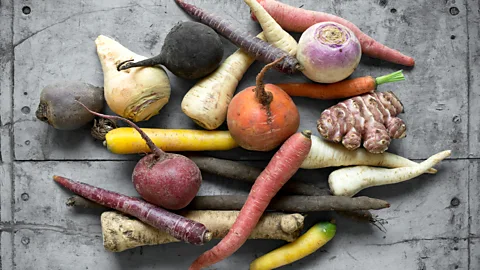
Other products did, however, such as swedes and Jerusalem artichokes, which WW2 historian Fabrice Grenard asserted “were more reserved for animals before the war.” The French were nevertheless forced to rely heavily on them once potato rationing began in November 1940, and after the war, these vegetables became almost “taboo”, according to Rambourg. “My mother never cooked a swede in her life,” added Morse.

Two generations later, however, Jerusalem artichokes, in particular, have surged to near-omnipresence in Paris, from the trendy small plates at Belleville wine bar Paloma to the classic chalkboard menu at bistro Le Bon Georges. Alongside parsnips, turnips and swedes, they’re often self-awarely called “les legumes oubliés“(“the forgotten vegetables”) and, according to Léo Giorgis, chef-owner of L’Almanach Montmartre, French chefs have been remembering them for about 15 years.

“Now you see Jerusalem artichokes everywhere, [as well as] swedes [and] golden turnips,” he said. As a chef dedicated to seasonal produce, Giorgis finds their return inspiring, especially in winter. “Without them, we’re kind of stuck with cabbages and butternut squash.”

According to Apollonia Poilâne, the third generation of her family to run the eponymous bakery Poilâne, founded in 1932, a similar shift took place with French bread. Before the war, she explained, white baguettes, which weren’t subject to the same imposed prices as sourdough, surged to popularity on a marketplace rife with competition.  But in August 1940, bread was one of the first products to be rationed, and soon, white bread was supplanted by darker-crumbed iterations bulked out with bran, chestnut, potato or buckwheat. The sale of fresh bread was forbidden by law, which some say was implemented specifically to reduce bread’s palatability.

“I never knew white bread!” said Pla. When one went to eat at a friend’s home during wartime, she recalled, “You brought your bread – your bread ration. Your own piece of bread.”

Hunger for white bread surged post-war – so much so that while Poilâne’s founder, Pierre Poilâne, persisted in producing the sourdoughs he so loved, his refusal to bake more modern loaves saw him ejected from bakery syndicates, according to his granddaughter, Apollonia. These days, however, the trend has come full circle: Baguette consumption fell 25% from 2015 to 2025, but the popularity of so-called “special” breads made with whole or heirloom grains is on the rise. “It’s not bad that we’re getting back to breads that are a bit less white,” said Pla.

For Grenard, however, the most lasting impact the war left on French food culture was a no-waste mindset. “What remains after the war is more of a state of mind than culinary practices,” he said. Rambourg agreed: “You know the value of food when you don’t have any.” Continue reading “How World War Two changed how France eats”

French wine production falls to lowest level since 1950s


Wine consumption in France reaches lowest point since 1961

The French wine industry endured one of its most challenging years in recent memory in 2024, marked by a dramatic drop in production, persistent decline in domestic consumption, and an increasingly volatile export landscape. According to the annual report published June 6, 2025, by Vinetur, the sector suffered a 23% decrease in wine output compared to 2023, producing only 37 million hectoliters — the lowest volume since the 1950s.

This collapse was driven by severe climatic conditions that impacted nearly all major wine regions. Persistent spring rains, late frosts, and an aggressive spread of mildew decimated yields. Key producing areas such as Charentes, Jura, and the Loire Valley reported losses exceeding 30%. Even Champagne and Bordeaux experienced double-digit declines. The downturn in volumes was mirrored by a 21.7% fall in the total production value, as per INSEE estimates [ . . . ]

Read full article at source: French wine production falls to lowest level since 1950s

The Trader Joe’s Frozen Find That Delivers Flavor With A French Flair

Frozen food doesn’t have the best reputation, but one Trader Joe’s premade pizza flatbread is actually a super delicious, perfect Parisian fantasy.

Craving a taste of French cuisine but can’t afford an international flight? There’s no need to fret, no need to pull out a copy of “Bonjour Tristesse,” and no need to put on a Françoise Hardy record. All you need do is put on a beret, and drive to your closest Trader Joe’s (okay, the beret is optional). Yes, Trader Joe’s, the kitsch, tiki themed grocery chain beloved for its endless array of tasty snacks is the perfect place to find your next French dinner. And there is one frozen meal in particular that packs an unexpectedly Parisian punch: the Tarte aux Champignons flatbread. This flatbread has light, flaky crust topped with crème fraîche, Emmental cheese, and a combination of white and oyster mushrooms. It is a delicious, complex dish that is perfect for serving at a dinner party, or cooked up for a simple weeknight dinner.

The Tarte aux Champignons flatbread came in first in Chowhound’s ranking of Trader Joe’s frozen pizzas, no small feat considering the breadth of the category. Our taster noted that the flatbread is “creamy, tender, flaky, and delicate. … I honestly would have liked it if I got it at a French restaurant.” That praise isn’t just glowing, it’s glimmering like the Eiffel Tower on a winter evening. And for the low cost of $4.79, it’s well worth a slice.

A delicious, umami mushroom flatbread is a great start to a fantastically French meal. But it is just that, a start. To make the tasty Trader Joe’s Tarte aux Champignons into a full meal, you’ll want to make a few additions. To start, you’ll want to choose a wine. And Trader Joe’s is the perfect place to look. After all, the chain offers up implausibly cheap wines through its Charles Shaw line. We need not limit ourselves to Two Buck Chuck, however, as Trader Joe’s has an impeccable wine selection. A tart, crisp sauvignon blanc or buttery chardonnay would both make a beautiful accompaniment to this mushroom flatbread. If you’d prefer a red wine, pinot noir would complement this rich, savory pie.

If you’re not in the mood for an alcoholic beverage but still want to sip on something French, you can try a bottle of Trader Joe’s Sparkling Pink Lemonade. Pair with a fresh arugula, cranberry balsamic, prosciutto, and goat cheese salad for a refreshing but hearty meal. And for dessert? You can try Trader Joe’s Macarons or Chocolate Lava Cakes for a sweet end to a delicious meal. You can also choose one of Trader Joe’s new spring releases, such as the refreshing Passion Fruit Meringue Tartlettes, which can give you a bright end to this rich, buttery flatbread pizza.

Read More: https://www.chowhound.com/1862597/trader-joes-french-frozen-find/

Source: 6 frozen Costco foods to buy and 7 to skip