
Read more stories about TIM DUP on Pas De Merde
Category: Culture
July 22 Feast of Mary Magdalene
Dr. Cynthia Bourgeault: The Meaning of Mary Magdalene
Pomme on Instagram “End of the World”
Investing in Fine Wine Is More Lucrative Than Ever – Bloomberg
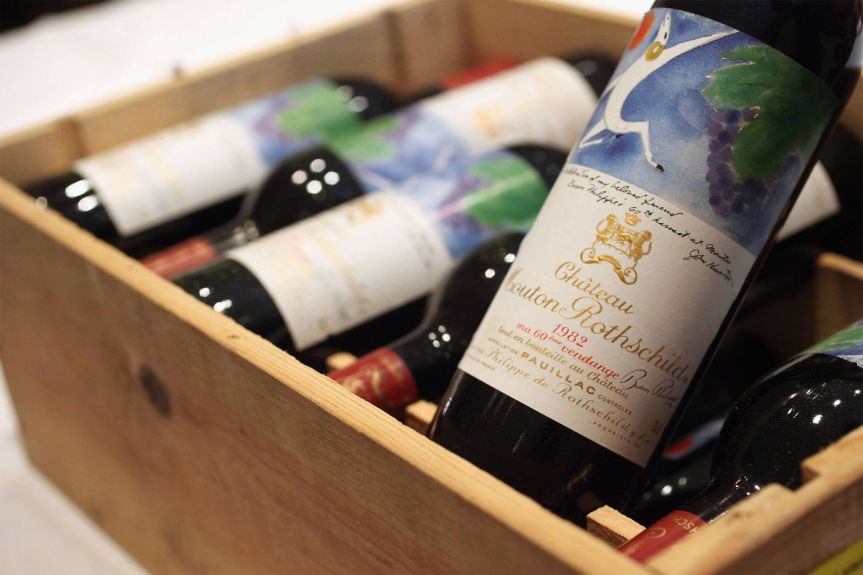 Once an exotic market, parking your assets inside expensive bottles can yield tremendous profits.
Buying rare wines is like investing in a startup: You need 10 years of runway to see significant returns. But unlike a startup, wine is a lot more lucrative these days.
Had you allocated $100,000 to Cult Wines, a U.K.-based wine portfolio manager, your money—which is to say your wine—would have returned an average of 13 percent annually. In 2016, its index performance was actually 26 percent. The fine wine secondary market hovers at about $5 billion, a fraction of the $302 billion global wine market. But Euromonitor International Ltd. projects that while “key luxury players face mounting risks in 2018,” the wine and Champagne category is set to increase by an estimated 7 percent.
To anyone that knows wine, French is the must-have and French Bordeaux the absolute must-have
When it comes to what private bank Coutts & Co. calls the “passion index,” wine is right up there with fancy cars and rare coins [ . . . ]
Continue story at BLOOMBERG: Investing in Fine Wine Is More Lucrative Than Ever – Bloomberg
Read more stories about WINE on Pas De Merde
Tour de France 2018: stage eight on Bastille Day – live!

Live updates from the 231km flat stage from Dreux to Amiens. Join John Brewin to follow the action
Source: Tour de France 2018: stage eight on Bastille Day – live! | Sport | The Guardian
How could 10 million bottles of cheap Spanish rosé be passed off as French? Blame America

Our insatiable love for pink wine created a booming market that helped lay the groundwork for fraud.
Lovers of French wine are suddenly seeing red. Earlier this year, they feared they wouldn’t have enough of their beloved rosé to get them through the summer, because Americans are buying it all. Now it seems much of the vaunted French pink they’ve been consuming the past two years has in fact been cheap Spanish rosado.
France’s consumer fraud authority confirmed July 9 that over the past two years, unscrupulous wine merchants have passed off as many as 70,000 hectoliters — the equivalent of 10 million bottles — of cheap Spanish wine as more-expensive French rosé. That’s shocking news in a country where protesters have been known to stop tanker trucks with imported wines and empty their contents on the road near the border.
That giant sucking sound over the past few years was U.S. consumers discovering they love rosé and buying and drinking as much as they could. Demand soared, and the rosé market boomed, with many more labels appearing on U.S. shelves, and earlier in the year than ever before as brands competed for shelf space. Prices rose, and shippers tried to send as much as they could to take advantage
This kind of story plays well in the media, because it reinforces two popular stereotypes: Those crafty French, and the snooty wine snobs who can’t tell the difference between plonk and the good stuff. Snickering aside, it also highlights basic economics and current trends in the production and marketing of wine [ . . . ]
Continue reading at THE WASHINGTON POST: How could 10 million bottles of cheap Spanish rosé be passed off as French? Blame America. – The Washington Post

