Luc Dardenne would have liked to work with Emilie Dequenne again
The tale of actress Emilie Dequenne is the stuff of legend. At age 17, she appeared in her first film and then found herself crowned at the Cannes Film Festival. The film was Rosetta – a harrowing tale of growing up in poverty in a post-industrial region of Belgium. The film was a turning point in the career of Duquenne, the Dardenne brothers Luc and Jean-Pierre that directed it and even on Belgium’s place in world cinema.
“It’s really unfair to die so young”
Dequenne sadly passed away recently at the age of 43. For director Luc Dardenne, the pain is double. “It’s really unfair to die so young,” he told the daily Libre Belgique. “We all know what Emilie did for cinema, but we’ll never know what she could still have done.”
Unlike other actors that the Dardenne brothers worked with, Dequenne never appeared in another of their films. Dardenne regrets this. “She told us, ‘You’ll never work with me again as I’m still Rosetta for you’. She was right.”
Although they had thought of her occasionally, they felt she needed a strong lead role. “But now that will never happen because of this damn disease.”
(Michael Leahy. Source: La Libre Belgique. Photo: Nicolas Landemard / Picture Alliance )
Björn Andrésen’s journey from ‘the most handsome boy in the world’ to a reflective artist reveals the deep and lasting impacts of early fame on his personal and professional life.
By Denise Massone
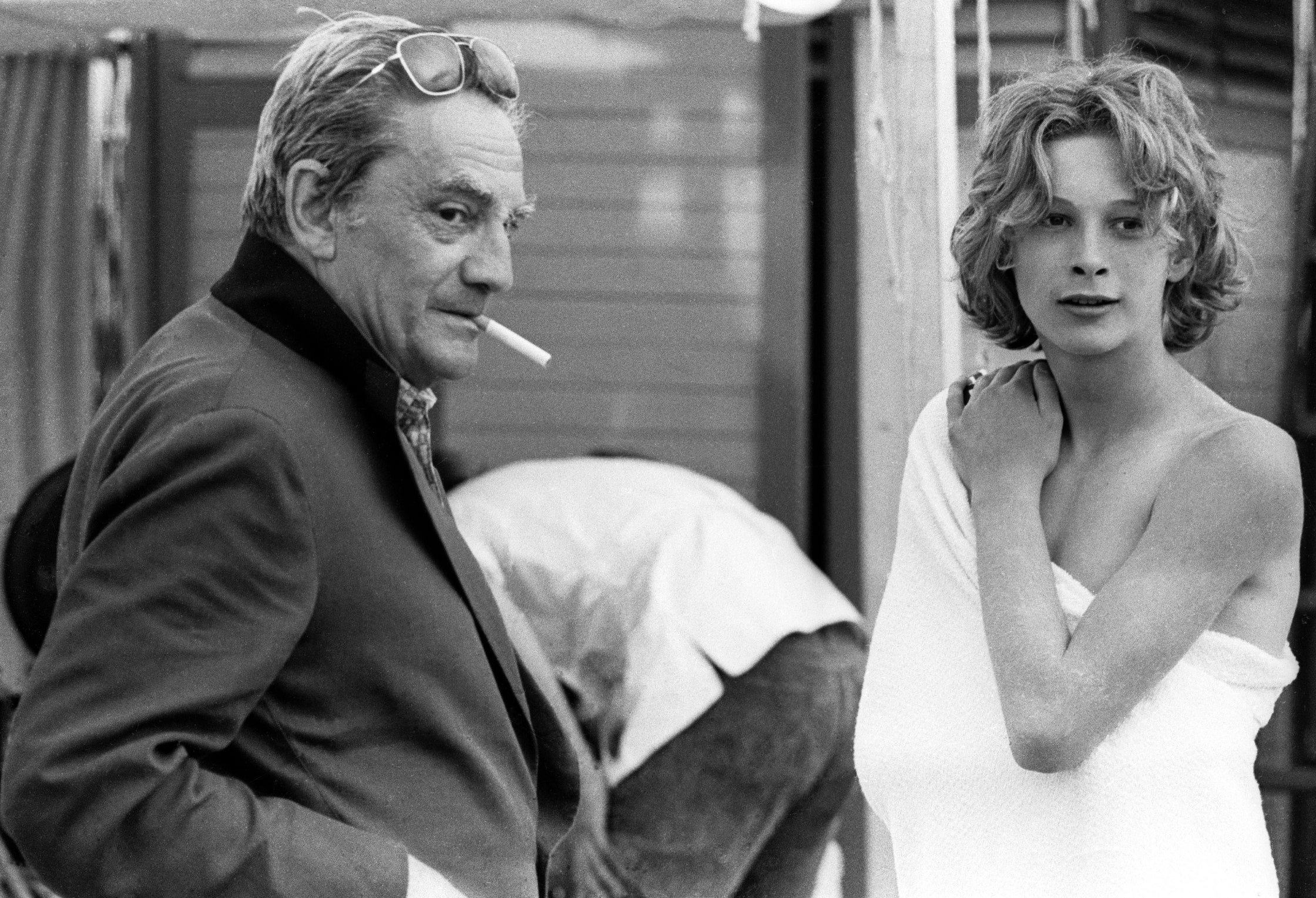
The label of “most beautiful boy in the world” was attributed to him by Visconti during the London premiere of the film. With the presentation of “Death in Venice” at the Cannes Film Festival, there was a global amplification of this vision. Andrésen’s beauty, defined by the director as “absolute beauty, like the angel of death,” with his delicate features and ethereal aura, captured the attention not only of Visconti but also of the entire crew from the start. For years, the production of the film had been looking for the right person for the role of Tadzio, who had to be played by a very young boy, with pure and androgynous beauty.
The choice of Björn Andrésen was the result of extensive research across Northern and Eastern Europe by Visconti, who viewed many young actors. When Andrésen entered the audition room, held in Stockholm, Visconti no longer needed to look any further: he had found his Tadzio. The photos and immediate filming that the crew took of the fifteen-year-old during the audition, including nude ones, became famous and immediately made the young man very embarrassed.
After the release of “Death in Venice,” Andrésen’s performance was acclaimed, and his physical appearance inspired audiences worldwide, not to mention a whole generation of manga artists in Japan. The most famous Japanese designer to take inspiration from him was Riyoko Ikeda, who took inspiration from Björn’s appearance for the renowned character of Lady Oscar in the manga “The Roses of Versailles”. From that moment, the young actor became a cultural icon and the first Western idol in the history of Japan.
The fame and morbid attention that followed the success of the film were the beginning of a nightmare for Björn, as he became a young teenager left alone, embodying for everyone only an object to be admired, such as a statue or a work of art. There was no slightest interest in who he really was and what he thought.
The 2021 documentary titled “The Most Beautiful Boy in the World,” made by Swedish independent filmmakers Kristina Lindström and Kristian Petri, explores the complexity of Björn’s life and the effects of early fame on his personal and professional life. This documentary film shows how the acclaimed beauty and celebrity influenced his already difficult childhood, marked by the lack of knowledge of his father and the loss of his mother in tragic circumstances, at just eleven years old. Björn lived for some time in boarding school and then went to live with his grandmother, a narrow-minded woman who immediately pushed him toward the world of entertainment to get rich. Björn himself says in the documentary, “My grandmother wanted a famous grandson,” and while the boy always looked for affection from his grandmother, she also pushed him to associate with important wealthy people to profit from her grandson’s beauty. These characters were interested in Björn’s presence as a trophy to display during their social gatherings. From that moment on, the young adolescent’s tendency towards depression and alcoholism was born.
Andrésen struggled for much of his life with the expectations and pressure resulting from his public image, which more often than not confliced with his reality as a boy who needed affection and his desires. After “Death in Venice” he faced periods of darkness and great pain, including family tragedies, a long period of alcoholism, and the incessant difficulty of managing a celebrity that arrived too soon, in solitude. That shade of sadness always present in his gaze became memorable, evident to others in every moment of public or private life, and an expression of his internal struggles.
The young actor, growing up, also explored other art forms such as music, but his identity remained inexorably linked to the iconic character of Tadzio. His life and career, after that role, have been a conflictual path, but also strong possibilities for personal growth and a profound understanding of pain. He had to fight against the public’s obsession with his beauty and against that morbid desire that made him stop being a person in the eyes of the world. Today, remembering what he had to go through in those moments, he refers to the people around him as “bats around him.”
After his short musical period, Andrésen continued to work in cinema and also on television, participating in a variety of projects. Andrèsen’s filmography includes his film debut in “En kärlekshistoria” (1970), followed by a series of Swedish films such as “Bluff Stop” (1977), “Den enfaldige mördaren” (1982), and “Lucifer sensorimmer-gult og sort ” (1990), demonstrating his ability to play different genres and roles. And on television, he participated in “Finding Tadzio” and “Maskrosbarn” (1989).
In recent times, Björn made an appearance in the horror film “Midsommar” (2019), directed by Ari Aster. He managed to bring an unforgettable performance to the screen, which rekindled the interest of filmmakers in his figure as an actor. Björn Andrésen’s career reflects his evolution as a person and as an artist. He has always sought roles that contrasted expectations and distanced him from the eternal image of a boy-object. Despite all his past suffering, the actor has left an indelible mark on the world of cinema and continues to be a major figure in popular culture. Today Björn Andrésen is a man who has found his own wisdom and inner peace. He has managed to acquire a way to live with the past and at the same time accept himself, despite the shadows that have long shrouded his figure. His story represents a powerful warning of how beauty, success, and fame can be both precious gifts and curses if not managed with empathy, the presence of true affection, and balance, and how the entertainment industry can profoundly influence the life of a human being.
Engineer, poet, actor, novelist, songwriter, jazz trumpeter, and record producer, Boris Vian was truly a symbol of the young post-war intellectuals of France.
I encourage Pas de Merde followers to tune in to WRIU(90.3 FM and streaming at wriu.org) Sundays at 6 pm for more great film music.
J’ai failli oublier! If you love the radio show (below) you may want to read Mr. Cresser’s latest collection of short stories. His most recent work The Book of Norman, is available now at Amazon, Barnes and Noble, Lulu and Rakuten Kobo.
Selections from the Picture This broadcast:
• Amelie’s Waltz from Amelie, composed by Yann Tiersen
• From The Triplets of Belleville, composed by Benoit Charest
• Tour de France
• Belleville Rendez-vous, a collaboration between -M-, aka Matthieu Chedid, and Charest
• The Jungle of Belleville
• Title theme from My Uncle, composed by Alain Romans
• Four Songs composed by Georges Auric
• Where is Your Heart from Moulin Rouge
• Suite 2 from Roman Holiday
• Suite 1: Titles and Suite III: The Eiffel Tower from The Lavender Hill Mob
• Title song from Bonjour Tristesse, performed by Juliette Greco
• Title theme from Call My Agent composed by Christophe Mink and Loik Dury
• Three songs composed by Francis Lai
• Olivier from Tender Moment
• I Wonder Why from Tender Moment, performed by Nicole Croisille
• Title song from 13 Hours in France
• Day for Night Suite from Day for Night, composed by Georges Delerue
• Truancy from The Four Hundred Blows, composed by Jean Constantin
• Charlie and Lena from Shoot the Piano Player, composed by Georges Delerue
• From Jules and Jim
• Title Theme composed by Georges Delerue
• The Whirlwind, composed by Georges Delerue, Yip Harburg and Cyrus Bassiak. performed by Jeanne Moreau
• Title song from Kid of Paris, composed and performed by Charles Aznavour
• She-She from The Seven Faces of Woman, composed and performed by Charles Aznavour
• The Other Waltz from Amelie, composed by Yann Tiersen
• Title song from Poly’s Vacation, composed and performed by Charles Trenet
• Haiti from Zou-Zou, composed by Vincent Scotto, performed by Josephine Baker
• Feeling Like a Million from Babes in Arms, composed by Nacio Herb Brown and Arthur Freed, performed by Josephine Baker
• Dream Ship from Princess Tam Tam, composed by Alain Romans, performed by Django Reinhardt
• Title song from The Wild West, composed and performed by Jacques Brel
• Tender Heart from An Idiot in Paris, composed and performed by Jacques Brel
• Midnight in Paris from Have Moicy!, composed by Con Conrad and Herb Magidson, performed by the Unholy Modal Rounders
• My Funny Valentine from Chet Baker Sings, composed by Richard Rodgers and Lorenz Hart, performed by Chet Baker
• Belleville, written and performed by Django Reinhardt
• Minor Swing from Lacombe Lucien, written and performed by Django Reinhardt
• Title Theme from The Monkey in Winter, composed and performed by Michel Magne
• Tontons swing from Gun-toting Uncles, composed and performed by Michel Magne
• LeFestin from Ratatouille, composed by Michael Giacchino, performed by Giacchino and Camille