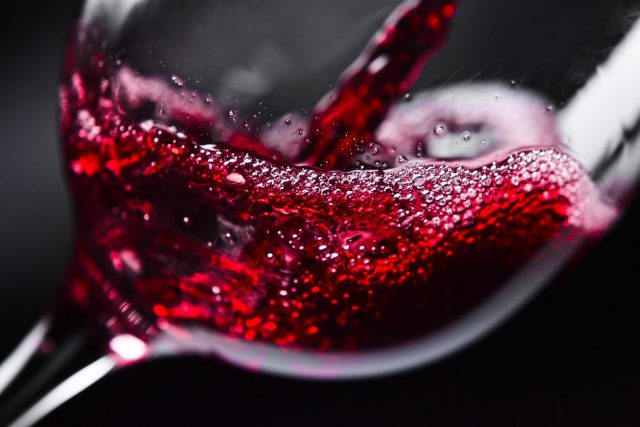
Nine French doctors have rounded on President Emmanuel Macron and accused him of “endangering the health of the French people” with his recent positive comments about wine and failure to address the belief that wine is less dangerous than other alcoholic drinks.
This incredible greenspace would cover approximately 5.2 square miles and offer various outdoor pursuits for locals and tourists.
:: SIMPLEMOST :: The capital of France is famous for its many iconic landmarks, such as the Eiffel Tower, the Louvre Museum and Arc de Triomphe, just to name a few. However, if eco-conscious French politicians get their way, we may soon associate Paris with a suburban forest that is five times the size of New York City’s Central Park.
The creation of a roughly 5.2-square mile green area north of Paris in the suburb of Pierrelaye-Bessancourt would not only be a fabulous green space for outdoor activities but it is also meant to combat air pollution. Trees remove carbon dioxide (CO2) from the atmosphere and release oxygen back out, thus improving air quality, according to the Urban Forestry Network.
Why The French Government Wants To Build A Forest
The city’s air pollution levels have reached a dangerous high, and the air quality is so poor that the City of Lights change its nickname to the “City of Smog.” In 2017, a Parisian yoga teacher even sued the Continue reading “Paris Wants To Create Its Own Central Park”→
Throughout the Cesar Awards ceremony Friday night, presenters and winners referenced the movement that has campaigned for an end to abuses by powerful men.
And the packed concert hall stood in ovation as the presenter called on everyone to support the #MaintenantOnAgit (Now We Act) campaign launched this week, aimed at raising money to help women pursue legal complaints against abusers.
Anger over sexual violence and demands for gender equality in the cinema industry charged the atmosphere around this year’s Cesars – much like around the Oscars coming up Sunday in Hollywood.
Instead of wearing black – as actors in the U.S. and Britain have done at recent awards shows – French stars chose to wear a white ribbon to make their statement.
So did special guests like Penelope Cruz, given a special award for her career’s work.
“The entire world is talking about this, it’s not only a problem of our industry, but of all industries and of any woman who does not have the opportunity to have a microphone in front of her as I have myself,” she told reporters.
The most Cesar awards went to the AIDS drama “120 Beats Per Minute,” which took six prizes, including best film. Directed by Robin Campillo, the movie centers on the activist group ACT UP in Paris in the 1990s at the height of the AIDS crisis.
Producer Marie-Ange Luciani hailed the social change since that era, including growing acceptance of gay marriage. She also had a message for those disconcerted by the turmoil prompted by the #MeToo movement that started in Hollywood with sexual abuse accusations against producer Harvey Weinstein.
“Don’t be afraid of what will happen. This moment is not a threat. It is a promise. And history will show we are right,” she said.
France’s entertainment industry has seen divisions over the #MeToo movement, with Catherine Deneuve notably saying it had gone too far.
No one at the Cesars publicly said anything similar.
The ceremony’s president, Vanessa Paradis – singer and actress and Johnny Depp’s ex-wife – set the tone by opening the show saying: “I am wearing this white ribbon for the fight against violence against women.”
More than 100 personalities, including actress Sandrine Bonnaire, director Agnes Jaoui and actor-director Julie Gayet, asked for donations destined for associations helping women pursue cases before justice, “so that no woman ever again has to say #MeToo.”
French film stars including Juliet Binoche called in a proposal in newspaper Le Monde on Friday for quotas to guarantee that more government film subsidies go to movies directed by women.
The ceremony was dedicated to Jeanne Moreau, the smoky-voiced femme fatale of the French New Wave who died last year, known for her distinctive blend of sensuality, intellect and resolve.
Best actress winner Jeanne Balibar praised actresses for supporting each other amid discrimination, injustice and abuses. “Despite our differences and our competition, we hold on.”
In addition to a white ribbon, actorBlanche Gardin wore a pin with the picture of comedian Louis C.K., accused of sexual harassment, and earned laughter with a sarcastic plea:
“Producers no longer have the right to rape actresses . But do we still have the right to sleep with them to get roles?” she asked. “Because if we don’t, then we have to learn our lines, pass auditions, and we don’t have the time. You realize how much time that takes?”
Louis-Ferdinand Céline was one of France’s greatest novelists – but plans to republish his anti-Semitic writing has dramatically divided Paris.
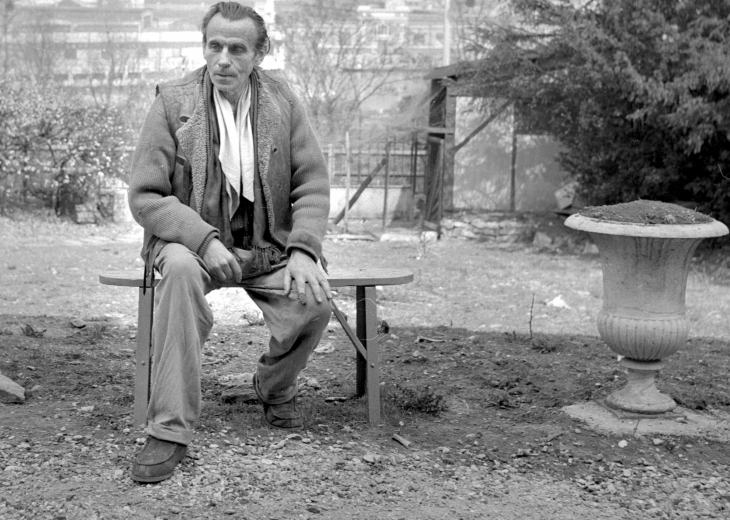
n a cold but sunny afternoon in late January I paid a visit to the Passage de Choiseul in the commercial heart of Paris. The passage is a covered arcade, one of many such places that were built across the Right Bank of Paris in the early part of the 19th century, and which were effectively the world’s first shopping malls. The Passage de Choiseul is also one of the most important and totemic sites in French literary history. It was the childhood home of the novelist Louis-Ferdinand Céline, arguably the greatest French writer of the 20th century, who still regularly outranks Marcel Proust in readers’ surveys and sales. Most significantly for his admirers, the passage was immortalised by Céline in his two magnificent novels, Journey to the End of the Night andDeath on the Instalment Plan, published in the 1930s. In Céline’s day the place was poor and decrepit and “stank of dogs’ piss”. Nowadays it is expensive and chic. But there is no trace of its most famous literary inhabitant – an extremely unusual fact in France, a country that prides itself on its literature, and where even the meanest provincial town has at least one Avenue Victor Hugo or Lycée Baudelaire.
I bought some pens and a notebook in the upmarket stationery shop just opposite the entrance to number 67, where I knew Céline had lived, and asked the lady behind the counter why there was no trace of the great man. She said that she was often asked this question by Céline’s admirers, who came from all over the world to this place, and that she did not know why there was no commemorative plaque or any other sign that Céline had lived here. She then hesitated, looked around to check that we were alone, and said quietly: “There are many Jews here who control business. They don’t want anyone to remember him.” [ . . . ] More at: The literature debate tearing apart Paris: should Céline’s racist pamphlets be published?
The man, the myth, the legend, and his persistent influence on screen.
Since The Silent World nabbed the Palme d’Or at Cannes in 1956, the name Jacques Cousteau has been synonymous with marine exploration. And while it’s easy to get lost in his prolific resume (which includes a stint as a spy with the French Resistance and co-inventing the aqualung), Cousteau’s legacy is undeniably one of influence; of sharing something he loved with the public and subsequently helping them fall in love with it, too. His work, on-screen and off, inspired a generation to take up scuba diving, to marvel at the alien beauty of undersea landscapes, and to become alert to the man-made problems that threatened their existence.
Cousteau was, bluntly put, pretty much singlehandedly responsible for popularizing modern marine conservation as we know it today. Which, last time we checked, makes him a huge fucking badass.
Of all Cousteau’s documentaries, The Undersea World of Jacques Cousteauwas perhaps his most influential. The docu-series premiered in 1968 and brought the exploits of the Calypsoand her heroic (and stylish) crew into the living rooms of thousands of eager viewers, a feat unmet by earlier nonfiction oceanographic efforts like Thirty Leagues Under the Sea (1914) andThe Sea Around Us (1953).
The series ran for seven years and featured pioneering underwater cinematography, a gripping sense of adventurism and (if you were watching stateside) the dulcet tones of Rod Serling. Given Serling’s then-fresh work on The Twilight Zone, I can’t imagine of a better narrator to shepherd starry-eyed viewers through this strange new world that had been lurking, just out of sight, right under their noses.
Cousteau’s influence is such that it is damn near impossible to depict oceanography in fiction without making a passing reference to the man. And of course, this is to say nothing of Cousteau’s role in countless technical innovations in underwater cinematography. All to say: cinema is greatly indebted to Cousteau, in large part because the aquatic activity he emboldened in his documentaries resonated (and continues to resonate) with untold numbers of filmmakers and audiences alike.
So, in honor of the 50th anniversary of The Undersea World of Jacques Cousteau, let’s dive into the cinematic legacy (and influences) of cinema’s favorite aquanaut [ . . . ]