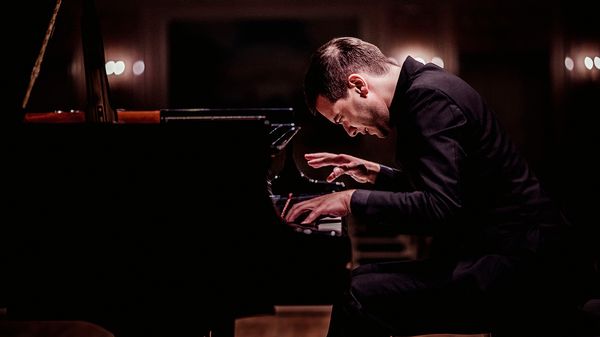
Live from the Auditorium, Debussy’s Sea, so marvelous and mysterious, brings to light the elusive nature of air and water. Upstream the pianist Francesco Piemontesi, whom we will receive at intermission, mingles with softness and virtuosity to the Orchester national de France. Listen to the program
A Europe-based movement is underway to stop disinformation on the Internet. One Paris man is at the center of the push to make Google clean up its search results.
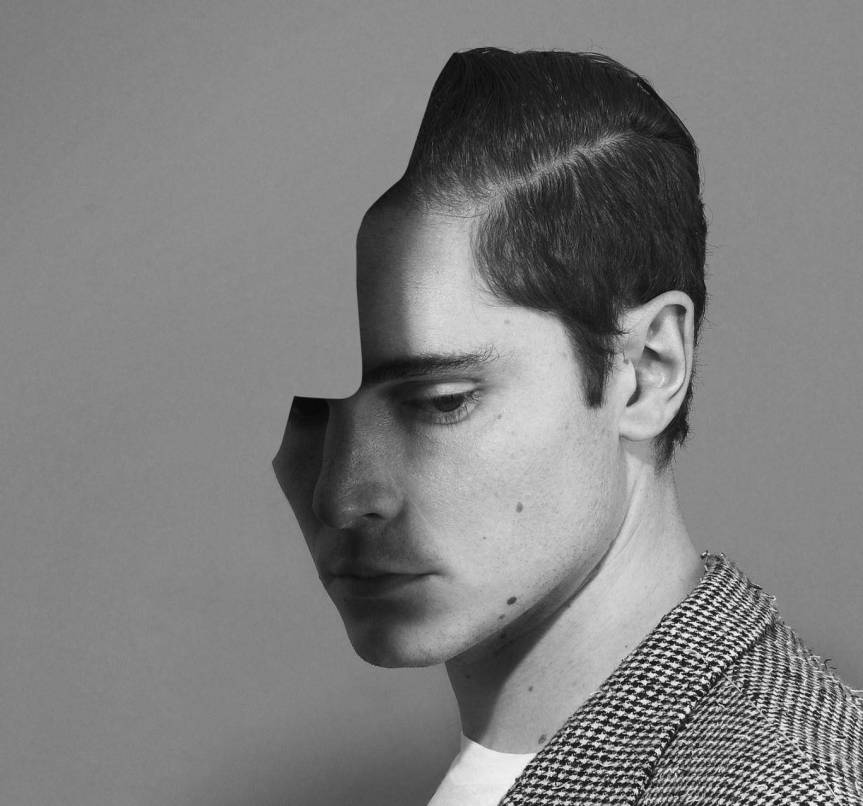
“We choose the way we’ll be remembered.” The first song Simon Carpentier and Victor Solf wrote as French electronic duo Her opens their self-titled debut album with those words. Both of them were afraid of the future at the time and needed to make a song about how they should be the ones to decide how they are remembered. No one else could decide.
“We Choose” was released after Carpentier’s death from cancer, aged 27, in August 2017. He and Solf had met over a decade ago at their school in the medieval town of Rennes, north France, forming Her in 2015 after their first band, electro-pop band The Popopopops, split two years earlier.
Knowing their time was limited, they mapped out how they wanted their debut album to sound, and how the entire project would be presented to the world. You’d be hard-pushed to find a record or another band to compare it to, and it’s not what you might expect from a French electronic act.
“Making this album was a very intense part of our life,” Solf says. He’s sat, in an orange roll-neck sweater and black trousers – handsome in a particularly French way, with a strong jaw and dark, close-cropped hair – at a venue in Paris where the first part of a documentary about Her will be shown, along with a live performance by him and his band members.
“It was really important for us to be able to produce our songs, to be really focused on the whole project,” he continues. “But it was also important to trust people and bring them in; we’d been working with our sound engineer for five years, even before Her, and he really helped us a lot on the production and the mixing.
“Sometimes you can’t see anymore what’s wrong with a song, so someone a little bit outside can help. It was the same with the musicians, Simon could play the guitar and the bass and I could play the keyboard and some drums, so we could have recorded it ourselves if we’d really wanted, but it’s not how we think about music. We started to work with three other musicians – without computers – in the studio, and it was really nice to have different opinions.” Continue reading “French electronic duo Her find immortality in their music”→
In ‘A Walk Through Paris,’ Eric Hazan connects the modern city with its revolutionary past
Eugene Brennan is a writer and academic based in Paris.
Eric Hazan’s “A Walk Through Paris” is about, simply, a walk through Paris. But Paris being Paris, a walk through its streets is anything but simple — or ordinary. Here Hazan, who has spent his entire life in the City of Light, offers a perspective — “a radical exploration” — that is both personal and historical, drawing on his experiences as a student, surgeon, social critic and publisher of leftist books.
Hazan sets out from Ivry, in the southeast of the city, to Saint-Denis in the north. As he travels, memories rise “to the surface street by street, even very distant fragments of the past on the border of forgetfulness.” His journey sparks questions: For example, he wonders, why choose one route over another? At other moments, personal preferences lead him on more convoluted detours. Traversing the Ile de la Cité, he avoids the principal routes, as one would pass by the prefecture de police, “a sorry perspective,” and the other would proceed through the rue d’Arcole, lined with tourist shops full of “I Love Paris” T-shirts — a scene that’s “hardly more attractive.”
Still, what emerges from this book is a profound affection for the city, often expressed in endearingly idiosyncratic terms. On the rue Hautefeuille, where Charles Baudelaire was born, Hazan observes a hanging turret on the corner of a small cul-de-sac. Dating from the 16th century, this conical trunk is made of a knot-work series in decreasing diameter, “each ring bearing a different decoration — a masterpiece of masonry.” Hazan lists several other locations in the city where these turrets can be found, referring to the architectural structures as “friends of mine”; sometimes, he writes, he even makes a detour just for a chance to greet them [ . . . ]
Actor and director performs Barbara, a biopic on the fascinating French singer starring his wife, Jeanne Balibar
The window of Parisian hotel resists. In person Mathieu Amalric ( Neuilly-on-Seine, Hauts-de-Seine, 1965) possesses same playful spirit that many of its characters on screen, goblins who take refuge behind its big eyes and its enormous smile of joker. And with those weapons he has involved journalist in attempt to open a window so that actor and director can smoke. There is a padlock in between and an alarm that jumps somewhere in reception. Amalric doesn’t stop laughing with little girl. “We can’t even kill ourselves here!” Until a conical waiter appears. Impossible. Amalric looks at him and in 30 seconds he coaxes with his chatter. Result: The filmmaker smokes in room thanks to a cup reconverted into an ashtray. Continue reading “Mathieu Amalric, the vibrant goblin of the French cinema”→





 Pas De Merde