Bastille Day: How literary writings see the French Revolution

The storming of the Bastille prison on July 14, 1789, is seen as a defining event in the French Revolution. But how does the revolution affect writers, poets, painters and other creative minds?

By Mohammad Asim Siddiqui

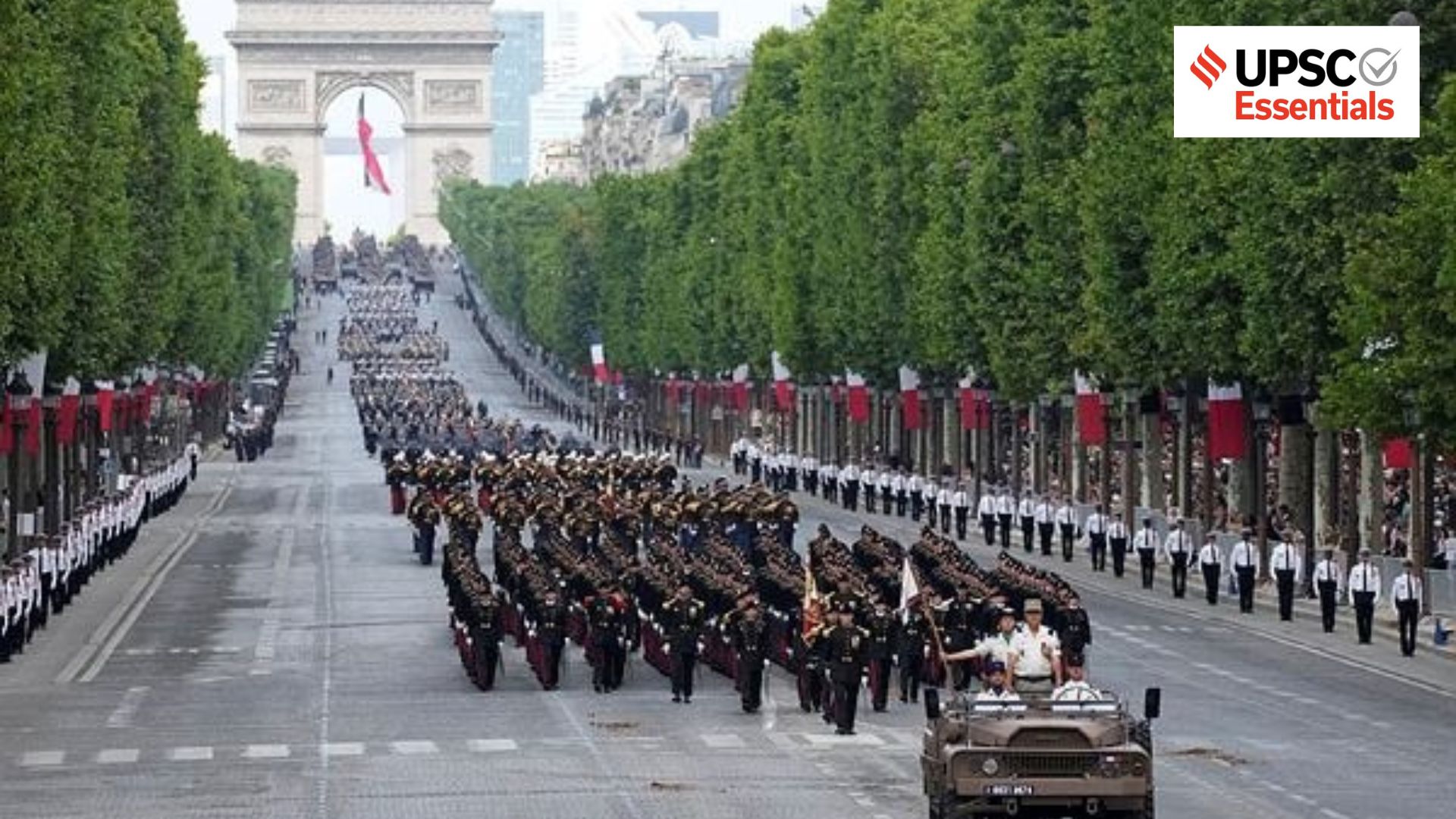
France celebrates Bastille Day to commemorate the storming of the Bastille prison on July 14, 1789, a defining event in the French Revolution. The Bastille was originally built as a castle in Paris in the 14th century to protect the city. But it was later used as a prison and came to symbolise the brute and arbitrary powers of the king.

The historiography of the French Revolution offers varied perspectives on the events, with some celebrating its revolutionary character and others highlighting the violence that accompanied it. For instance, British historian Eric Hobsbawm in Echoes of the Marseillaise: Two Centuries Look Back on the French Revolution (1990) focuses on the positive takeaways of the Revolution – Liberté, Égalité, Fraternité (liberty, equality and fraternity), the spirit of the Enlightenment, and the overthrow of aristocracy by the middle class.

He also laments many historians’ and writers’ emphasis on the violence and destruction associated with the Revolution. Hobsbawm considers historian Simon Schama’s bestselling book Citizens: A Chronicle of the French Revolution (1989), which highlights the violent nature of the Revolution through an engaging narrative. He sees it as part of a tradition in England established by Edmund Burke’s Reflections on the Revolution in France (1790), Charles Dickens’ A Tale of Two Cities (1859), and many other popular works.

But how do Romantic poets like William Blake, William Wordsworth, and P B Shelley depict the French Revolution? Why does Albert Elmer Hancock say that the French experience “humanised” Wordsworth? Why does Jane Austen deliberately avoid discussing directly the events of the French Revolution that so disturbed her world, but incorporate many of her responses to those events in her writing? Continue reading “Bastille Day: How literary writings see the French Revolution”

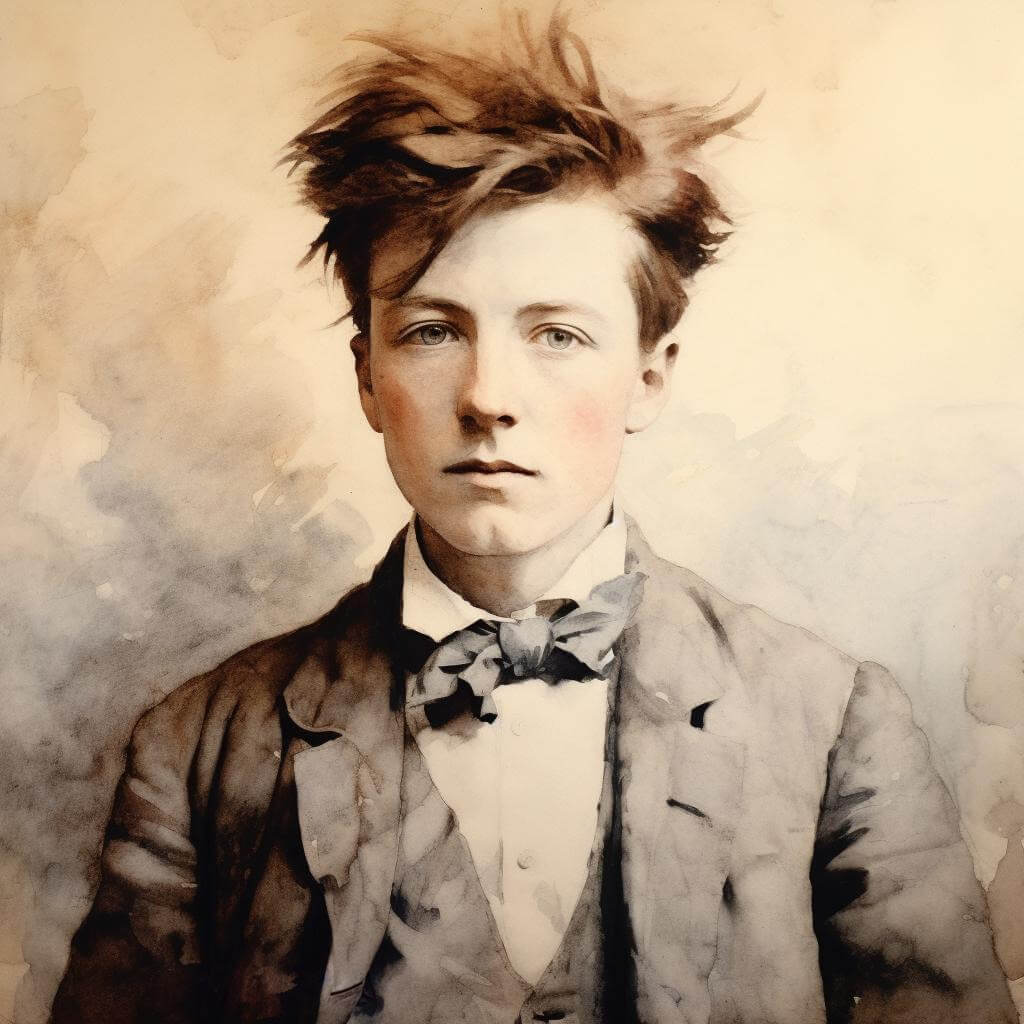
Rimbaud: “No one’s serious at Seventeen”

"No one's serious at seventeen.
On beautiful nights when beer and lemonade
And loud, blinding cafés are the last thing you need
You stroll beneath green lindens on the promenade.

Lindens smell fine on fine June nights!
Sometimes the air is so sweet that you close your eyes;
The wind brings sounds, the town is near—
And carries scents of vineyards and beer". . ."
- Arthur Rimbaud (20 October 1854 – 10 November 1891)

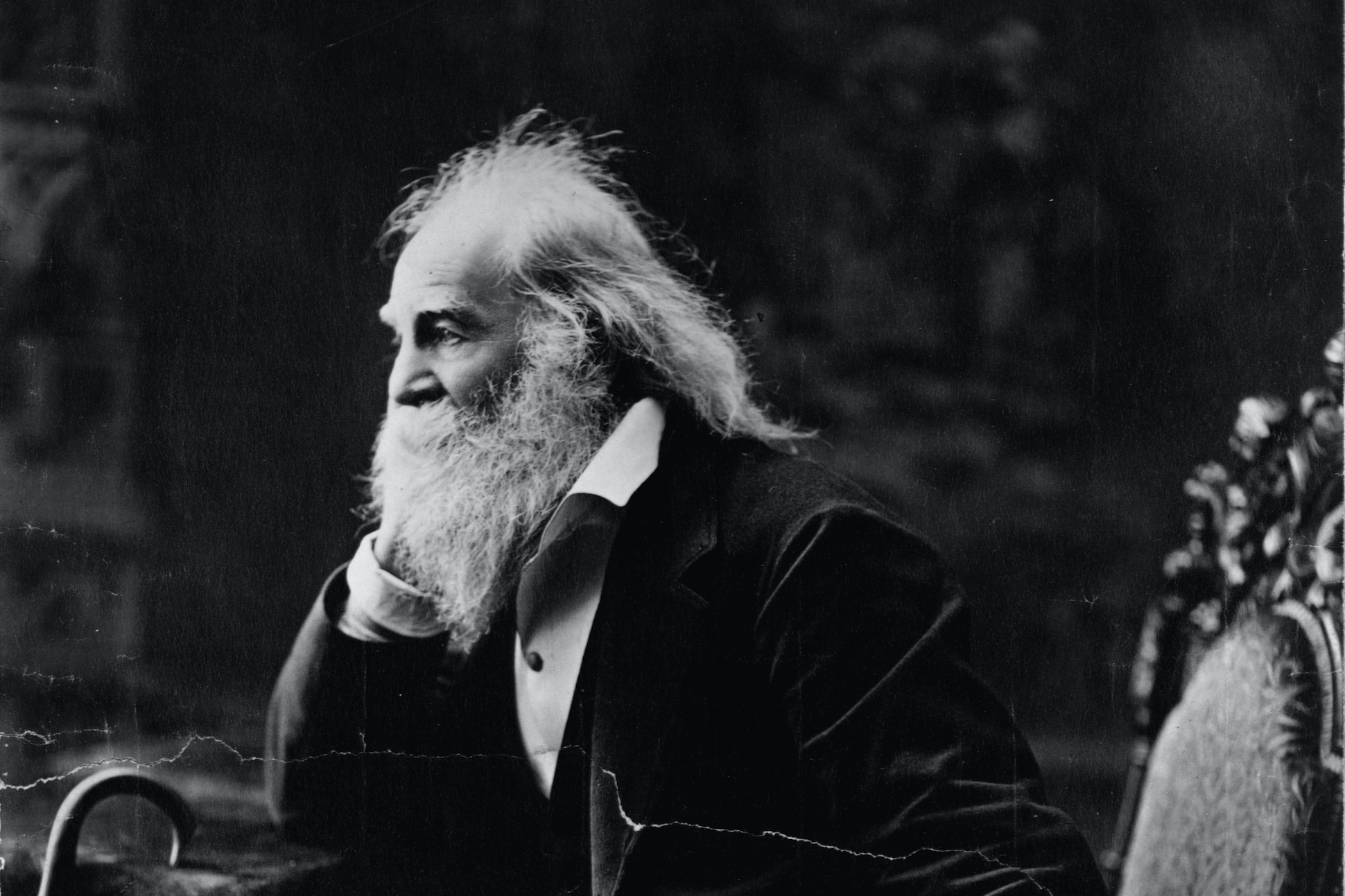
Joyeux anniversaire! Read Whitman’s “Crossing Brooklyn Ferry” on the poet’s birthday

Crossing Brooklyn Ferry

“Walt Whitman, poète, philosophe et ‘rowdy.'” – La Revue Européenne (November 1, 1861)
 
 
1
Flood-tide below me! I see you face to face!
Clouds of the west—sun there half an hour high—I see you also face to face.
 
Crowds of men and women attired in the usual costumes, how curious you are to me!
On the ferry-boats the hundreds and hundreds that cross, returning home, are more curious to me than you suppose,
And you that shall cross from shore to shore years hence are more to me, and more in my meditations, than you might suppose.
 
2
The impalpable sustenance of me from all things at all hours of the day,
The simple, compact, well-join’d scheme, myself disintegrated, every one disintegrated yet part of the scheme,
The similitudes of the past and those of the future,
The glories strung like beads on my smallest sights and hearings, on the walk in the street and the passage over the river,
The current rushing so swiftly and swimming with me far away,
The others that are to follow me, the ties between me and them,
The certainty of others, the life, love, sight, hearing of others.
 
Others will enter the gates of the ferry and cross from shore to shore,
Others will watch the run of the flood-tide,
Others will see the shipping of Manhattan north and west, and the heights of Brooklyn to the south and east,
Others will see the islands large and small;
Fifty years hence, others will see them as they cross, the sun half an hour high,
A hundred years hence, or ever so many hundred years hence, others will see them,
Will enjoy the sunset, the pouring-in of the flood-tide, the falling-back to the sea of the ebb-tide.
 
3
It avails not, time nor place—distance avails not,
I am with you, you men and women of a generation, or ever so many generations hence,
Just as you feel when you look on the river and sky, so I felt,
Just as any of you is one of a living crowd, I was one of a crowd,
Just as you are refresh’d by the gladness of the river and the bright flow, I was refresh’d,
Just as you stand and lean on the rail, yet hurry with the swift current, I stood yet was hurried,
Just as you look on the numberless masts of ships and the thick-stemm’d pipes of steamboats, I look’d.
 
I too many and many a time cross’d the river of old,
Watched the Twelfth-month sea-gulls, saw them high in the air floating with motionless wings, oscillating their bodies,
Saw how the glistening yellow lit up parts of their bodies and left the rest in strong shadow,
Saw the slow-wheeling circles and the gradual edging toward the south,
Saw the reflection of the summer sky in the water,
Had my eyes dazzled by the shimmering track of beams,
Look’d at the fine centrifugal spokes of light round the shape of my head in the sunlit water,
Look’d on the haze on the hills southward and south-westward,
Look’d on the vapor as it flew in fleeces tinged with violet,
Look’d toward the lower bay to notice the vessels arriving,
Saw their approach, saw aboard those that were near me,
Saw the white sails of schooners and sloops, saw the ships at anchor,
The sailors at work in the rigging or out astride the spars,
The round masts, the swinging motion of the hulls, the slender serpentine pennants,
The large and small steamers in motion, the pilots in their pilot-houses,
The white wake left by the passage, the quick tremulous whirl of the wheels,
The flags of all nations, the falling of them at sunset,
The scallop-edged waves in the twilight, the ladled cups, the frolicsome crests and glistening,
The stretch afar growing dimmer and dimmer, the gray walls of the granite storehouses by the docks,
On the river the shadowy group, the big steam-tug closely flank’d on each side by the barges, the hay-boat, the belated lighter,
On the neighboring shore the fires from the foundry chimneys burning high and glaringly into the night,
Casting their flicker of black contrasted with wild red and yellow light over the tops of houses, and down into the clefts of streets.
 
4
These and all else were to me the same as they are to you,
I loved well those cities, loved well the stately and rapid river,
The men and women I saw were all near to me,
Others the same—others who look back on me because I look’d forward to them,
(The time will come, though I stop here to-day and to-night.)
 
5
What is it then between us?
What is the count of the scores or hundreds of years between us?
 
Whatever it is, it avails not—distance avails not, and place avails not,
I too lived, Brooklyn of ample hills was mine,
I too walk’d the streets of Manhattan island, and bathed in the waters around it,
I too felt the curious abrupt questionings stir within me,
In the day among crowds of people sometimes they came upon me,
In my walks home late at night or as I lay in my bed they came upon me,
I too had been struck from the float forever held in solution,
I too had receiv’d identity by my body,
That I was I knew was of my body, and what I should be I knew I should be of my body.
 
6
It is not upon you alone the dark patches fall,
The dark threw its patches down upon me also,
The best I had done seem’d to me blank and suspicious,
My great thoughts as I supposed them, were they not in reality meagre?
Nor is it you alone who know what it is to be evil,
I am he who knew what it was to be evil,
I too knitted the old knot of contrariety,
Blabb’d, blush’d, resented, lied, stole, grudg’d,
Had guile, anger, lust, hot wishes I dared not speak,
Was wayward, vain, greedy, shallow, sly, cowardly, malignant,
The wolf, the snake, the hog, not wanting in me,
The cheating look, the frivolous word, the adulterous wish, not wanting,
Refusals, hates, postponements, meanness, laziness, none of these wanting,
Was one with the rest, the days and haps of the rest,
Was call’d by my nighest name by clear loud voices of young men as they saw me approaching or passing,
Felt their arms on my neck as I stood, or the negligent leaning of their flesh against me as I sat,
Saw many I loved in the street or ferry-boat or public assembly, yet never told them a word,
Lived the same life with the rest, the same old laughing, gnawing, sleeping,
 
Play’d the part that still looks back on the actor or actress,
The same old role, the role that is what we make it, as great as we like,
Or as small as we like, or both great and small.
 
7
Closer yet I approach you,
What thought you have of me now, I had as much of you—I laid in my stores in advance,
I consider’d long and seriously of you before you were born.
 
Who was to know what should come home to me?
Who knows but I am enjoying this?
Who knows, for all the distance, but I am as good as looking at you now, for all you cannot see me?
 
8
Ah, what can ever be more stately and admirable to me than mast-hemm’d Manhattan?
River and sunset and scallop-edg’d waves of flood-tide?
The sea-gulls oscillating their bodies, the hay-boat in the twilight, and the belated lighter?
 
What gods can exceed these that clasp me by the hand, and with voices I love call me promptly and loudly by my nighest name as I approach?
What is more subtle than this which ties me to the woman or man that looks in my face?
Which fuses me into you now, and pours my meaning into you?
 
We understand then do we not?
What I promis’d without mentioning it, have you not accepted?
What the study could not teach—what the preaching could not accomplish is accomplish’d, is it not?
 
9
Flow on, river! flow with the flood-tide, and ebb with the ebb-tide!
Frolic on, crested and scallop-edg’d waves!
Gorgeous clouds of the sunset! drench with your splendor me, or the men and women generations after me!
Cross from shore to shore, countless crowds of passengers!
Stand up, tall masts of Mannahatta! stand up, beautiful hills of Brooklyn!
Throb, baffled and curious brain! throw out questions and answers!
Suspend here and everywhere, eternal float of solution!
Gaze, loving and thirsting eyes, in the house or street or public assembly!
 
Sound out, voices of young men! loudly and musically call me by my nighest name!
Live, old life! play the part that looks back on the actor or actress!
Play the old role, the role that is great or small according as one makes it!
Consider, you who peruse me, whether I may not in unknown ways be looking upon you;
Be firm, rail over the river, to support those who lean idly, yet haste with the hasting current;
Fly on, sea-birds! fly sideways, or wheel in large circles high in the air;
Receive the summer sky, you water, and faithfully hold it till all downcast eyes have time to take it from you!
Diverge, fine spokes of light, from the shape of my head, or any one’s head, in the sunlit water!
Come on, ships from the lower bay! pass up or down, white-sail’d schooners, sloops, lighters!
Flaunt away, flags of all nations! be duly lower’d at sunset!
Burn high your fires, foundry chimneys! cast black shadows at nightfall! cast red and yellow light over the tops of the houses!
 
Appearances, now or henceforth, indicate what you are,
You necessary film, continue to envelop the soul,
About my body for me, and your body for you, be hung out divinest aromas,
Thrive, cities—bring your freight, bring your shows, ample and sufficient rivers,
Expand, being than which none else is perhaps more spiritual,
Keep your places, objects than which none else is more lasting.
 
You have waited, you always wait, you dumb, beautiful ministers,
We receive you with free sense at last, and are insatiate henceforward,
Not you any more shall be able to foil us, or withhold yourselves from us,
We use you, and do not cast you aside—we plant you permanently within us,
We fathom you not—we love you—there is perfection in you also,
You furnish your parts toward eternity,
Great or small, you furnish your parts toward the soul.

Source: Crossing Brooklyn Ferry | The Poetry Foundation

Albert Camus and María Casares

In 1949, Albert Camus, one of the most influential philosophers and writers of the 20th century, penned a heartfelt letter to María Casares, a prominent actress and his muse during a pivotal period in his life. Camus, renowned for his contributions to existentialism and absurdism, was navigating both personal and intellectual transformations in the aftermath of World War II. The post-war years were marked by profound reflections on human existence, morality, and freedom, themes that permeated Camus’s works like The Stranger (1942) and The Plague (1947). His letter to Casares reveals the intimate emotional shifts that paralleled his philosophical journey, highlighting how personal relationships could inspire new perspectives and resilience.

María Casares, a Spanish-French actress, became an important figure in Camus’s life in the late 1940s. Their relationship, both passionate and intellectually stimulating, influenced Camus’s outlook during a time when he was grappling with the human condition in a world recovering from devastation. Casares herself was renowned for her theatrical talent and was a muse for many artists during the mid-20th century. The quote from Camus’s letter reflects a deeper humanistic side of the philosopher, showing how love and companionship could soften existential angst and ignite a renewed sense of admiration for life’s complexities.

The late 1940s also marked a vibrant period in the arts and philosophy, where figures like Camus were shaping cultural dialogues that continue to resonate today. His relationship with Casares was emblematic of a broader post-war search for meaning and authenticity in art and life. This era saw a flourishing of literary and artistic expression, as creators sought to make sense of the recent past and envision a hopeful future. Camus’s work and personal experiences during this time remain critical for understanding the intellectual currents of the 20th century, particularly in French literature and existential thought.

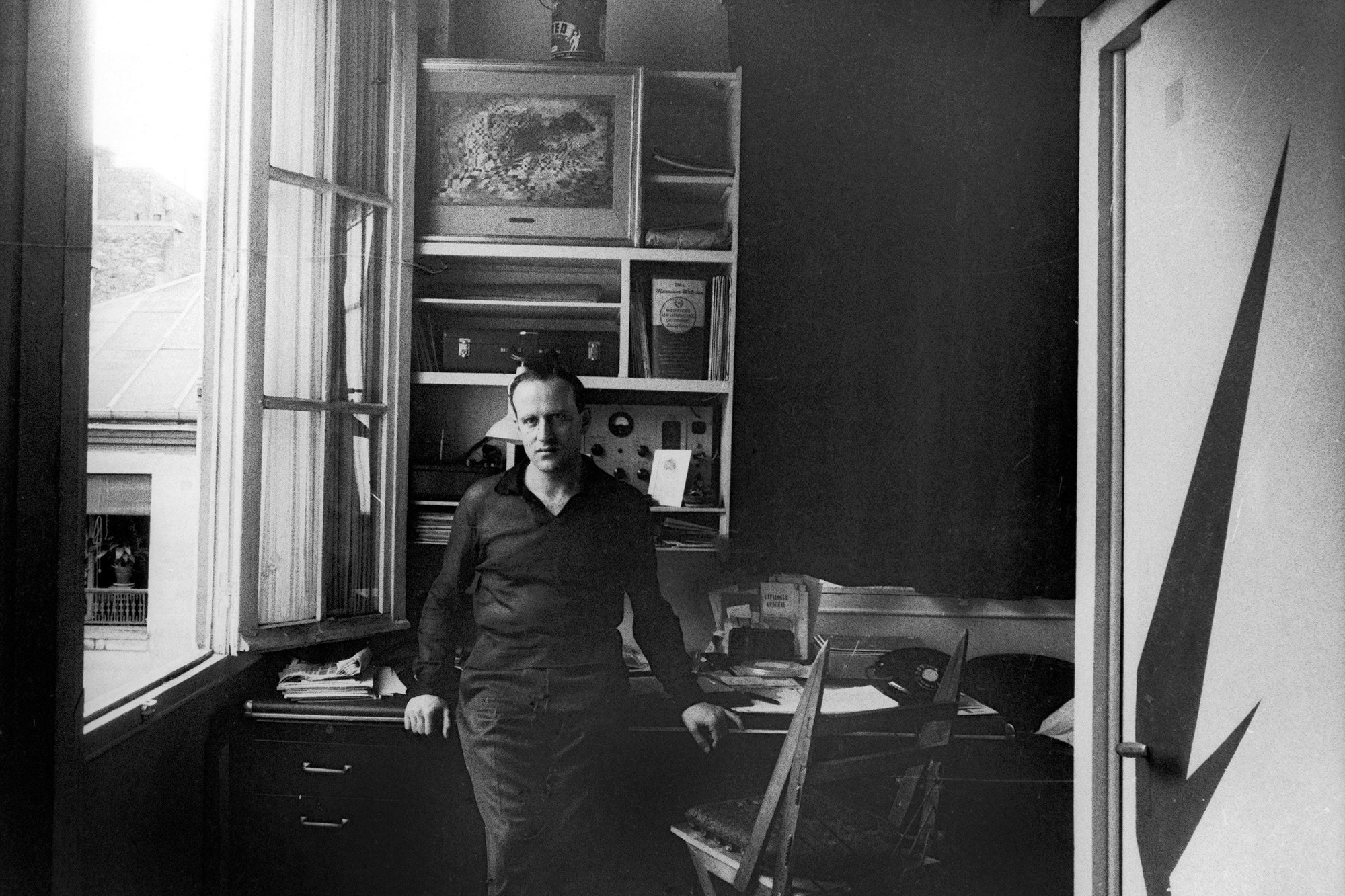
Prince of Saint-Germain

How Boris Vian brought cool to Paris.

By Dan Halpern

In 1946, Boris Vian—novelist, poet, playwright, songwriter, jazz trumpeter, screenwriter, actor, and general scourge of anyone failing to have enough fun in Paris in the postwar era—came to New York. He made the trip from France by submarine, caused a small international incident upon arrival, and had lunch. Then he ventured forth to discover America.

Vian was impressed by the state of American progress, which, he concluded, was far ahead of that of his native country, and not so impressed by American girls, whom he deemed silly things with large behinds. He ran into Hemingway but didn’t recognize him, and failed to say hello. He went to see the Empire State Building, only to discover that it had recently been demolished. He came across the Surrealist André Breton living in Harlem camouflaged as a black man and calling himself Andy. He spent a morning sitting in front of his hotel, hoping to see a lynching, but was disappointed.

Or so he said in “Impressions of America,” one of a series of columns written for Jean-Paul Sartre’s literary review, Les Temps Modernes, under the general title “Chronicles of a Liar.” In fact, Vian never visited the United States, except in his own imagination. But America was one of Vian’s most enduring fascinations, born of a love of jazz and matured by the postwar Continental vogue for all things transatlantic. The sentiment, however, has never remotely been returned; his obscurity in this country is all but perfect. Now it seems that this may be changing. TamTam Books, an enterprising publisher in Los Angeles, has embarked on translating a wide range of Vian’s work, including the scandalous pseudonymous novel that launched his career. Dalkey Archive Press has published the first American edition of his last novel, “Heartsnatcher” ($13.95), and Rizzoli has recently published Vian’s “The Manual of Saint-Germain-des-Prés” ($40), a facetious guidebook to bohemian Paris, left unpublished at his death, in 1959

Vian’s great novel, “L’Écume des Jours,” written in 1946, has become one of the most popular books in all of twentieth-century French literature, making Vian, in France, the sort of hero whom succeeding generations transform into an institution. (The title translates, literally, as “Foam of the Days,” or “Scum of the Days,” though it has been rendered, in various translations, as “Froth on the Daydream,” “Mood Indigo,” and, most recently, “Foam of the Daze.”) But while he was alive Vian was known less for his work than for being the epitome of Left Bank bohemia, standing at the center of its postwar rehabilitation after the trauma of the German Occupation. He was the presiding spirit of intellectual café society, and a close conspirator with Sartre and Simone de Beauvoir. He had no allegiance to existentialism, however. Instead, he offered a single absurd voice, dedicated to pleasure and provocation, to dreams and pure subjectivity. While Albert Camus and Maurice Merleau-Ponty spent their time worrying about choosing the right sort of authentic freedom or struggling against world-historical forces, Vian was more interested in amusing himself. “I am not an existentialist,” he wrote. “For an existentialist, existence precedes essence. For me, there isn’t any such thing as essence.”

“I was born, by chance, on March 10, 1920, at the door of a maternity ward, which was closed due to a strike,” Vian wrote by way of autobiography. “My mother, pregnant by the works of Paul Claudel (whom, to this day, I cannot stand), was in her thirteenth month and could not wait for a legal settlement to the issue.” In fact, he was born, on that day, into a well-to-do bourgeois family living in Ville-d’Avray, a suburb of Paris. The Vians lost most of their money in the crash of 1929, but by the time he was a teen-ager Boris was already committed to not letting anything get in the way of fun: he organized legendary parties in his family garden, with guests dancing into the night.

As a child, Vian was given a diagnosis of a heart problem, and he battled various ailments throughout childhood and adolescence. He often predicted that he would die before he was forty. An early death, and a long-foretold one, became an essential element of his personal mythology: he had no time to waste. He liked to say that one should be a specialist in everything, and he did his best to live up to this dictum.

In his late teens, Vian began listening to Duke Ellington and took up the trumpet. In 1941, his heart condition having kept him out of the war, he began performing with the clarinettist Claude Abadie’s jazz band, which soon was renamed the Abadie-Vian Orchestra. Meanwhile, he did his best to avoid any sort of regular work, though he did spend four years as a civil engineer, employed in the glassworks division of the French standards bureau. (His first assignment there was to find the perfect bottle, appropriately enough: one of his more famous songs is called “I Drink,” and runs, “I drink / the worst cheap wines./It’s disgusting / but it passes the time.”) After the war, he formed his own group, which he called the Little Choir of Saint-Germain of the Feet, and helped transform the underground club Le Tabou into one of the hottest spots in the city. As he wrote in “The Manual of Saint-Germain-des-Prés,” “Rather quickly Le Tabou evolved into a center of organized madness.”

When Vian was twenty-one, he married Michelle Léglise, the daughter of an inventor, and his first attempts at writing were done to amuse her. He began with poetry—a book of sonnets—and finished two novels before writing “Foam of the Days.” He dedicated it to her—“Pour mon bibi”—and the book has the quality of an absurd love letter, a fairy tale for grownups. Colin, a young man possessed of a fortune large enough to avoid any sort of work, and Chick, a young man without fortune who avoids work nonetheless, meet two girls, Chloe and Alise. Colin has a factotum, Nicolas, a sort of Surrealist Jeeves, who serves pâté made out of eels that he finds in the plumbing, carries on conversations with mice, sleeps with teen-age girls, and is Alise’s uncle. When Chick remarks on the resemblance between uncle and niece, noting a particular difference in the general area of the chest, Nicolas answers that, indeed, “she is more developed perpendicularly, if I may be permitted this precision.” Colin and Chloe fall in love, and marry.

But this simple tale is only the canvas onto which Vian’s hyperactive imagination splashes a rich variety of bizarre effects and contemporary allusions. He misses no opportunity to invent new words, or to play with the ambiguities of already existing ones. The book is peppered with pianos that mix cocktails according to which notes are played, rifles that require being fed by human warmth to grow regularly, a philosopher named Jean-Sol Partre, who arrives at his lectures on the back of an elephant, and a visit from a noncommittal Jesus, who refuses to take responsibility for any of it. The book is half a satirical picture of sleek postwar culture—gadgets, car trips, parties—and half a blooming forest of surreal effusions. Here is Colin, off to meet his friends, seeing the world as only he sees it and drawing his own conclusions:

Colin got out of the metro and went up the stairs. He came out on the wrong side and went round the station to orient himself. He took the direction of the wind with a yellow silk handkerchief and the color of the handkerchief, carried away by the wind, landed on a large and irregularly formed building, which then took on the air of the Molitor skating-rink-pool complex. . . . A man in a white sweater opened a changing room for him, accepted a tip for his work that he would use for his leisure because he looked like a liar, and abandoned him in this forgotten dungeon after haphazardly scrawling his initials on a blackened rectangle placed for that purpose inside the cabin. Colin noticed that the man did not have the head of a man, but of a pigeon, and did not understand why he was put to work at the skating rink rather than at the pool.

That a pigeon-headed man is better suited to water than to ice is hardly something that most readers will feel requires no explanation, but Vian isn’t interested in explaining what he sees. He deploys his effects with deadpan bravado, as if they were nothing out of the ordinary. He works in a universe of pure lightness, rising up against what Italo Calvino once called “the weight, the inertia, the opacity of the world,” lifting himself above all laws of gravity out of a certainty that they do not apply to him.

Until, suddenly, they do. For most of the book, Colin and Chick live in a childish world, of girls and jazz and fun, but around them Vian’s surreal sketchbook starts to display an almost giddy cruelty. Vian evokes a mechanized world in which human lives, apart from those of the main characters, seem utterly expendable. At Partre’s lecture, his fans are so crazy to see him that some try to parachute in (a team of firefighters drown them with hoses) and others try to enter the hall through the sewers (security stomps them, and rats eat the survivors).

“Foam of the Days” is a deeply silly piece of work, but, as these macabre flourishes accumulate, it becomes, ultimately, a tragedy, following a descent into despair that is characteristic of Vian’s novels. Soon after her wedding, Chloe falls sick. A water lily is found growing in her lung, and her illness destroys Colin’s world, forcing him into the domain of money and misery and heaviness. Vian’s delight in youth and his sense of its fragility are always intertwined: it is the responsible lives of adults that are nonsensical, and a refusal to grow up that is the only reasonable way to live, but this natural course of things is not allowed. Like Vian, Colin wants nothing more than to play lovely games his whole life, but life will not let him.

“Foam of the Days” was the third novel that Vian wrote, but commercial success eluded him. In the summer of 1946, however, he made a wager with the head of a struggling publishing house that, given a few weeks, he could produce a best-seller. He sequestered himself for the next fifteen days, emerging to announce that he had discovered and translated a novel by an African-American writer named Vernon Sullivan, who had found no American publisher willing to touch it. The book, titled “I Spit on Your Graves,” is a pulpy, grotesque cartoon with a deliberately incendiary plot: a black man, passing for white, murders a pair of wealthy white girls he has seduced after his brother is lynched. Published in French toward the end of 1946, the book initially attracted only minimal notice, until a man named Daniel Parker, the leader of a right-wing morality watchdog group, Cartel d’Action Sociale et Morale, set out to have the book banned and its author, translator, and publisher prosecuted. The book’s notoriety increased further when a deranged man strangled his lover in a hotel room, and the police found a copy of the book by the bed. Passages in which the protagonist strangles a woman had been circled.

Riding on this tide of scandal, “I Spit on Your Graves” became the best-selling book in France in 1947. Amid the uproar, Vian maintained that he was merely the translator—he even published a text of the putative English original—but by the end of 1948 he had to admit that there was no Sullivan, and that he was the book’s sole author; he was eventually fined a hundred thousand francs for his offense to public morals. By then, a new Sullivan novel had appeared, “The Dead All Have the Same Skin,” the story of a white man so repulsed by the fear that he is black that he turns to murder and rape. Vian named him Dan Parker.

The Sullivan novels catapulted Vian to a sudden professional success, but, as he himself acknowledged, they are not very good. They are avowedly trashy, presumably influenced by Vian’s reading of American noir—an influence perhaps comparable to the effect of Hollywood B movies on French postwar cinema. Nonetheless, James Baldwin, in his long essay “The Devil Finds Work,” thought “I Spit on Your Graves” worth taking seriously: “What informs Vian’s book . . . is not sexual fantasy, but rage and pain: that rage and pain which Vian (almost alone) was able to hear in the black American musicians, in the bars, dives, and cellars, of the Paris of those years. . . . Vian would have known something of this from Faulkner, and from Richard Wright, and from Chester Himes, but he heard it in the music, and, indeed, he saw it in the streets.” Baldwin also observed that the book’s “vogue was due partly to the fact that it was presented as Vian’s translation of an American novel. But this vogue was due also to Vian himself, who was one of the most striking figures of a long-ago Saint-Germain des Prés.”

Indeed, from the end of the war, Vian was everywhere you looked—“the Prince of a subterranean kingdom,” his biographer Noël Arnaud called him, “a prince in shirtsleeves with a trumpet for his scepter.” “The Manual of Saint-Germain-des-Prés” portrays a scene filled with poets and painters, movie stars, singers, and philosophers—Jean Cocteau, Jean Genet, Alberto Giacometti, Tristan Tzara, Juliette Gréco, Simone Signoret. De Beauvoir, describing a party at the Vians’, recalled:

When I arrived, everyone had already drunk too much; his wife, Michelle, her long white silk hair falling on her shoulders, was smiling to the angels; Astruc . . . was sleeping on the sofa, shoeless; I also drank valiantly while listening to records imported from America. Around two in the morning Boris offered me a cup of coffee; we sat in the kitchen and until dawn we talked: about his novel, on jazz, on literature, about his profession as an engineer. I found no affectation in his long, white and smooth face, only an extreme gentleness and a kind of stubborn candor. . . . We spoke, and dawn arrived only too quickly. I had the highest appreciation, when I had the chance of enjoying them, for these fleeting moments of eternal friendship.

American culture, discouraged in France by the Vichy regime, held enormous attraction for the postwar generation, and arguably helped France reshape its sense of self after the shame of the Occupation. Vian was at the center of this movement. He wrote a vast amount of jazz criticism, most of it for a journal called Jazz Hot, a publication that was, to the music of the time, something like what Cahiers du Cinéma was, later, to film. He became a leading promoter of American jazz in France, helping organize Paris gigs for Duke Ellington, Charlie Parker, and Miles Davis, and taking visiting musicians to parties, restaurants, and clubs.

He also wrote three more novels as Sullivan and three under his own name, but nothing sold as well as “I Spit on Your Graves,” and, with each failure, Vian’s finances became shakier. His marriage ended, and so did the novels; his entire corpus of fiction was produced in an extraordinary burst of activity between 1946 and 1953. He kept himself busy, however, turning his attention to music, journalism, the theatre, and translations. His collected works, published recently in France, run to fifteen large volumes—six novels under his own name and four under the Sullivan pseudonym, as well as a torrent of plays, poems, short stories, film scripts, opera librettos, cabaret shows, essays, criticism, treatises, pornography, and hundreds of songs. He published writings under twenty-seven different pseudonyms, and translated a great deal of American fiction, including works by Richard Wright, Raymond Chandler, and Ray Bradbury.

Even as his health declined, through the nineteen-fifties, he showed a willingness, indeed a compulsion, to turn his talents to anything. He recorded many of his own songs, and, in 1954, his music restored him to notoriety, when “The Deserter”—an antiwar song written just before France’s defeat in Indochina and on the brink of the French-Algerian war—was banned. He also acted in six movies, most notably in Roger Vadim’s film version of “Les Liaisons Dangereuses.” He rounded out his career as a jazz A. & R. man, first for Philips and then for his friend the record producer Eddie Barclay.

Vian remains difficult to categorize, in part because he both was and wasn’t a creature of his time. For all his cultural centrality in postwar Paris, his books have much less in common with anything his contemporaries were up to than with the linguistic playfulness of writers who preceded him, from Mallarmé to the Surrealists, or, for that matter, with literature that came just after—the practitioners of the nouveau roman who emerged in the late fifties, or the game-playing Oulipo crowd of the sixties. “He lived ahead,” Arnaud wrote. “He was, and remains, on the arc of the future.” “Foam of the Days” was largely ignored on its publication, but it became a totemic book to the revolutionary generation of 1968: by 1962, it had sold only three thousand copies; by 1975, the figure had reached a million.

But by then Vian was long dead. In 1959, as he sat in a movie theatre, watching an adaptation of “I Spit on Your Graves”—a French production that he had wanted nothing to do with and had tried to prevent from being made—his weak heart finally gave out. He was thirty-nine. According to Vian legend, he was able to bear only ten minutes of the movie before collapsing, and his last words were “These guys are supposed to be American? My ass!” Evidently, the Americans in the film were not the Americans Vian had seen in his head, and, for Vian, what he saw in his head was all that counted. In the preface to “Foam of the Days” he wrote, “There are only two things: love in all its forms with pretty girls and the music of New Orleans or Duke Ellington, it’s the same. The rest should disappear, for the rest is ugly, and the brief demonstration that follows gathers all its energy from the fact that the story is entirely true, because I imagined it from one end to the other.” ♦

Source: Prince of Saint-Germain | The New Yorker 
[ Published in the print edition of the December 25, 2006, issue. ]