
Gigot is a 1962 American comedy film directed by Gene Kelly and starring Jackie Gleason. Gigot (Gleason) (the name means “leg of mutton” in French) is a mute Frenchman living in a cellar in the Ménilmontant district of Paris in the 1920s. He ekes out a hand-to-mouth existence as a janitor at his landlady’s apartment building. He is routinely treated with condescension by neighbors and often is made the butt of practical jokes. However, he is a decent and kindhearted fellow, traits not unnoticed by children and the animals he often feeds.
Author: THE HOBBLEDEHOY
Michael Stevenson, aka Dai Bando, Johnny Foreigner, Monsieur Pas De Merde, is a blogger of French and British culture. His blogs "Pas De Merde" and "The Hobbledehoy" have been called "marvelous" by some, and "meh" by others.
Bonnard, Pierre & Marthe trailer (English) – Cannes Film Festival 2023
“Bonnard, Pierre and Marthe” (2024) by Martin Provost with Cécile de France, Vincent Macaigne, Stacy Martin, Anouk Grinberg, André Marcon, Grégoire Leprince-Ringuet is a magnificent biopic as well as a moving love story.
Pierre Bonnard would not be the painter that everyone knows without the enigmatic Marthe who alone occupies almost a third of his work. This is, over the course of half a century, the life of the “painter of happiness”, from the Parisian bourgeoisie, and his relationship with his muse who came from the people. From the moment they met, in 1893, it was love at first sight that lasted until 1942, mixing love, creations, jealousy, deception, reconciliation and marriage.
This is an excellent feature film where everything rings true. There is a good nature in these characters, in the dialogues which simply show the life of this couple from the time of the nabis until Marthe’s madness and death. Cécile de France is breathtaking and Vincent Macaigne is very credible. Visually it is very successful: the director of photography, Guillaume Schiffman, excels and thanks to the computer-generated images we can admire three overall shots of the Parisian skyline as well as two of Rome. Martin Provost offers us a very beautiful film
Le Cinéma
France Gall’s 1968 & The Death Of Yé-Yé

In this month’s subscriber essay, novelist Richard Milward travels back 55 years to the cobblestone-strewn streets of Paris, the release of France Gall’s album 1968, and discovers how a time of political upheaval had a profound impact on the happy-go-lucky genre of yé-yé
In this month’s subscriber essay, novelist Richard Milward travels back 55 years to the cobblestone-strewn streets of Paris, the release of France Gall’s album 1968, and discovers how a time of political upheaval had a profound impact on the happy-go-lucky genre of yé-yé
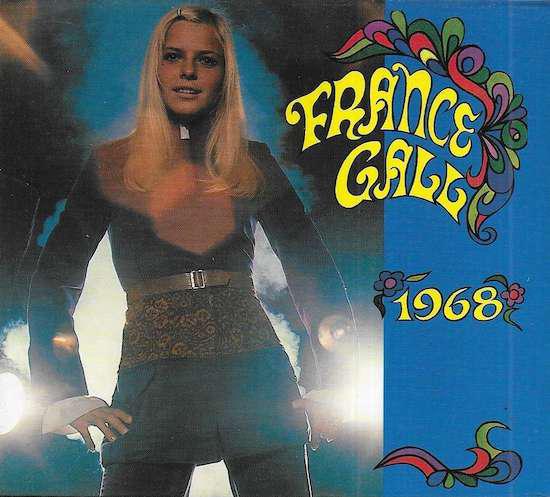
Three weeks before the first cobblestones were thrown in the explosive student revolt in Paris, May 1968, Télévision Suisse Romande broadcast the image of French yé-yé chanteuse France Gall’s small unconscious body carried down the hatch of the Savoie, a paddle steamboat floating on a frosty, overcast Lake Geneva. A strange funeral procession followed her down: a top-hatted illusionist, two muscular dancers dressed in sparkly forest-green bodysuits and white furry gilets, a dour Napoleon lookalike, comic singer Henri Dès in a purple Nehru jacket and pantaloons, and five ballerinas in bejewelled go-go boots and pastel-coloured wigs. A minute later, Gall would be upright again, dancing in the film’s grand psychedelic finale – but, with intense social and political upheaval looming, her mock death would unknowingly mark the symbolic death of yé-yé, the playful bubblegum pop movement that made Gall, Françoise Hardy, Sylvie Vartan, Chantal Goya, Annie Philippe and so many others famous between 1962 and 1968.
Gall’s mock funeral appeared in Gallantly, a 33-minute nautical caper promoting her seventh LP, 1968. Released in the first weeks of that year, the LP’s title and free-flowing flowery artwork seemed to promise 1968 would continue the carefree, loved-up hippy ideals of 1967 – and likewise the music within repeated many of the tropes of the Summer of Love sound: sitar-heavy exotica (‘Chanson Indienne’), chamber pop (‘Toi Que Je Veux’), North African slithering scales (‘Nefertiti’), hyperactive psych (‘Teenie Weenie Boppie’), cartoonish flute-led lounge jazz (‘Les Yeux Bleus’). Lyrically the LP is equally haphazard, taking in the perils of LSD, the pleasures of mini golf, Queen Nefertiti’s fragrant bandages, an insatiable flesh-eating giant, Anglo-Gallic dispute over the Channel Tunnel, the vicious love of a baby shark. While not wholly cohesive, 1968 is held together by Gall’s sweetly emphatic vocals: more than any other yé-yé singer, her sincerity and versatility enabled her to skip from genre to genre without ever tripping into parody or mawkishness. Throughout the mid 1960s, she was the embodiment of youthful optimism, consistently selling hundreds of thousands of records – but, by the time the stones and Molotov cocktails rained down on the Latin Quarter, she was no longer a fixture on French TV, her sales had slumped, her career seemingly irrelevant to this new, politicised youth [ . . . ]
Read Full Article at The Quietus: The Quietus | Features | Subscriber Area | Richard Milward On France Gall’s 1968 & The Death Of Yé-Yé
Watch this fascinating interview with “Sapiens” author Yuval Noah Harari
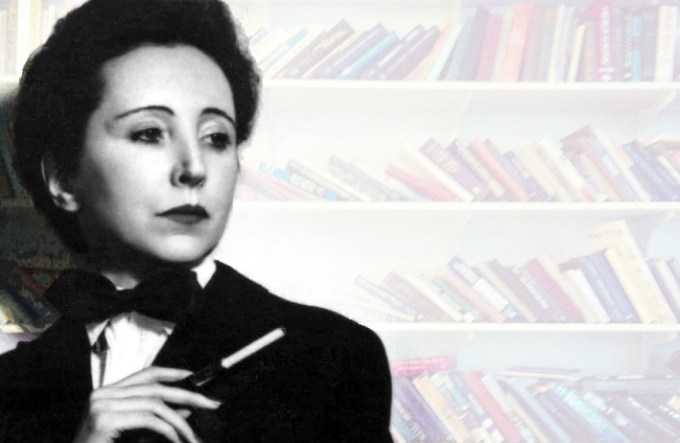
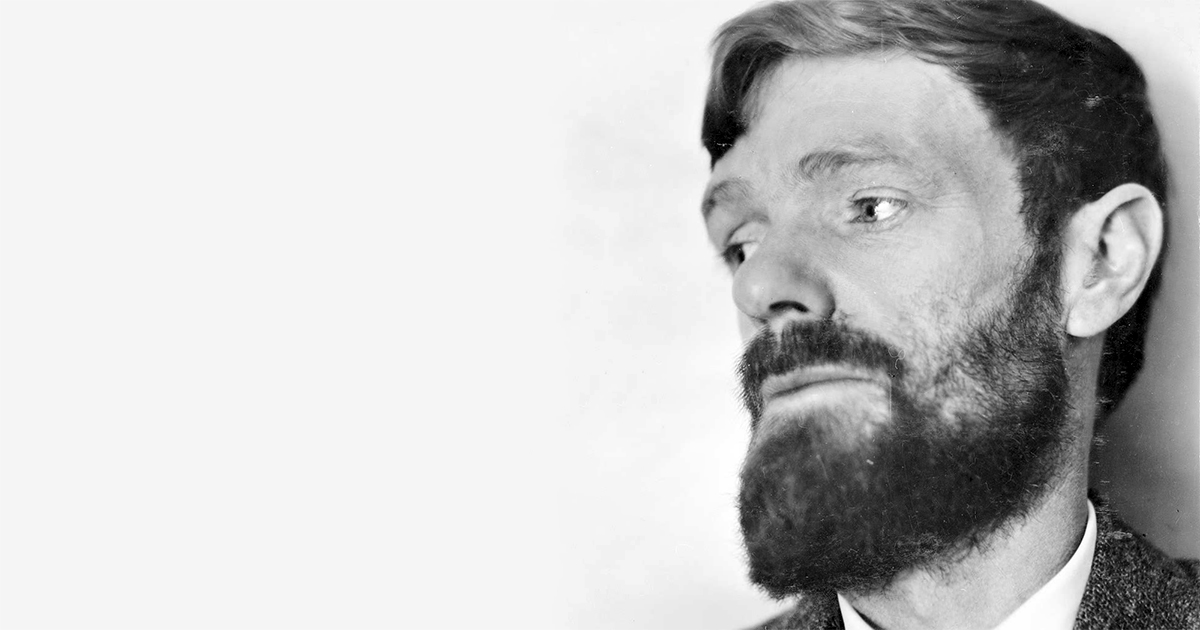
How to Be Un-Dead: Anaïs Nin and D.H. Lawrence on the Key to Living Fully
By Maria Popova
“Life is a process of becoming, a combination of states we have to go through. Where people fail is that they wish to elect a state and remain in it. This is a kind of death.”
Nin herself — a woman uncommonly liberated from the common traps of convention, control, and self-consciousness — took up the spiritual mechanics of this paradox in her first published book, D. H. Lawrence: An Unprofessional Study (public library), composed when she was still in her twenties.
With an eye to D.H. Lawrence (September 11, 1885–March 2, 1930) and his “philosophy that was against division,” his “plea for whole vision,” she writes:
When the realization came to the moderns of the importance of vitality and warmth, they willed the warmth with their minds. But Lawrence, with the terrible flair of the genius, sensed that a mere mental conjuring of the elemental was a perversion… Lawrence believed that the feelings of the body, from its most extreme impulses to its smallest gesture, are the warm root for true vision, and from that warm root can we truly grow. The livingness of the body was natural; the interference of the mind had created divisions, the consciousness of wrong-doing or well-doing.
In a sentiment central to my own animating ethos, she adds:
Life is a process of becoming, a combination of states we have to go through. Where people fail is that they wish to elect a state and remain in it. This is a kind of death.
It was Lawrence’s own writing that awakened in her this awareness of ongoingness and the urgency of total aliveness — the way “livingness is the axis of his world, the light, the gravitation, and electromagnetism of his world.”
In his 1924 novel The Boy in the Bush, Lawrence makes a stunning case for the indivisibility of it all — the beauty and the sorrow, the ache and the astonishment:
All real living hurts as well as fulfils. Happiness comes when we have lived and have a respite for sheer forgetting. Happiness, in the vulgar sense, is just a holiday experience. The life-long happiness lies in being used by life; hurt by life, driven and goaded by life, replenished and overjoyed with life, fighting for life’s sake. That is real happiness. In the undergoing, a large part of it is pain.
This was the foundational philosophy of Lawrence’s worldview — the pulse-beat that makes his writing so resonant and eternally alive, the way all great spiritual texts are. He distilled this view in an especially beautiful passage from his 1923 novel Kangaroo, reckoning with the most universal reality of life — the reality we spend our lives fighting, yet the one that peeks through in all of our greatest works of art and highest triumphs of the creative spirit. Echoing Whitman’s defense of our inner multitudes, often at odds with each other, he writes in an era when every woman was a “man” purely as a matter of linguistic convention:
If a man loves life, and feels the sacredness and mystery of life, then he knows that life is full of strange and subtle and even conflicting imperatives. And a wise man learns to recognize the imperatives as they arise — or nearly so — and to obey. But most men bruise themselves to death trying to fight and overcome their own, new, life-born needs, life’s ever strange imperatives. The secret of all life is obedience: obedience to the urge that arises in the soul, the urge that is life itself, urging us to new gestures, new embraces, new emotions, new combinations, new creations.
In the same epoch when Hermann Hesse so beautifully defended the wisdom of the inner voice, Lawrence’s protagonist makes a passionate case for listening to the song of life as it reverberates through the singular cathedral of each self, yours and mine, as it did for Nin and Lawrence and every other great mind long sung out of existence:
I offer no creed. I offer myself, my heart of wisdom, strange warm cavern where the voice of the oracle steams in from the unknown; I offer my consciousness, which hears the voice; and I offer my mind and my will, for the battle against every obstacle to respond to the voice of life.
Complement with Mary Oliver on how to live with maximum aliveness and Henry Miller on the measure of a life well lived, then revisit Nin on the meaning of maturity and how reading awakens us from the trance of near-living.
Source: How to Be Un-Dead: Anaïs Nin and D.H. Lawrence on the Key to Living Fully – The Marginalian

