Bastille Day: How literary writings see the French Revolution

The storming of the Bastille prison on July 14, 1789, is seen as a defining event in the French Revolution. But how does the revolution affect writers, poets, painters and other creative minds?

By Mohammad Asim Siddiqui

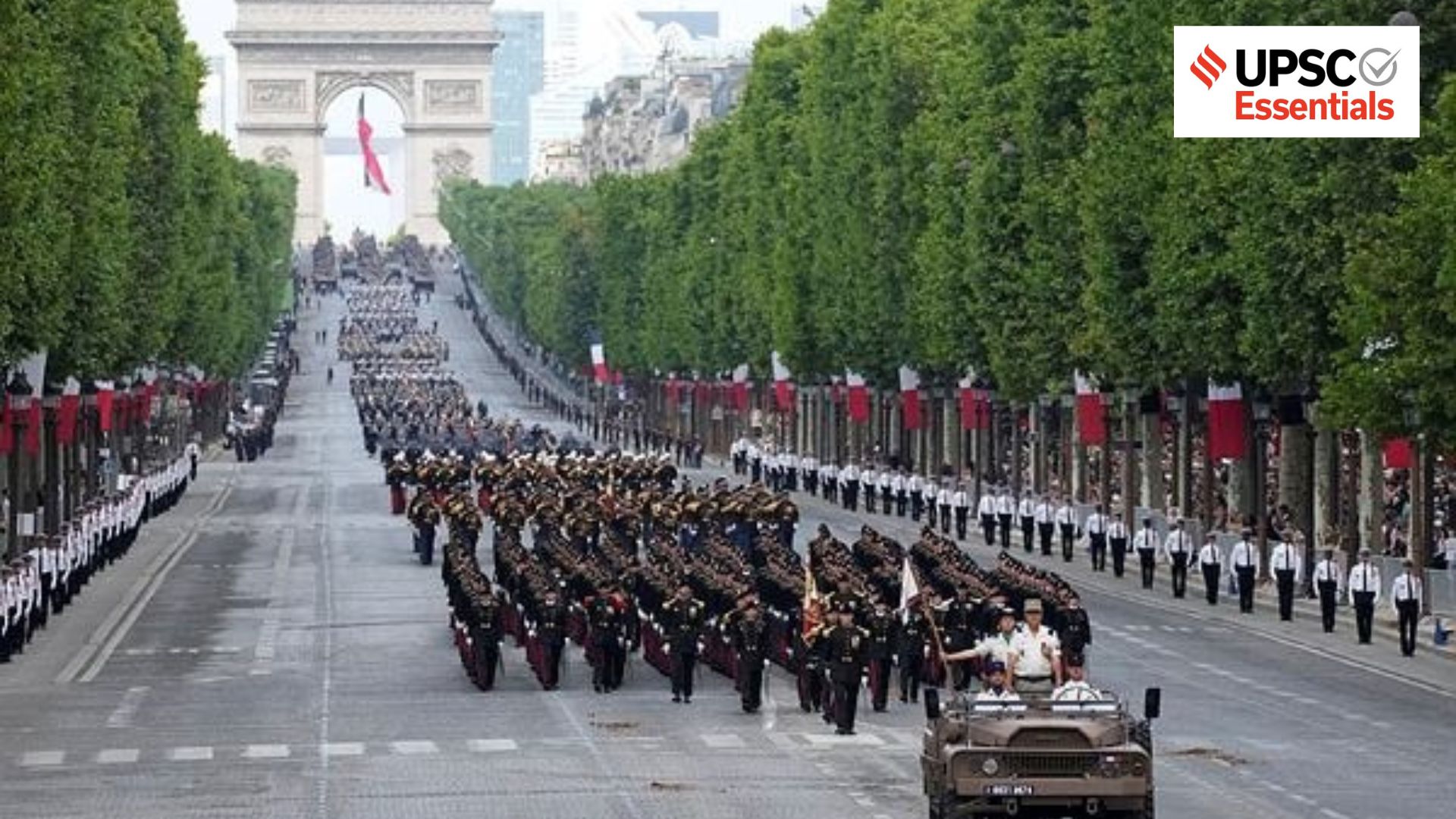
France celebrates Bastille Day to commemorate the storming of the Bastille prison on July 14, 1789, a defining event in the French Revolution. The Bastille was originally built as a castle in Paris in the 14th century to protect the city. But it was later used as a prison and came to symbolise the brute and arbitrary powers of the king.

The historiography of the French Revolution offers varied perspectives on the events, with some celebrating its revolutionary character and others highlighting the violence that accompanied it. For instance, British historian Eric Hobsbawm in Echoes of the Marseillaise: Two Centuries Look Back on the French Revolution (1990) focuses on the positive takeaways of the Revolution – Liberté, Égalité, Fraternité (liberty, equality and fraternity), the spirit of the Enlightenment, and the overthrow of aristocracy by the middle class.

He also laments many historians’ and writers’ emphasis on the violence and destruction associated with the Revolution. Hobsbawm considers historian Simon Schama’s bestselling book Citizens: A Chronicle of the French Revolution (1989), which highlights the violent nature of the Revolution through an engaging narrative. He sees it as part of a tradition in England established by Edmund Burke’s Reflections on the Revolution in France (1790), Charles Dickens’ A Tale of Two Cities (1859), and many other popular works.

But how do Romantic poets like William Blake, William Wordsworth, and P B Shelley depict the French Revolution? Why does Albert Elmer Hancock say that the French experience “humanised” Wordsworth? Why does Jane Austen deliberately avoid discussing directly the events of the French Revolution that so disturbed her world, but incorporate many of her responses to those events in her writing? Continue reading “Bastille Day: How literary writings see the French Revolution”

Culture under lockdown in Paris: When the opera comes to you

In this edition we discover a very special type of concert. With venues closed due to Covid-19, classical musicians are bringing their art to the courtyards of Parisians, as our team reports. We also look at several symbols of France, including the famous “baguette”. We see what makes it so special and why the French are campaigning for it to be included in the UNESCO intangible cultural heritage list. Meanwhile, the Château de Versailles, another symbol of French culture and history, is welcoming back the luxurious desk of Louis XVI after two years of restoration. 

FRANCE 24

‘No culture, no future’: French film awards turn into protest over Covid closures

France’s annual celebration of cinema, Les Césars, on Friday became the stage for venting frustrations over the months-long shutdown of theatres. Actress Corinne Masiero stole the limelight when she stripped naked with the words “No culture, no future” written across her front as she presented the costume award.

The mood was set from the opening monologue, as mistress of ceremonies Marina Fois launched a scathing attack on Culture Minister Roselyne Bachelot.

“The minister hasn’t done nothing… Madame Bachelot, you released a book with your recipe for pasta and gorgonzola,” the actress joked, before striking a sad note to conclude: “What we miss is what unites us, the emotions that we experience together.”

Bachelot was reportedly present in the Olympia venue in Paris for the 46th edition, but the television channel Canal+ was instructed not to zoom in on her.

Several participants at the César Awards used the event as a platform to confront the government over its decision to keep cinemas shut since October, even as most other businesses have reopened.

“My children can go to Zara but not the cinema… it’s incomprehensible,” said Stephane Demoustier as he picked up the Cesar for best screenplay for “The Girl With a Bracelet”.


For her part, actress Corinne Masiero turned her message into performance art. She wore a bloody donkey costume, before stripping naked – to reveal messages painted on her body – referring to how cinema industry workers see themselves “stripped” of work in the face of the pandemic.

On her back were the words “Give us back our art Jean,” directed at Prime Minister Jean Castex, while on her chest were the words “No culture no future”.

The country has seen mounting protests in recent days over the closure of cultural sites, with several theatres occupied by activists and students.

Greater diversity

The big winner on the night was Adieu les Cons (Bye Bye Morons), a comedy drama about a seriously ill woman searching for her long-lost child, which took home seven awards including best film and best director for Albert Dupontel.

Continue reading “‘No culture, no future’: French film awards turn into protest over Covid closures”