
Category: Music
France Gall’s 1968 & The Death Of Yé-Yé

In this month’s subscriber essay, novelist Richard Milward travels back 55 years to the cobblestone-strewn streets of Paris, the release of France Gall’s album 1968, and discovers how a time of political upheaval had a profound impact on the happy-go-lucky genre of yé-yé
In this month’s subscriber essay, novelist Richard Milward travels back 55 years to the cobblestone-strewn streets of Paris, the release of France Gall’s album 1968, and discovers how a time of political upheaval had a profound impact on the happy-go-lucky genre of yé-yé
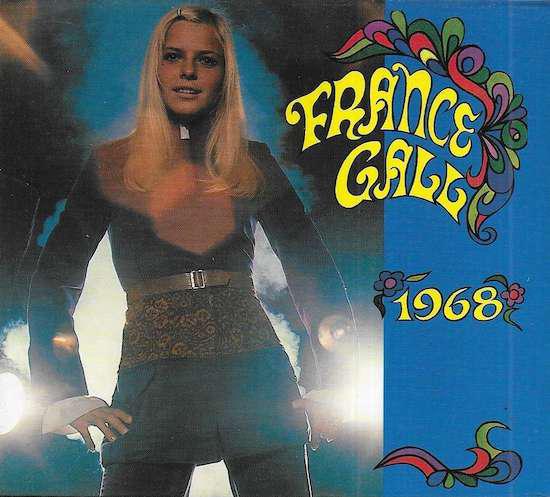
Three weeks before the first cobblestones were thrown in the explosive student revolt in Paris, May 1968, Télévision Suisse Romande broadcast the image of French yé-yé chanteuse France Gall’s small unconscious body carried down the hatch of the Savoie, a paddle steamboat floating on a frosty, overcast Lake Geneva. A strange funeral procession followed her down: a top-hatted illusionist, two muscular dancers dressed in sparkly forest-green bodysuits and white furry gilets, a dour Napoleon lookalike, comic singer Henri Dès in a purple Nehru jacket and pantaloons, and five ballerinas in bejewelled go-go boots and pastel-coloured wigs. A minute later, Gall would be upright again, dancing in the film’s grand psychedelic finale – but, with intense social and political upheaval looming, her mock death would unknowingly mark the symbolic death of yé-yé, the playful bubblegum pop movement that made Gall, Françoise Hardy, Sylvie Vartan, Chantal Goya, Annie Philippe and so many others famous between 1962 and 1968.
Gall’s mock funeral appeared in Gallantly, a 33-minute nautical caper promoting her seventh LP, 1968. Released in the first weeks of that year, the LP’s title and free-flowing flowery artwork seemed to promise 1968 would continue the carefree, loved-up hippy ideals of 1967 – and likewise the music within repeated many of the tropes of the Summer of Love sound: sitar-heavy exotica (‘Chanson Indienne’), chamber pop (‘Toi Que Je Veux’), North African slithering scales (‘Nefertiti’), hyperactive psych (‘Teenie Weenie Boppie’), cartoonish flute-led lounge jazz (‘Les Yeux Bleus’). Lyrically the LP is equally haphazard, taking in the perils of LSD, the pleasures of mini golf, Queen Nefertiti’s fragrant bandages, an insatiable flesh-eating giant, Anglo-Gallic dispute over the Channel Tunnel, the vicious love of a baby shark. While not wholly cohesive, 1968 is held together by Gall’s sweetly emphatic vocals: more than any other yé-yé singer, her sincerity and versatility enabled her to skip from genre to genre without ever tripping into parody or mawkishness. Throughout the mid 1960s, she was the embodiment of youthful optimism, consistently selling hundreds of thousands of records – but, by the time the stones and Molotov cocktails rained down on the Latin Quarter, she was no longer a fixture on French TV, her sales had slumped, her career seemingly irrelevant to this new, politicised youth [ . . . ]
Read Full Article at The Quietus: The Quietus | Features | Subscriber Area | Richard Milward On France Gall’s 1968 & The Death Of Yé-Yé
Danny Kaye with Mirelle Mathieu. Brilliant!
Francoise Hardy – Pas Gentille 1965
Sissoko, Segal, Parisien, Peirani: Les Égarés review – an awesome foursome
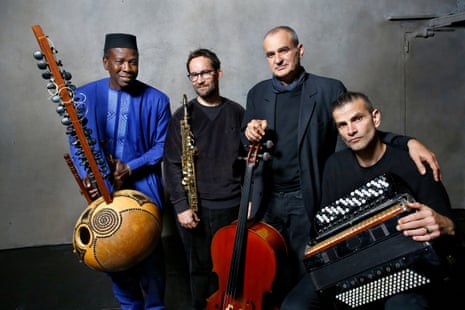
This stellar quartet channel a multitude of influences to irresistible effect
By John Fordham
The French cellist Vincent Segal is one of those peripatetic players who shows up across the musical frontier: on albums by Sting or “barefoot diva” Cesária Évora, on an arthouse film score or a dancefloor remix of Bumcello, the duo he formed with drummer Cyril Atef almost a quarter of a century ago. Segal’s most feted collaboration remains with Malian kora master Ballaké Sissoko on Chamber Music (2009) and Musique de Nuit (2015), where they pulled the traditions of Africa and Europe into a seductive neoclassical fusion.
Here, the pair are joined by accordionist Vincent Peirani and soprano sax player Émile Parisien on a venture that proves just as irresistible, even if its title translates as The Lost. It’s a sprightly, restless set, with Segal’s plucked cello providing a thrumming heartbeat to what is a communal, improvisational approach. There are reflective pieces – Sissoko’s Ta Nyé and Banja bookend the record in flurries of kora – but more typical is the group’s reworking of the late Joe Zawinul’s Orient Express, while on Esperanza the quartet seem to be channelling a drunken Colombian cumbia. Although inflected by various accents – there’s a Balkan feel to Izao, a touch of John Coltrane to Parisien’s sax – this is truly fusion music.
Source: Sissoko Segal Parisien Peirani: Les Égarés review – an awesome foursome | Music | The Guardian
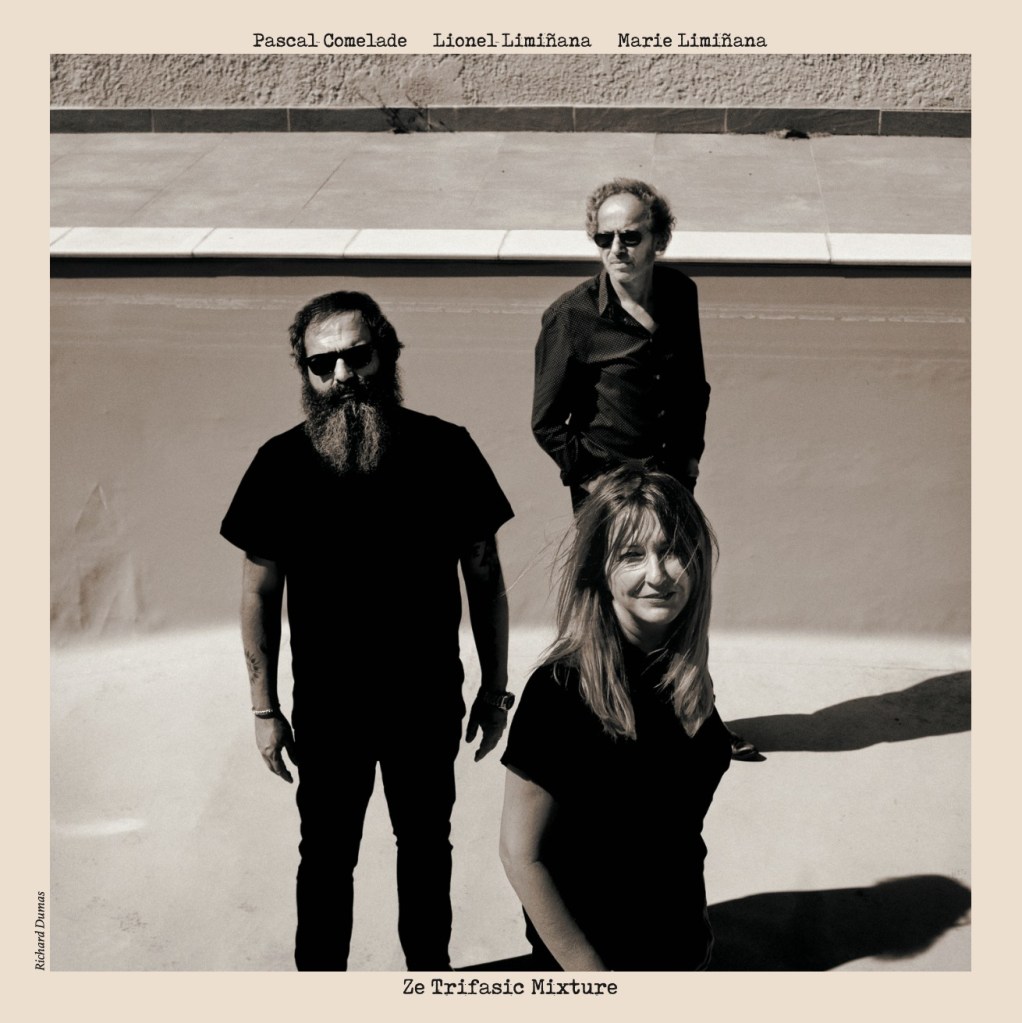
Liminanas
 Pas De Merde