
A great clip from the 1938 feature film La Route Enchantée. Charles Trenet bears such an uncanny resemblance to Harpo Marx, one has to wonder if the look was intentional. Of course, Harpo never spoke on film, nevermind sing. Here Trenet, aka “Le Fou Chantant” sings the film’s title song.
Category: Movies
Christian Clavier defends With open arms in the face of the controversy aroused by this comedy
” With open arms is not a stack of clichés,” said Christian Clavier on the set of ” C to you “. The French actor defended the last comedy of Philippe de Chauveron, director of What did we do to the Good God? , In front of the tidal wave of negative reactions that had caused the trailer and the previews of the film.
The feature film features a “bobo of the left caviar” (dixit Clavier) which welcomes a family of Roma often described as “ugly and dirty”. The polemic had immediately broke out on social networks. Internet users have expressed their contempt for this feature, accused of advocating racism and discrimination against the Roma community. Accusations that the editorial staff of Le Figaro can not attest for the simple reason that he was denied access to the press screenings of the film [ . . . ] Read More at: Christian Clavier defends With open arms in the face of the controversy aroused by this comedy
[Youtube https://www.youtube.com/watch?v=acSGH1_ng88%5D
Verlaine’s Chanson d’automne

“Chanson d’automne” (“Autumn Song”) is a poem by Paul Verlaine, one of the best known in the French language. It is included in Verlaine’s first collection, Poèmes saturniens, published in 1866 (see 1866 in poetry). The poem forms part of the “Paysages tristes” (“Sad landscapes”) section of the collection
Poem: “Chanson d’Automne” by Paul Verlaine
Charles Trenet “Verlaine”
The legendary French crooner Charles Trenet added music to Verlaine’s poem and recorded the song twice, first in the early 1940’s and again in the 1950s with a slower arrangement adding a string section. Here’s the original jazz version.
Word War II Resistance Code
The song’s lyrics include the line “les sanglots longues des violons de l’automne blessent mon coeur d’un langueur monotone” which translates as “the long sobs of the violins of autumn wound my heart with a monotonous languor”.
These words were used in 1944 to form the code phrases that alerted the Resistance to the Allied invasion of France, and were depicted in the earlier epic World War II movie The Longest Day (1962).
List of French TV Series Available on VOD Platforms

The Film Department has prepared a list of some of the best French TV series available on VOD platforms as Amazon, Hulu and Netflix. With themes like sex (THE BORGIAS, MAISON CLOSE and VERSAILLES), murder, suspense (BRAQUO, THE BUREAU and WITNESSES), humor (CALL MY AGENT), and art, they are definitely worth a watch!
Source: List of French TV Series Available on VOD Platforms | French Culture
Claude Lelouch: “The most beautiful city in the world is Paris!”
 INTERVIEW – On March 15, 2017, the director of A Man and a Woman releases his new film, Everyone’s Life. In his life as in his cinema, Claude Lelouch never stopped wanting to escape from the capital … to better find it. Meeting in his HQ, avenue Hoche.
Read Full Story: Claude Lelouch: “The most beautiful city in the world, it’s Paris!”
A Map of Every Amelie Filming Location in Real Life (in Paris)
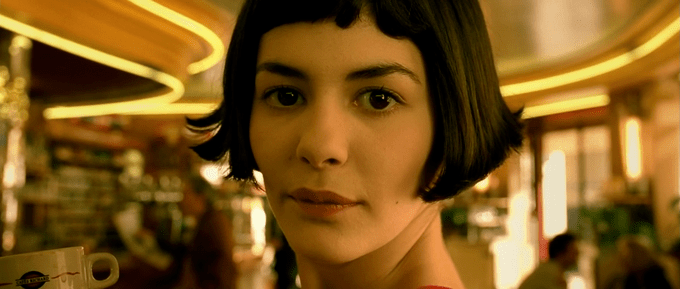
Amelie (Le fabuleux destin d’Amélie Poulain in French), directed by Jean-Pierre Jeunet, became a French classic with worldwide fame. The romantic comedy shows the history of Amélie Poulain (Audrey Tautou), a waitress in Montmartre who keeps watching the people around her. She aspires to do some good around her and finds a small toy box and decides to find its owner. On her way, she will meet many characters, always with Yann Tiersen music as the original soundtrack, and she will go through many places in Paris you must visit.
If you already know this movie, get ready to follow Amélie Poulain’s steps. If you don’t, watch it before you even read this article, and you shall see a difference in these mythical places.
Read Full Story: A Map of Every Amelie Filming Location in Real Life (in Paris)

