Opens in US August 31: “A Paris Education”  

Etienne (Andranic Manet), a serious and impressionable shaggy-haired young cinephile, leaves behind his steady girlfriend (Diane Rouxel) in Lyon to study film in Paris. Settling into a dingy flat with a rotating cast of roommates, he immerses himself in a bohemian world of artists, intellectuals, and fellow film geeks who excitedly share their passion for Bresson, Ford, and obscure Russian directors. It’s a seemingly idyllic life of the mind—until more complicated matters of the flesh, as well as jealous creativity, intrude. Shooting in timeless black and white and interweaving references to philosophy, music, and cinema—from Pascal to Mahler to Parajanov—Jean Paul Civeyrac conjures a bittersweet ode to the heady days of student life that evokes the films of the French New Wave

A Paris Education (Mes provinciales)
Written and directed by: Jean Paul Civeyrac
Cast: Andranic Manet, Diane Rouxel, Jenna Thia
Year: 2018
Runtime: 136 mins
In French with English subtitles
Released by: Kino Lorber

Opens in New York on Friday, August 31 at Lincoln Center

Source FRENCH CULTURE: A Paris Education | French Culture

Gauguin Review

The conceptual dullness of the new French biopic Gauguin: Voyage to Tahiti hit me especially hard, since I was fired up to see those Tahitian pictures after a June trip to Paris and the Musee D’Orsay, where many of them reside. Have you been to a highly-touristed art museum lately? It used to be that if you wanted to get close to study the brush strokes it was a guard who’d ask you to step back. Now, it’s people who yell at you for blocking their iPhone photos. The museum’s Postimpressionist area would be a great place to get lost, but, like Paul Gauguin, it ends up making you want to flee civilization for shady pandanus glades halfway around the world — preferably without Gauguin’s raging syphilis.

The syphilis isn’t mentioned by name in Gauguin: Voyage to Tahiti, although Gauguin has an unspecified cough that will obviously be fatal, because in biopics there is no such thing as an inconsequential cough. But as played by the febrile Vincent Cassel, this Gauguin seems too tightly wound for sex. The image of Gauguin the voluptuary eating and screwing and painting naked Tahitian women might be a cliché, but the director, Edouard Deluc, has gone to the other extreme. Although the script is based on Gauguin’s own writing, the film presents him as such a gloomy Gus that he might have swapped souls with his onetime pal Van Gogh.

The movie opens in France, where Gauguin is stricken that his oh-so-proper wife won’t come to Tahiti with the kids — though I imagine she’d have put a crimp in his lifestyle if she had. He does need her family money, since rich people are finding his latest works a mite unruly. He’s also dismayed that none of his fellow painters or acolytes will abandon Paris for distant French Colonial paradises. What Deluc gets right is that Gauguin, like most great artists but few in great-artist biopics, spends most of his time not carousing but sitting in front of canvases. What doesn’t come through is how entwined in Tahiti Gauguin’s various impulses were. The artist tells a doctor friend, “I paint and draw all day long and live in harmony with everything around me,” but you don’t see Buddhist oneness in Cassel’s face, especially as he ages into someone resembling Fagin. Non-transcendental, too, are composer Warren Ellis’s somber cellos and violins [. . . ]

Continue at THE VULTURE: Gauguin Review

DVD/Blu-ray: Let the Sunshine In

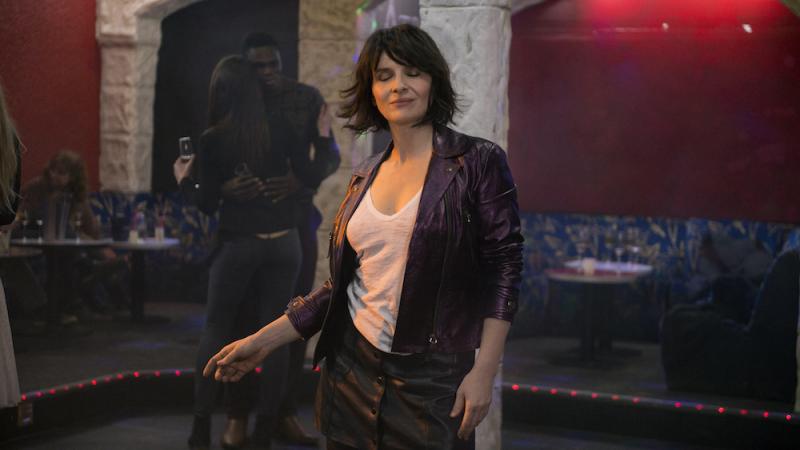
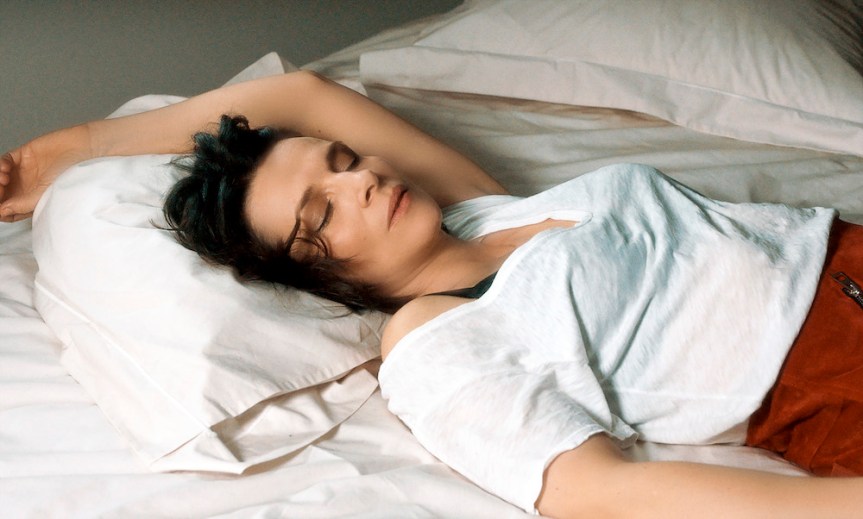
Un beau soleil intérieur, the film’s French title, is part of a piece of advice given by a clairvoyant (Gérard Depardieu, in a surprise 15-minute cameo at the end of the movie). Try to find the beautiful sun within, he tells Isabelle (a glowing Juliette Binoche) and be “open” (he uses the English word). His huge, dented face seems to take up most of the screen. Isabelle, a lonely, recently divorced artist, who wants him to tell her which of her potential lovers is the best bet, laps his words up tearfully. Any port in a storm.

Whether you enjoy this film by revered director Claire Denis (Beau Travail, White Material; High Life, her first English-language movie, co-starring Binoche and Robert Pattinson, comes out later this year) depends on your tolerance for middle-aged Parisian bobos (bohemian-bourgeois) who flit from gallery to restaurant to loft, having hesitant, repetitive conversations that go nowhere. “What do you want me to say?” “I don’t know,” is a typical example. “It feels so good to stop all this talking,” says Isabelle as she falls into bed with an actor (Nicolas Duvauchelle). You have to agree.

It’s not quite a comedy, not quite a parody; perhaps it’s a meta romcom. The performances are impressive and there is, no doubt, immense skill in Denis’s elliptical, naturalistic, fragmentary direction. This non-linear approach must owe something to co-scriptwriter and collaborator Christine Angot, whose incantatory repetition in her plays and novels is her trademark style. But it’s just that – like life, perhaps – this plotlessness doesn’t result in anything very satisfying. Isabelle, volatile and seductive in stiletto-heeled thigh-high boots, goes from one unsuitable man to the next, swayed by the breeze, and we get to know none of them. As for her ten-year-old daughter, waiting in the car for her dad to finish arguing with Isabelle over his right to keep the keys to their apartment, we see her for about ten seconds [ . . . ]

Continue reading at THE ARTS DESK : DVD/Blu-ray: Let the Sunshine In

Chanson du Jour: Theme from Midnight Cowboy

John Barry, who supervised the music and composed the score for Midnight Cowboy, won a Grammy for Best Instrumental Theme. Fred Neil’s song “Everybody’s Talkin'” won a Grammy Award for Best Male Pop Vocal Performance for Harry Nilsson.

Bob Dylan wrote “Lay Lady Lay” to serve as the theme song, but did not finish it in time.T he movie’s main theme, “Midnight Cowboy”, featured harmonica by Toots Thielemans.

Among the film soundtracks that Thielemans recorded are The Pawnbroker (1964), Midnight Cowboy (1969), Cinderella Liberty (1973), The Sugarland Express (1974) and Looking for Mr. Goodbar (1977). His harmonica theme song for the popular Sesame Street TV show was heard for 40 years.

“Toots” played in both Benny Goodman’s and Charlie Parker’s bands, and on recordings by Edith Piaf, Peggy Lee, and Billy Joel (“Leave a Tender Moment Alone”). He passed away in 2016.

Meet the French film star being compared to Greta Gerwig and Winona Ryder

Laetitia Dosch
We meet Laetitia Dosch, the dazzling star of new movie Jeune femme

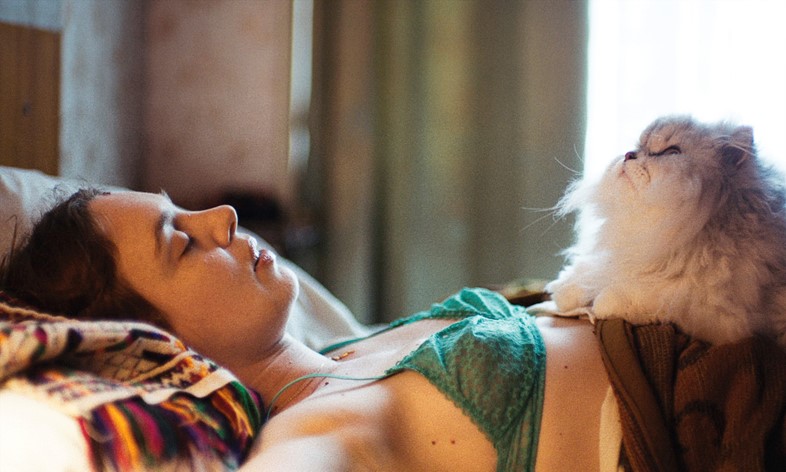
When we meet her, Paula’s got nothing, just a bag of clothes and a former lover’s cat. Paris is supposed to be romantic, but not in Jeune femme. Fresh from a breakup, the titular “young girl” finds herself jobless, homeless, and broke in an overpriced city. Not for long, admittedly. Paula, as played by Laetitia Dosch, is an impulsive trainwreck, the kind of overgrown child who’ll talk her way in and out of trouble within the same breath. Then as the escapades escalate, you start to wonder: am I appalled, impressed, or concerned with how much this all resonates?

The directorial debut of Léonor Serraille, Jeune femme scooped up the Camera d’Or at last year’s Cannes Film Festival, spotlighting a protagonist who survives poverty through sheer improvisation. By twisting the truth, Paula swiftly lands employment as a lingerie salesperson and part-time nanny. Mistaken by a stranger for a long-lost friend, the 31-year-old chancer plays along – and scores free accommodation as a reward. Later on, she admits, “I’m nostalgic for things I haven’t done yet.” In that sense, Jeune femmeshares parallels with Frances Ha – you know, if Frances Ha was French, downbeat, and concerned about hidden homelessness.

“It’s weird to talk about Jeune femme here,” Dosch concedes as we sit down in Knightsbridge’s Bulgari Hotel. “The film has certain moral values. It’s about the situation in Paris, about loneliness, about not having money. And to talk about it in a beautiful hotel is weird.”

Dosch has been in London for over a month now. She’s leading a stage production of The Malady of Death, and is considering a permanent switch. “Paris depresses me,” she sighs. “If you want to live there, you have to be selfish, or else you’re hurt every 10 seconds. Léonor wanted to show the disillusion and beauty of it. Paris is full of dreams, but it’s a harsh city.” She adds, “It was snowing there a few weeks ago. It was so cold. There are immigrants in tents, hundreds of them. Then the police came and took the tents away. It’s terrible.”

“Paris depresses me. If you want to live there, you have to be selfish, or else you’re hurt every 10 seconds” – Laetitia Dosch

On her CV, Dosch boasts an extensive filmography, including collaborations with Catherine Corsini and Justine Triet. However, Serraille made her casting decision after a Google search conjured up an inexplicably wide variety of images. “Léonor thought I couldn’t really be described physically,” Dosch explains. “Sometimes I was beautiful, sometimes not. Sometimes I looked fat, sometimes too slim. She didn’t know who I was.” Is that a compliment? “The first time, it’s a compliment,” she laughs. “If it happens all the time…”

The pair not only watched Mike Leigh’s Naked in preparation, they even emulated the director’s rehearsal methods. “We talked a lot. We improvised. We took the time to know each other and build the character. We built a vision of a woman we wanted to see onscreen now. This film is an answer to what’s happening in French cinema: the way women are treated, the way they’re always being sweet, always asking stupid things.”

I admittedly went into Jeune femme expecting something like Cédric Klapisch’s 1996 comedy When the Cat’s Away, another Parisian tale about a young woman’s feline-related antics. But Jeune femme, a film with considerably more bite and anger, delves into subjects such as mental health, sexual violence and abortion. So, really, such comparisons are unhelpful. Still, as I do in my daily life, I bring up Frances Ha. I mention that the journalist who spoke to Dosch before me wrote in his review that she’s “France’s answer to Greta Gerwig”.

“He did?” she says. “Well, it’s a good comparison. But actually, we were afraid of Paula looking too much like Frances, too much like a wacky girl. We thought Paula should be somewhere between Frances Ha and Sue Lost in Manhattan. She’s having to deal with keeping her child or not, finding a job, concrete things.”

Serraille has instead cited Winona Ryder, not Gerwig, as an inspiration for Paula. Dosch mulls it over. “I understand it. Paula was a muse, and she isn’t anymore. She has the same rage as Winona Ryder in Black Swan.” She then jokes, “And Winona Ryder also used to steal things, like Paula.”

“I understand it. Paula was a muse, and she isn’t anymore. She has the same rage as Winona Ryder in Black Swan” – Laetitia Dosch

Paula’s major theft, though, is her ex-boyfriend’s cat, an act borne out of spite. The creature, it turns out, is actually a minor celebrity. “He’s very popular in gay calendars! I love the cat. We tried to make a poster together, but it didn’t like the situation.” How come? “I don’t know. Because I was naked? Maybe it didn’t like my smell.”

To get over her ex, Paula has a sort-of fling with Ousmane, a security guard played by Souleymane Seye Ndiaye. “It was important that we show a character who is black,” Dosch says. “In France, there are a lot, but in French films they’re always white and 50 years old. He has a daughter. He’s a supermarket worker who used to be a lawyer. He’s complex.”

Even though Paula’s differently coloured eyes are achieved through lenses (“I’m sorry, it’s fake”), Dosch evidently shares a few of her character’s traits. Paula’s makeshift Amy Winehouse hairdo is a party trick Dosch executes in real life, and as a freelancer the actor identifies with the unpredictability of bouncing from job to job. In turn, Parisians are suddenly recognising her on the Métro. “People are like, ‘Ah, you’re Paula!’ They talk about their stories. They see Paula. They don’t see me.”

jeune_femme_5


Paula’s boss declares that women “cut to the chase” and thus make better co-workers. A glance through the credits reveals that Jeune femme has a nearly all-female crew. “It’s just a different relationship,” Dosch says. “With very strong women, you feel strong around them. Right now, I’m working with Katie Mitchell, a big stage director, and Alice Birch, who wrote the play. I like that continuity.”

A recent performance of The Malady of Death was attended by two of Dosch’s heroes, Charlotte Rampling and Isabelle Huppert. “They’re very strong, independent women. What I admire most is the way they work. They love their job, and they’re very singular. It’s hard to be an actress. You see yourself on the big screen. You’re confronted with what kind of woman people want you to be, or what you want to be. It’s a sociological experience inside of you.”

“It’s hard to be an actress. You see yourself on the big screen. You’re confronted with what kind of woman people want you to be” – Laetitia Dosch

Now that Jeune femme has made Dosch, if not a household name, then at least a Métro name, she has a list of dream directors that includes Hong Sang-soo, James Gray, Jacques Audiard and Miguel Gomes. “If I could work with Mike Leigh for six months, and the rest of it doing nothing but meeting people, that would be a dream. I love the relationship people have here with acting. I don’t like the way they treat the job in France. They like personalities. In France, if you’re an actor, sometimes there’s no work behind it. They think it’s your nature, and they put you on the screen.”

The diligent preparation for Jeune femme evidently pays off with the three-dimensionality of Paula. We believe every curse word, every tiny gesture, and even how she clings to a bannister to avoid being kicked out of temporary accommodation. So does Dosch, like Paula, ever feel nostalgic for things she hasn’t done yet?

“I’m always like that,” she says. “It’s what Paula learns during the film. She’s listening to her desire, and that’s why it’s full of hope for me, that sentence. It’s important for women to find what they desire. It’s a lot of work. There are limits. When they want to say no, they can say no. It takes time sometimes to know what you want, and to be proud of it.”

Source: Meet the French film star being compared to Greta Gerwig and Winona Ryder | Dazed