One of France’s most celebrated screenwriters is taking on its biggest taboo, the bloody conflict in Algeria, in a new war film.Abdel Raouf Dafri told AFP that he had been itching for years to broach the delicate subject.
The writer of the Oscar-nominated “A Prophet”, and the Emmy-winning television series “Braquo”, has Algerian roots but was born in the French port of Marseille, where many former French “pied noir” colonists who were forced to flee Algeria settled. The film’s title “May an impure blood…” (Qu’un sang impur…) is plucked from the most controversial line in the French national anthem, “La Marseillaise”, which ends “…water our fields”. Dafri cleverly turns it around to refer to “the blood of the colonised” who suffered under the French, which “just goes to show how universal our national anthem is”, he argued. [ . . . ]
Juliette Binoche, Guillaume Canet et Vincent Macaigne, les acteurs de Doubles vies d’Olivier Assayas, nous racontent ce qu’ils attendent de demain.
What are the double lives of Olivier Assayas’ new film? Most of his characters lead double lives. Because the life of the bourgeois often resembles caricature to bourgeois theater, their double lives are at first conjugal: Alain (Guillaume Canet) cheats his wife Selena (Juliette Binoche) with a young collaborator of his publishing house ; and Selena misleads Alain with one of his best friends, Leonard (Vincent Macaigne). The friendly lives are also double: Alain is the friend of Leonard, but also his publisher, and their friendship does not prevent the first to release the second when the potential of his new novel leaves him skeptical. Double games, double stakes …
Double lives travels with a lot of verve on the tracks of satirical marivaudage and the chronicle as amused and inspired by the mores of a social environment and an era. But the title of the film is itself double. The true object of investigation of Doubles lives , it is first of all what which doubles the life, the duplicate, deploys it in a more virtual space than current. This power of duplication is the great digital switch of the world that affects our lives in their smallest ramifications, revolutionizes the world of work, transforms relations between people. Double livesinspected with great precision and irony – but also with tenderness and delicacy of human understanding – the way everyone negotiates with the principle of transformation of the world, alternates between resistance and adaptation. To begin an issue mainly dedicated to the coming year, we wanted to bring together the three main performers of the beautiful film by Olivier Assayas to project further and ask them the question posed by the film: what are the reasons to fear or hope in the world that is coming?
Is technological progress a source of worry or excitement for you?
Guillaume Canet – On these questions, I feel pretty close to my character in Doubles Lives. I want to welcome progress with a lot of curiosity and yet it mixes a little skepticism. I want to live in my time, but I sometimes freak out at the implications in creating this digital revolution. The way art is consumed, that is to say as a content, delivered at home, among many others, interferes with the way it is conceived. It affects thought at work in every creation. To satisfy these new modes of consumption, there is an injunction to make simpler, shorter. Here, for example, I finish the postproduction of my new film, and the mixer explains to me, about a replica which I wanted it to be really whispered, that it will go to the trap with the compressed sound smartphones. What are we doing ? Do we consider it or not?
Vincent Macaigne – I think that in terms of VOD, you would have to invent media where the films disintegrate as you see them … (laughs). No, but I’m not kidding! On streaming sites, I myself watch bits of movies, which do not really exist as works, and from which I take fragments. When the ritual of the hall jumps, bending to the rhythm of the one who thought the work becomes something more restrictive. And yet, for me it really is what defines the aesthetic experience: to bend to the rhythm of another. Basically, I find it odd that the viewer has control of the progress of the work. It creates a somewhat strange spectator grammar. But yet, I do it. For example, I watch some series focusing only on one character. All the related intrigues, I pass them in fast forward, and I stop only when my character comes back (laughs) .
Continue at LesInRocks https://www.lesinrocks.com/2019/01/09/actualite/binoche-canet-et-macaigne-entretien-avec-les-acteurs-de-doubles-vies-111157342/
French director and writer Yann Moix has caused controversy after saying he “could not love a 50-year-old woman” and “only goes out with Asian women”.
Mr Moix, aged 50 himself, made the statements in an interview with magazine Marie-Claire, published on January 4.
He said: “I am telling you the truth. Aged 50 [myself], I am incapable of loving women aged 50. I think that’s too old. When I am 60 years old, I will be able to; 50 will then appear young to me.”
He continued: “It doesn’t disgust me, it just wouldn’t occur to me. [Women aged 50] are invisible to me. I prefer younger women’s bodies, that’s all.”
He also said that he only goes out with Asians, specifying “Koreans, Chinese, Japanese”, adding: “Many people would not admit that, as it is racial bias. Maybe that is sad for the women I go out with, but the Asian race is rich, large and infinite enough, that I do not feel embarrassed.”
His comments have caused controversy on social media.
Journalist and author Mona Chollet said: “Yann Moix is a sad man, confirmation in Marie-Claire.”
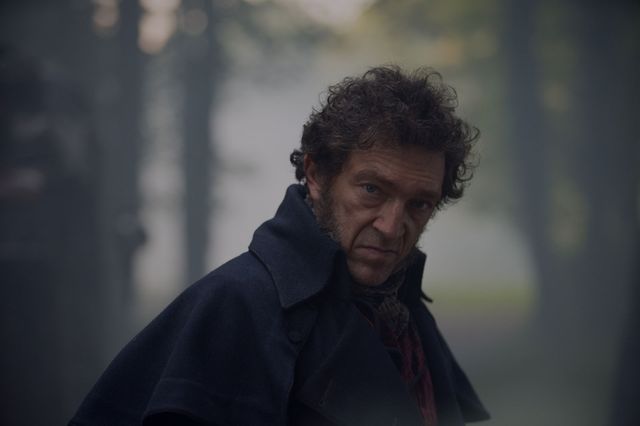
After Harry Baur, Gérard Depardieu and Claude Brasseur, it is Vincent Cassel who seizes the legendary role of Vidocq in the film adaptation of JF Richet. The cast is flamboyant (Patrick Chesnais, Fabrice Luchini, James Thierré …) but the film is up to it? Check out the reviews of the “Mask”.
The film summarized by Jérôme Garcin
The film opens with a very violent mutiny of galley slaves, at the bottom of a boat. Vidocq escapes and arrives in Paris, where he is arrested for a murder he did not commit and signs a contract of indic with the head of the security: he gets his freedom by fighting the underworld, that he knows by heart. And so the former convict becomes, under the reign of Napoleon, the first cop in France .
Jean-François Richet has reconstructed in images of synthesis the Paris of the Empire, without forgetting to show the people who suffer …
Eric Neuhoff found the film “appalling”
EN: It’s cumbersome! It’s a costumed, wiggy, starched, lacquered, dusty movie – that’s all you should not do !
One year after the death of Alton Sterling, a chronicle of the Afro-American community of Baton Rouge, Louisiana, during the summer of 2017.
An exciting reflection through the intimate portrait of three women struggling for their justice, dignity and their survival in a country that keeps them on the margins.
As two film biopics of Romy Schneider are announced, it looks like Germany is finally reclaiming one of its most troubled daughters
BY: KATE CONNOLY [Orginally published Sept 2009]
The death of one of the German-speaking world’s best-known female actors could hardly have been more prosaic. Romy Schneider was found by her partner Laurent Petin, in their Paris apartment, sitting lifelessly at her desk. Slumped over the arm of her chair, an empty bottle of red wine in front of her, she had started to write a letter to a women’s magazine to cancel an interview. Her words broke off mid-sentence, the result of a heart attack, probably induced by a cocktail of drugs and alcohol. It was May 1982 and Schneider was just 43.
It is a scene which will be re-enacted in two film versions of the actor’s life due out next year, one called Romy, starring Jessica Schwarz for SWR, an affiliate of German broadcaster ARD, the other, Warner Bros’ A Woman Like Romy, starring German soap star Yvonne Catterfeld.
Variety magazine has described the Austrian Schneider as “a magnet for film-makers”. But it was not ever so. Germany is celebrating what would have been her 70th birthday this week and the commemorations, marked by the usual coffee table books, DVD re-releases and film posters, stand in stark contrast to the way the German-speaking world used to perceive her. She was viewed as something of a traitor for turning her back on Germany.
Unlike Dietrich or Hedy Lamarr, who both shunned Nazi Germany and were never fully forgiven for doing so, the younger Schneider’s “crime”, like many German stars before and since, was simply that she chose to make her fortune in the tougher but more lucrative film studios of Paris and Hollywood, where of course the most beautiful lovers also resided, rather than in the Germany of the economic miracle era.
The height of Schneider’s fame came with the hugely popular Sissi trilogy of the 1950s in which she played the 19th-century Bavarian princess who went on to became Empress of Austria. She later starred as a more mature Sissi once again in Luchino Visconti’s 1972 film Ludwig about the life of King Ludwig II of Bavaria.
She once complained: “Sissi sticks to me just like oatmeal.”
Indeed the Sissi roles somewhat overshadowed some of her other – arguably more memorable – film appearances, including Clive Donner’s What’s New Pussycat, Orson Welles’ The Trial and Jacques Deray’s The Swimming Pool, one of several films she made with her erstwhile lover Alain Delon. Her early death certainly contributed to the mythical perception of her as the tortured woman of German film. After all her private tragedies certainly towered above the dramas in which she starred.
From the start her life was overshadowed by German history. She was born Rosemarie Albach in Vienna to her actor father, Wolf Albach-Retty, and her film-star mother, Magda Schneider. From their house they could see Hitler’s holiday domicile, Obersalzberg, where the Fuhrer received them, later declaring Magda to be his favourite actress. Romy would later claim her mother and Hitler had had an affair. It is perhaps no accident that she went on to play many Nazi-persecuted Jews.
She met Delon in 1959 and lived with him for five years, until one day he left her. His farewell note read: “Gone to Mexico with Natalie.” She slashed her wrists in response.
In 1966 she married the director Harry Meyen, a depressive due to the torture treatment he had received at the hands of the Gestapo as a “half-Jew”. He later hanged himself.
Her second marriage to her secretary Daniel Biasini ended in a divorce battle in 1981. She had an operation to remove a tumour on her kidneys, and then in the same year her 14-year-old son David punctured his femoral artery when climbing an iron-spiked fence at his step-grandparents’ home, and died.
“I’m just an unhappy 42-year-old woman and my name is Romy Schneider,” she said in one of her last interviews.
It has taken years since her death for Germans to fall in love with her. Two years ago she was voted Germany’s favourite actress by German broadcaster ZDF, and now, in time for her 70th, so many picture books and biographies have emerged that it seems her rehabilitation is almost complete. Next year the Filmmuseum on Potsdamer Platz will stage a glitzy Romy Schneider retrospective, complete with her costumes and jewellery.
It just goes to show that if you want to be loved, dying a young and tragic death helps no end.



 Pas De Merde