
Category: Movies
Theme song from the 1986 masterpiece “Jean de Florette”
The legendary Belgian jazz musician Toots Thielemans playing the theme song from “Jean de Florette,” which was inspired by Verdi’s “La Forza del Destino”
10 ‘Emily in Paris’ Locations You Can Visit in Real Life
From well-known spots like the Palais-Royal to museums like L’Atelier des Lumières, here are 10 “Emily in Paris” filming locations you can visit in real life.
If you’ve watched Emily in Paris, the new Netflix show about a young marketing executive from Chicago who moves to Paris to bring an American perspective to a French marketing firm, you likely have a few thoughts about it. Love it or hate it, there’s one thing we can probably all agree on: The setting is absolutely stunning.
Glamorous shots over the Seine and scenes set in iconic locales reaffirm my personal belief that Paris is one of the most beautiful cities in the world. We’ve rounded up some of the filming locations depicted in Emily in Paris, so you can walk in Emily’s footsteps during your next trip to the city — or just daydream about the City of Lights.
1. Pont Alexandre III

CREDIT: GETTY IMAGES/500PX
In a city full of picturesque bridges, Pont Alexandre III stands out as one of the most beautiful. Savoir, the French marketing firm where Emily works, films a perfume advertisement here with their client, Maison Lavaux. With an ornate design and views of the Grand Palais and Eiffel Tower, it’s a truly stunning place to walk.
2. Jardin du Palais-Royal
CREDIT: COURTESY OF NETFLIX
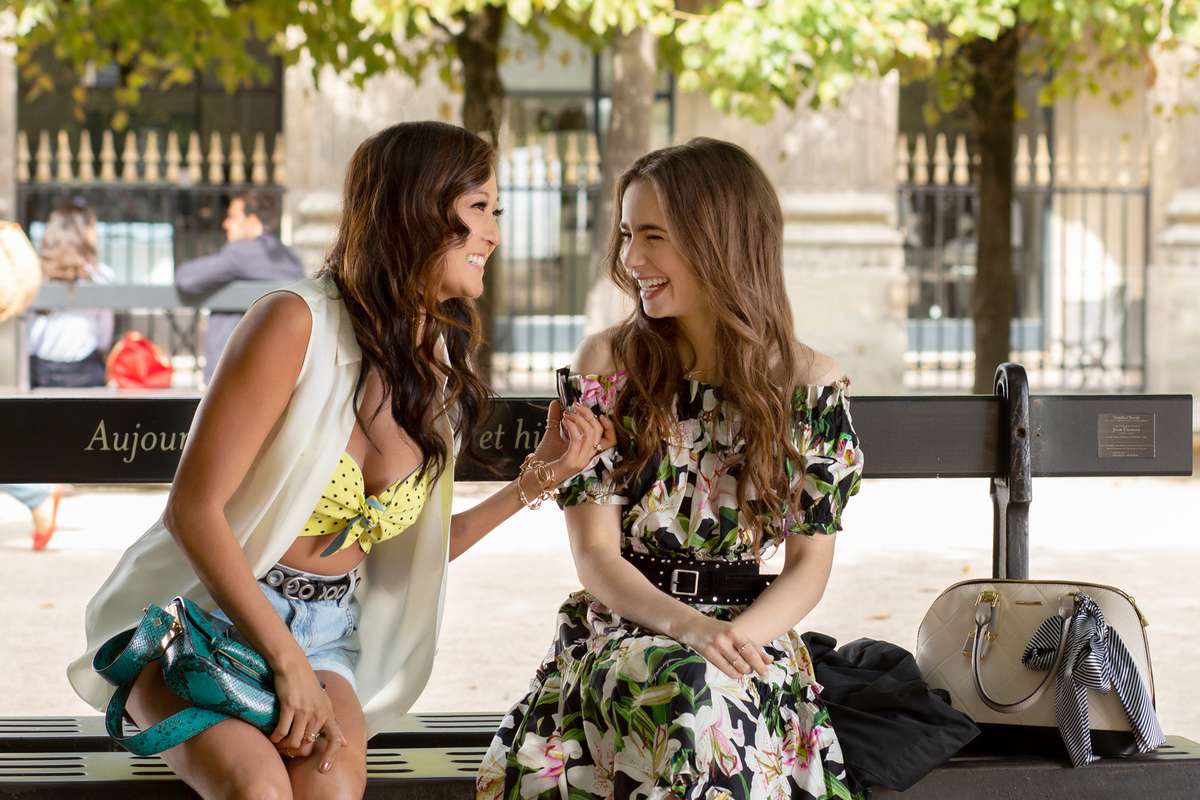
The beautifully landscaped grounds of a 17th-century palace called the Palais-Royal (now government buildings) are where Emily meets her new friend, Mindy, a nanny living in Paris, during her lunch break. It’s located in the center of Paris, just steps from the Louvre, making it the perfect place to stop while touring the city.
3. L’Atelier des Lumières

CREDIT: COURTESY OF NETFLIX
Emily joins her neighbor (and love interest), Gabriel, and his girlfriend, Camille, on a visit to L’Atelier des Lumières, an abandoned factory-turned-art space. The innovative experience opened in 2018, and right now, visitors can be completely immersed in the works of Renoir, Chagall, and Monet during the “Journeys Around the Mediterranean” exhibition.
4. Palais Garnier
CREDIT: SYLVAIN SONNET/GETTY IMAGES
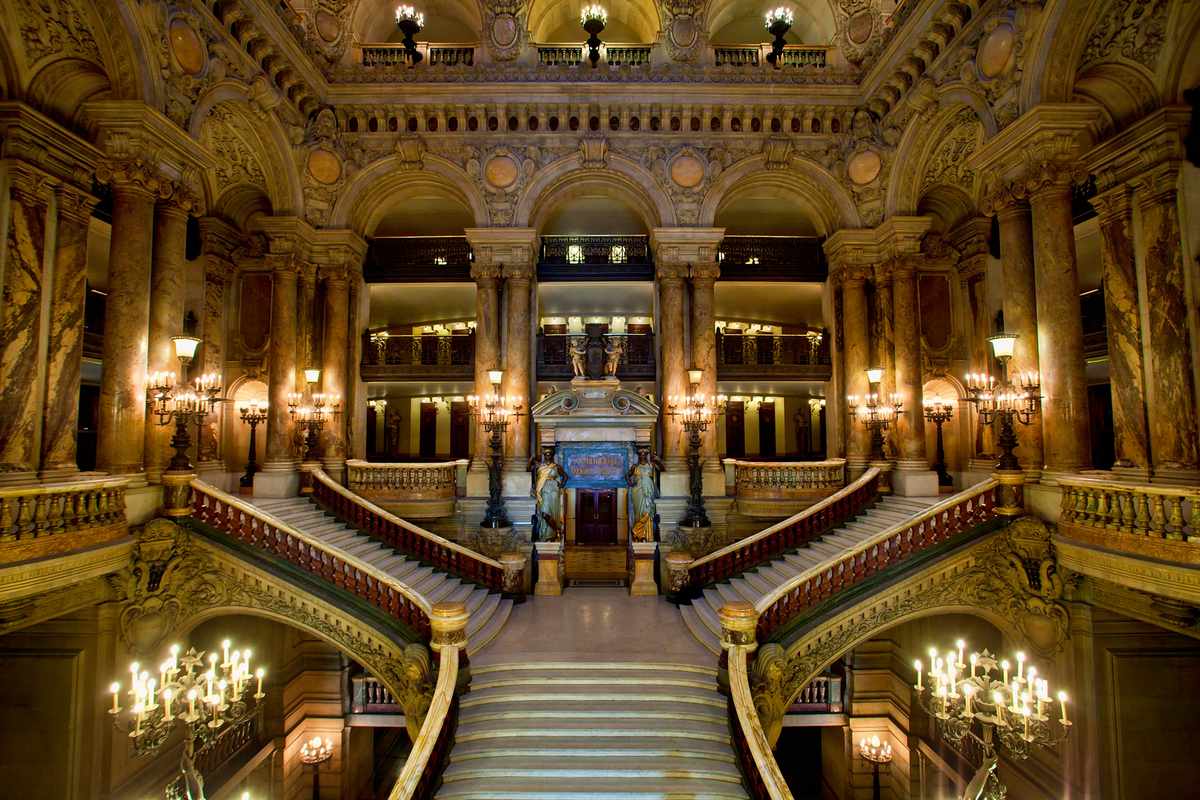
With an Audrey Hepburn-inspired look, Emily visits the Palais Garnier for a showing of “Swan Lake.” The truly impressive opera house was built in the 1800s, and today, it’s probably most famous as the setting for “The Phantom of the Opera.”
Continue reading “10 ‘Emily in Paris’ Locations You Can Visit in Real Life”
Happy birthday Catherine Deneuve, 77
Dardenne Brothers Give Emotional Speech at Lumière Festival in France
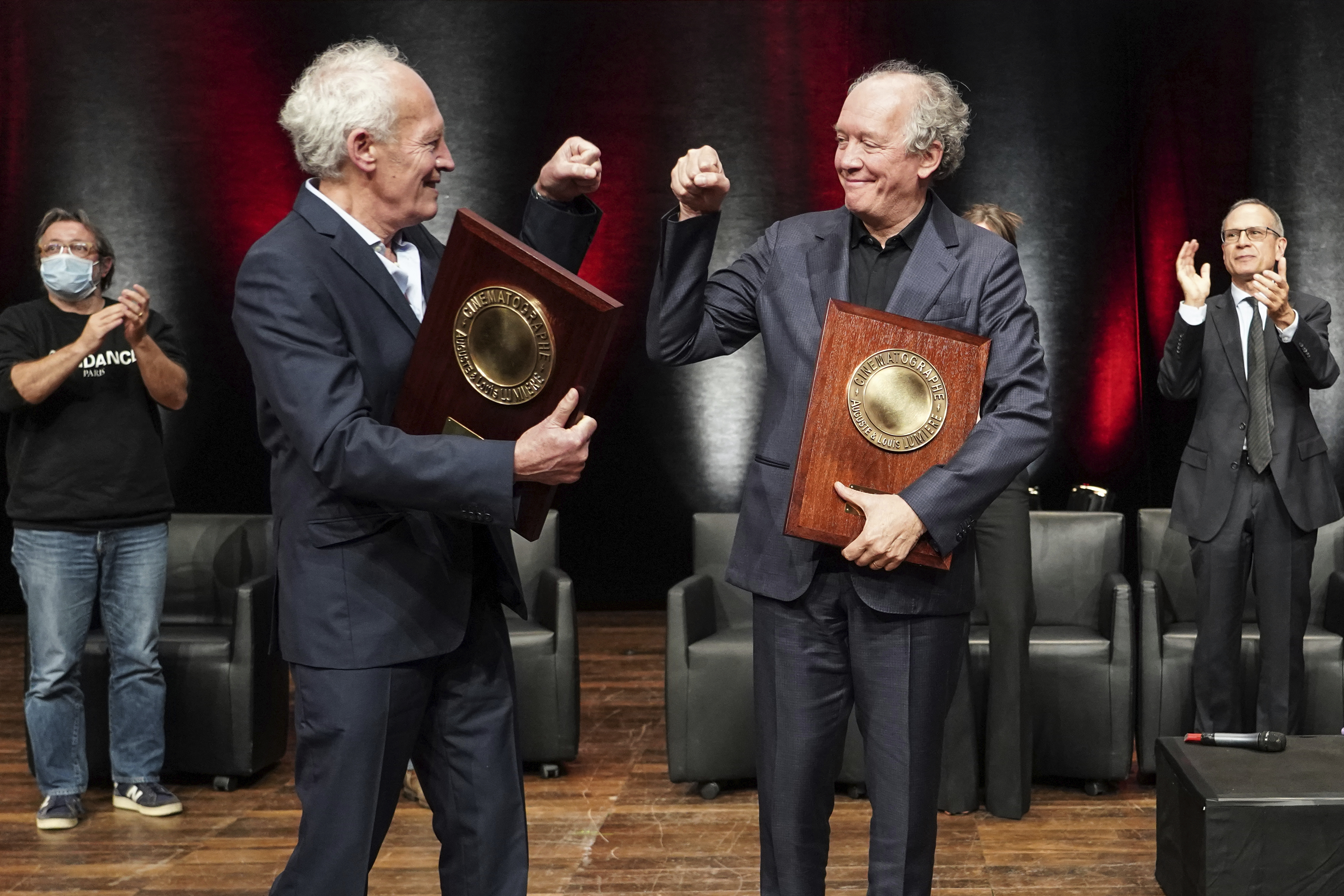
Luc and Jean-Pierre Dardenne spoke while accepting a lifetime achievement award in Lyon, just as France rolls out a nightly curfew.
Jean-Pierre and Luc Dardenne gave a rousing speech at the Lumière Festival in Lyon on Friday before accepting the event’s lifetime achievement award. They were welcomed to the stage by Cannes Film Festival director Thierry Frémaux (who also runs the Lyon event) and actress Emilie Dequenne, the star of the pair’s 1999 film “Rosetta.” The filmmaking brothers, whose last film was the 2019 Cannes selection “Young Ahmed,” spoke candidly about coronavirus and inequality at a masterclass earlier as part of the festival.
“Few things have changed in the 20 years since we made ‘Rosetta’ [the brothers’ first of two Cannes Palme d’Ors]. The coronavirus is not responsible for everything, and there are still so many inequalities in the world. They are right to fight,” Luc Dardenne said. Along with “Rosetta,” about a young woman struggling to hold down a job in a broken world, the brothers also earned Cannes’ top prize in 2005 with “L’enfant.”
“Being excluded from the world of work, of production, of consumption, of the human community, creates a feeling of humiliation, of worthlessness, of not existing. That’s what ‘Rosetta’ was about and it’s still true today — that solitude, it’s a question of human dignity,” Luc Dardenne said.
In stressing that the concerns of “Rosetta” remain relevant today, Luc also said, “There’s a responsibility that comes with being a filmmaker. Of course we like it when people like our film, but it’s even better they can become Rosetta, share her distress, become her. If a film can make someone who is locked up inside their own pre-conceived notions become someone else, and if this feeling stays with them, that’s what we want to achieve.”
Luc Dardenne also went on to explain how they formally achieved the societal intentions of the film which, like the majority of their body of work, employs a neorealist style to paint a picture of the working class in France. “In many of our films, there’s this notion of belonging. Rosetta has no place in society, she doesn’t know where she belongs. So when directing, we try and find a place for her. We put the camera in ‘the wrong place’” he said. “So that the character isn’t obvious to the viewer. If you feel you’re losing the character, you’re more interested.”
Source: Dardenne Brothers Give Emotional Speech at Lumière Festival in France | IndieWire
Jean-Luc and Pierre Dardenne: A Portrait of 2020’s Lumiere Awardees
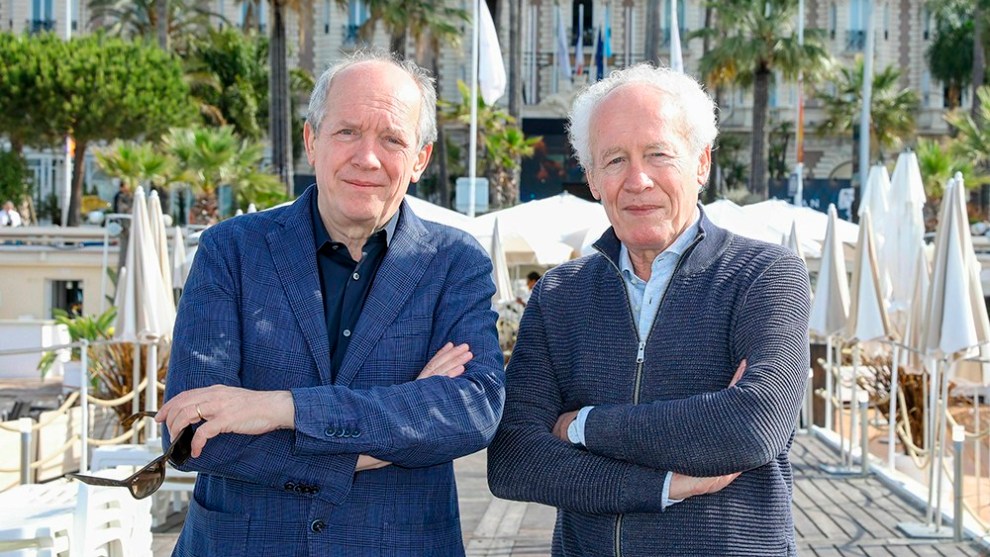
When Jean-Luc and Pierre Dardenne gained the Palme d’Or for “Rosetta” in 1999 — upending such hotly fancied contenders as Pedro Almodovar’s “All About My Mom” — it wasn’t precisely an out-of-nowhere arrival. The Belgian brothers have been already of their mid-forties, having begun their profession in documentary filmmaking 20 years earlier than, and had already loved a fiction breakthrough with 1996’s award-winning “La Promesse.”
However it felt like an invigorating new wave all the identical. Towards the tip of a decade marked by auteurist flash and swagger, the empathetic, unvarnished realism of their working-class survival story gave world cinema a clean-scrubbed human face: intent on making audiences focus extra on the lives being introduced than the administrators’ fashion of presentation.
In a career-making efficiency, the 18-year-old Emelie Dequenne performed a teen struggling to help herself and her alcoholic mom with fleeting, fragile jobs: Although by the way a damning examine of Belgian labour legislation and social welfare, the movie was no political screed. With the sort of grainy on a regular basis element that solely comes by way of acute human curiosity and statement — all the way down to its wince-inducing depiction of interval ache amid poverty — the brothers plainly distinguished themselves from the filmmakers to whom they drew instant crucial comparisons, together with Ken Loach and Robert Bresson. Continue reading “Jean-Luc and Pierre Dardenne: A Portrait of 2020’s Lumiere Awardees”

