
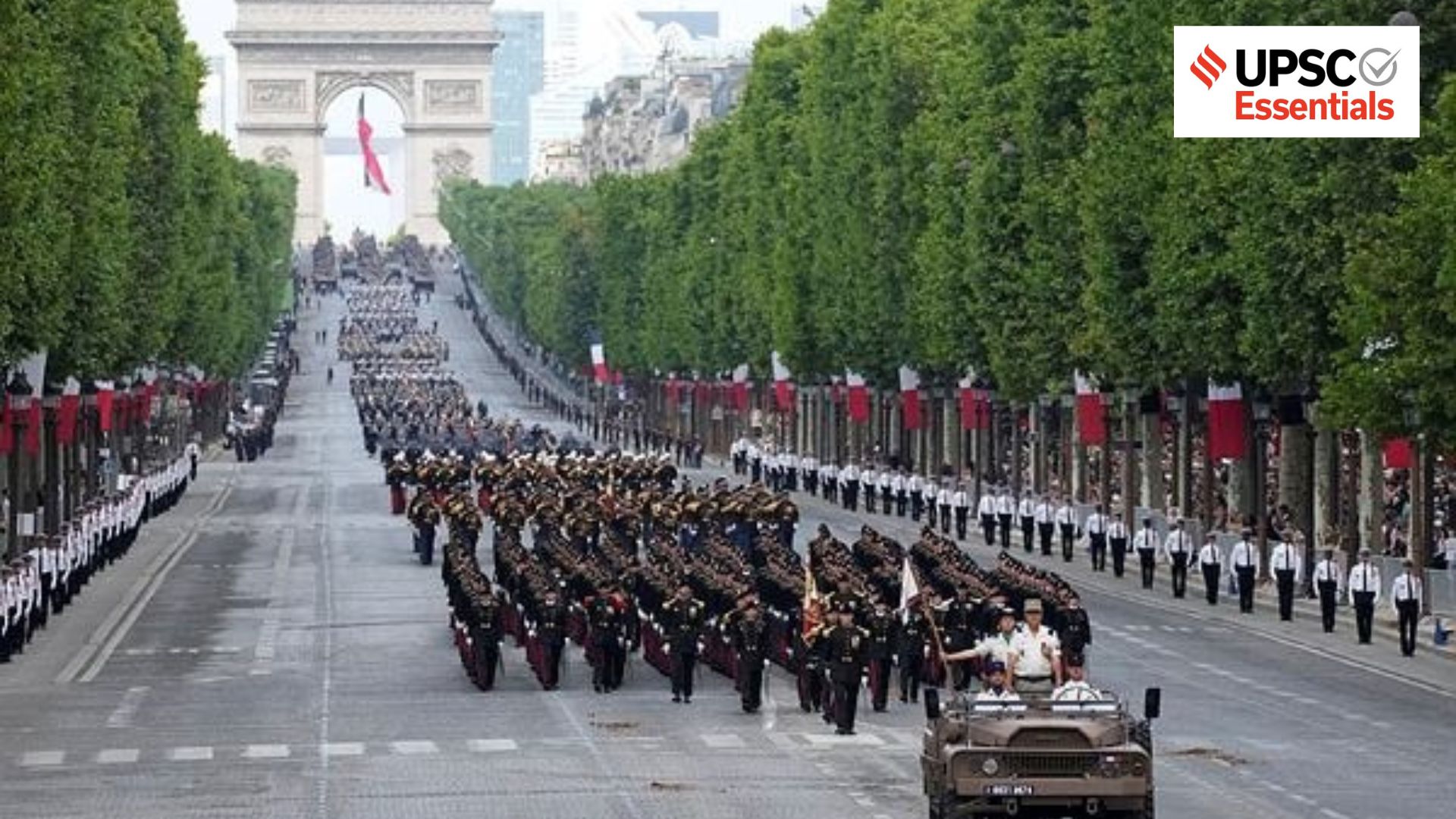
The storming of the Bastille prison on July 14, 1789, is seen as a defining event in the French Revolution. But how does the revolution affect writers, poets, painters and other creative minds?
By Mohammad Asim Siddiqui
France celebrates Bastille Day to commemorate the storming of the Bastille prison on July 14, 1789, a defining event in the French Revolution. The Bastille was originally built as a castle in Paris in the 14th century to protect the city. But it was later used as a prison and came to symbolise the brute and arbitrary powers of the king.
The historiography of the French Revolution offers varied perspectives on the events, with some celebrating its revolutionary character and others highlighting the violence that accompanied it. For instance, British historian Eric Hobsbawm in Echoes of the Marseillaise: Two Centuries Look Back on the French Revolution (1990) focuses on the positive takeaways of the Revolution – Liberté, Égalité, Fraternité (liberty, equality and fraternity), the spirit of the Enlightenment, and the overthrow of aristocracy by the middle class.
He also laments many historians’ and writers’ emphasis on the violence and destruction associated with the Revolution. Hobsbawm considers historian Simon Schama’s bestselling book Citizens: A Chronicle of the French Revolution (1989), which highlights the violent nature of the Revolution through an engaging narrative. He sees it as part of a tradition in England established by Edmund Burke’s Reflections on the Revolution in France (1790), Charles Dickens’ A Tale of Two Cities (1859), and many other popular works.
But how do Romantic poets like William Blake, William Wordsworth, and P B Shelley depict the French Revolution? Why does Albert Elmer Hancock say that the French experience “humanised” Wordsworth? Why does Jane Austen deliberately avoid discussing directly the events of the French Revolution that so disturbed her world, but incorporate many of her responses to those events in her writing? Continue reading “Bastille Day: How literary writings see the French Revolution”



 Pas De Merde