
Feb 17, 2025
For Zaho de Sagazan, music serves as a relief from sadness. As for Chiharu Shiota, art helps her ward off her fear of death. Writer Matt Haig suffered from panic attacks and depression. And the Swedish choreographer Alexander Ekman explores the power of feelings in his creations. Art is often born in the wake of emotions!
Category: literature
Paul Auster: An Appreciation – The New York Times
“Little Prince” Author Antoine de Saint-Exupéry on How a Simple Human Smile Saved His Life
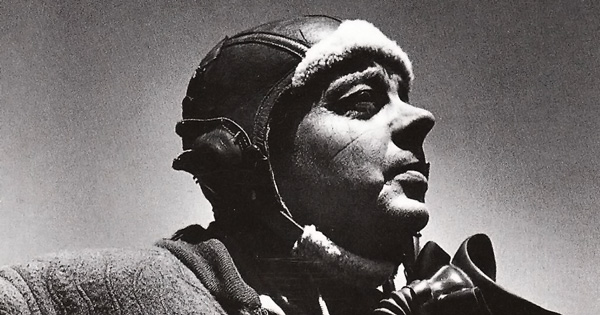
“Care granted to the sick, welcome offered to the banished, forgiveness itself are worth nothing without a smile enlightening the deed.”
By Maria Popova
Though researchers since Darwin may have spent considerable effort on the science of smiles, at the heart of that simple human expression remains a metaphysical art — one captured nowhere more beautifully and grippingly than in a short account by Antoine de Saint-Exupéry (June 29, 1900–July 31, 1944), found in Letter to a Hostage (public library) — the same exquisite short memoir he began writing in December of 1940, a little more than two years before he created The Little Prince on American soil, which also gave us his poignant reflection on what the Sahara desert teaches us about the meaning of life.Source: “Little Prince” Author Antoine de Saint-Exupéry on How a Simple Human Smile Saved His Life – The Marginalian
In a creative sandbox for what would become Saint-Exupéry’s most famous line in The Little Prince — “What is essential is invisible to the eye.” — he writes:
How does life construct those lines of force which make us alive?
[…]
Real miracles make little noise! Essential events are so simple!
One such essential event in Saint-Exupéry’s life had to do with the mundane miracle of a simple smile, a gift he so poetically describes as “a certain miracle of the sun, which had taken so much trouble, for so many million years, to achieve, through ourselves, that quality of a smile which was pure success.” He once again channels the spirit of his famous Little Prince line and writes:
The essential, most often, has no weight. The essential there, was apparently nothing but a smile. A smile is often the essential. One is paid with a smile. One is rewarded by a smile. And the quality of a smile might make one die.
Indeed, in a subsequent chapter, Saint-Exupéry recounts an incident that rendered a smile very much the difference between life and death — his life and death. One night during his time in Spain as a journalist reporting on the Civil War, he found himself with several revolver barrels pressed tightly into his stomach — the militia of the rebel forces had snuck up on him under the veil of the dark and captured him in “solemn silence,” staring at his tie — “such a luxury was not fashionable in an anarchist area” — rather than his face. He recounts:
My skin tightened. I waited for the shot, for this was the time of quick trials. But there was no shot. After a complete blank of a few seconds, during which the shifts at work appeared to dance in another universe — a kind of dream ballet — my anarchists, slightly nodding their heads, bid me precede them, and we set off, without hurry, across the lines of junction. The capture had been done in perfect silence, with an extraordinary economy of movement. It was like a game of creatures of the ocean bed.
I soon descended to a basement transformed into a guard post. Badly lit by a poor oil lamp, some other militia were dozing, their guns between their legs. They exchanged a few words, in a neutral voice, with the men of my patrol. One of them searched me.
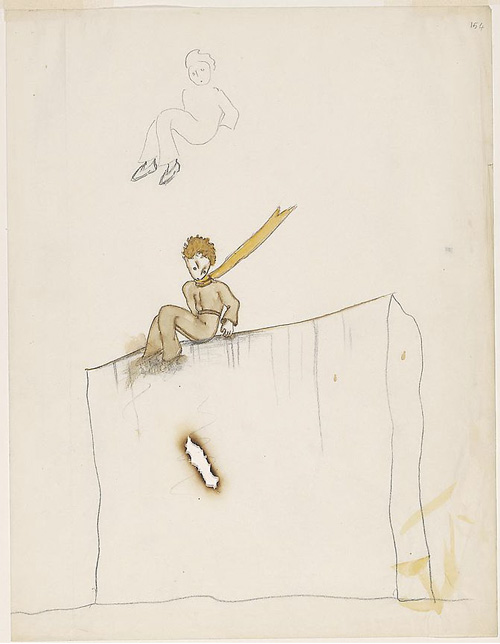
Saint-Exupéry didn’t speak Spanish, but he understood enough Catalan to gather that his identity documents were being requested. He tried to communicate to his captors that he had left them at the hotel, that he was journalist, but they merely passed around his camera, yawning and expressionless. The atmosphere, to his surprise, wasn’t what one would expect of an anarchist militia camp:
The dominant impression was that of boredom. Boredom and sleep. The power of concentration of these men seemed exhausted. I almost wished for a sign of hostility, as a human contact. But … they gazed at me without any reaction, as if they were looking at a Chinese fish in an aquarium.
(One has to wonder whether that desire for contact, whatever its nature or cost, might be a universality of the human condition — the same impulse that drives trolls to spew the venom of hostility as a desperate antidote to their own apathy and existential boredom. Aggression is, perhaps, the only form of contact of which they are capable, and yet it is contact they crave so compulsively.)
After a tortuous period of observing his captors wait for nothing in particular, Saint-Exupéry grew increasingly exasperated with a longing for contact, for the mere acknowledgement of his existence. He paints the backdrop of the miracle that would take place:
In order to load myself with the weight of real presence, I felt a strange need to cry out something about myself, which would impose upon them the truth of my existence — my age for instance! That is impressive, the age of a man! That summarizes all his life. This maturity of his has taken a long time to achieve. It was grown through so many obstacles conquered, so many serious illnesses cured, so many griefs appeased, so many despairs overcome, so many dangers unconsciously passed. It has grown through so many desires, so many hopes, so many regrets, so many lapses, so much love. The age of a man, that represents a good load of experience and memories. In spite of decoys, jolts, and ruts, you have continued to plod like a horse drawing a cart.
Saint-Exupéry was thirty-seven at the time.
But what happened next had nothing to do with the achievement of age, or the gravitas of maturity, or any other willful self-assertion. Instead, it was driven by the simplest, most profound form of shared humanity:
Then the miracle happened. Oh! a very discreet miracle. I had no cigarette. As one of my guards was smoking, I asked him, by gesture, showing the vestige of a smile, if he would give me one. The man first stretched himself, slowly passed his hand across his brow, raised his eyes, no longer to my tie but to my face, and, to my great astonishment, he also attempted a smile. It was like the dawning of the day.
This miracle did not conclude the tragedy, it removed it altogether, as light does shadow. There had been no tragedy. This miracle altered nothing visible. The feeble oil lamp, the table scattered with papers, the men propped against the wall, the colors, the smell, everything remained unchanged. Yet everything was transformed in its very substance. That smile saved me. It was a sign just as final, as obvious in its future consequences, as unchangeable as the rising of the sun. It marked the beginning of a new era. Nothing had changed, everything was changed. The table scattered with papers became alive. The oil lamp became alive. The walls were alive. The boredom dripping from every lifeless thing in that cellar grew lighter as if by magic. It seemed that an invisible stream of blood had started flowing again, connecting all things in the same body, and restoring to them their significance.
The men had not moved either, but, though a minute earlier they had seemed to be farther away from me than an antediluvian species, now they grew into contemporary life. I had an extraordinary feeling of presence. That is it: of presence. And I was aware of a connection.
The boy who had smiled at me, and who, until a few minutes before, had been nothing but a function, a tool, a kind of monstrous insect, appeared now rather awkward, almost shy, of a wonderful shyness — that terrorist! He was no less a brute than any other. But the revelation of the man in him shed such a light upon his vulnerable side! We men assume haughty airs, but within the depth of our hearts, we know hesitation, doubt, grief.
Nothing had yet been said. Yet everything was resolved.
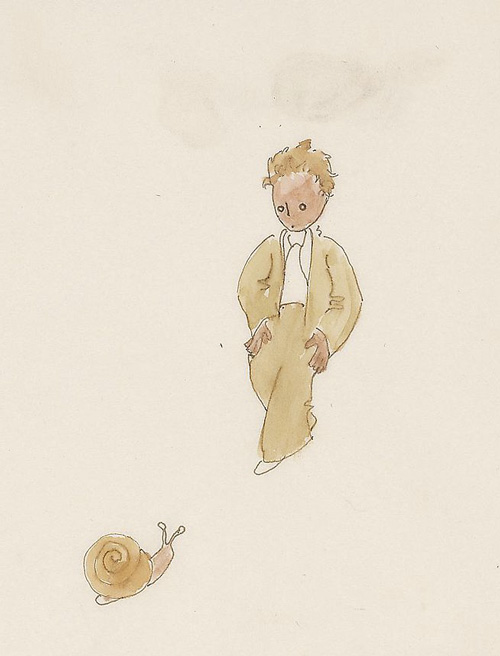
Saint-Exupéry ends with a reflection on the sacred universality and life-giving force of that one simple gesture, the human smile:
Care granted to the sick, welcome offered to the banished, forgiveness itself are worth nothing without a smile enlightening the deed. We communicate in a smile beyond languages, classes, and parties. We are faithful members of the same church, you with your customs, I with mine.
Four years after he wrote Letter to a Hostage, which is a sublime read in its totality, Saint-Exupéry disappeared over the Bay of Biscay never to return. Popular legend has it that Horst Rippert, the German fighter pilot who shot down the author’s plane, broke down and wept upon hearing the news — Saint-Exupéry had been his favorite author. What a tragic form of contact, war.
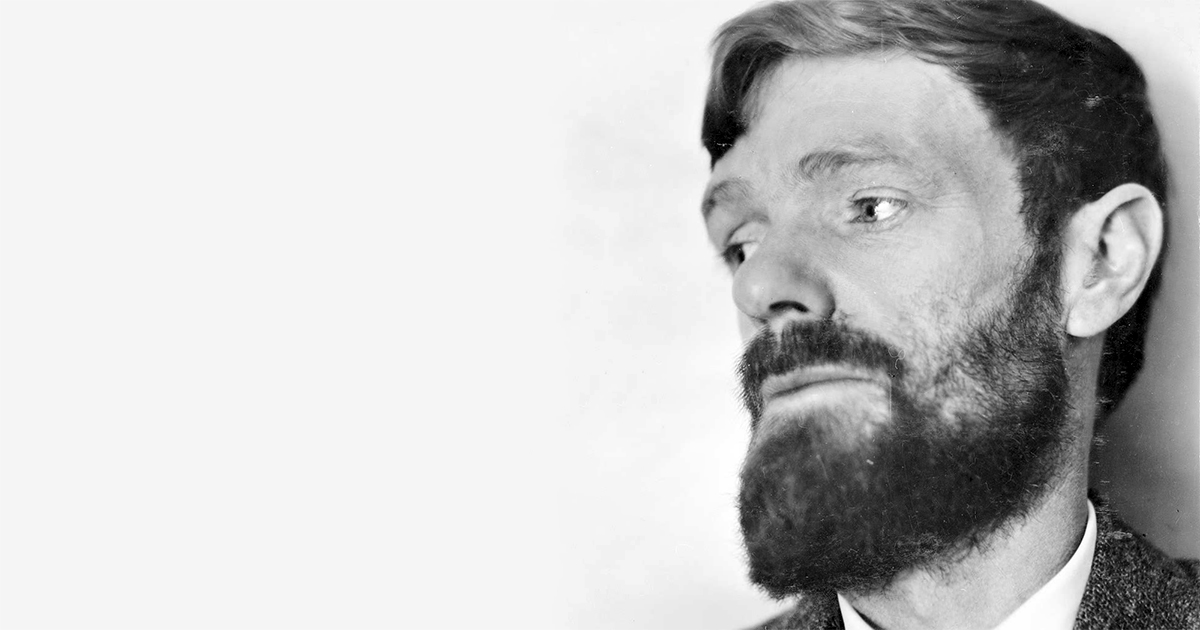
How to Be Un-Dead: Anaïs Nin and D.H. Lawrence on the Key to Living Fully
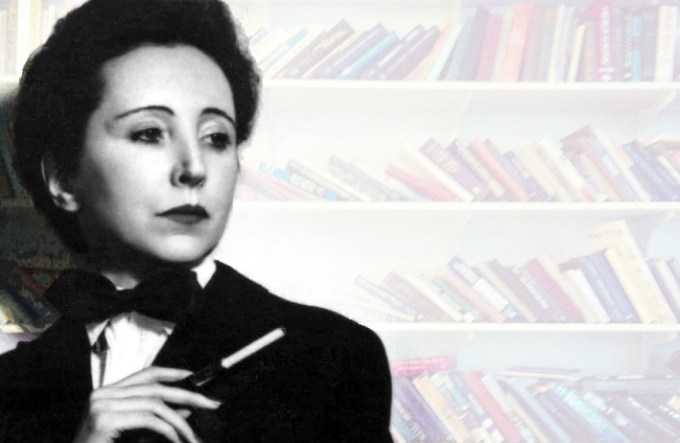
By Maria Popova
“Life is a process of becoming, a combination of states we have to go through. Where people fail is that they wish to elect a state and remain in it. This is a kind of death.”
Nin herself — a woman uncommonly liberated from the common traps of convention, control, and self-consciousness — took up the spiritual mechanics of this paradox in her first published book, D. H. Lawrence: An Unprofessional Study (public library), composed when she was still in her twenties.
With an eye to D.H. Lawrence (September 11, 1885–March 2, 1930) and his “philosophy that was against division,” his “plea for whole vision,” she writes:
When the realization came to the moderns of the importance of vitality and warmth, they willed the warmth with their minds. But Lawrence, with the terrible flair of the genius, sensed that a mere mental conjuring of the elemental was a perversion… Lawrence believed that the feelings of the body, from its most extreme impulses to its smallest gesture, are the warm root for true vision, and from that warm root can we truly grow. The livingness of the body was natural; the interference of the mind had created divisions, the consciousness of wrong-doing or well-doing.
In a sentiment central to my own animating ethos, she adds:
Life is a process of becoming, a combination of states we have to go through. Where people fail is that they wish to elect a state and remain in it. This is a kind of death.
It was Lawrence’s own writing that awakened in her this awareness of ongoingness and the urgency of total aliveness — the way “livingness is the axis of his world, the light, the gravitation, and electromagnetism of his world.”
In his 1924 novel The Boy in the Bush, Lawrence makes a stunning case for the indivisibility of it all — the beauty and the sorrow, the ache and the astonishment:
All real living hurts as well as fulfils. Happiness comes when we have lived and have a respite for sheer forgetting. Happiness, in the vulgar sense, is just a holiday experience. The life-long happiness lies in being used by life; hurt by life, driven and goaded by life, replenished and overjoyed with life, fighting for life’s sake. That is real happiness. In the undergoing, a large part of it is pain.
This was the foundational philosophy of Lawrence’s worldview — the pulse-beat that makes his writing so resonant and eternally alive, the way all great spiritual texts are. He distilled this view in an especially beautiful passage from his 1923 novel Kangaroo, reckoning with the most universal reality of life — the reality we spend our lives fighting, yet the one that peeks through in all of our greatest works of art and highest triumphs of the creative spirit. Echoing Whitman’s defense of our inner multitudes, often at odds with each other, he writes in an era when every woman was a “man” purely as a matter of linguistic convention:
If a man loves life, and feels the sacredness and mystery of life, then he knows that life is full of strange and subtle and even conflicting imperatives. And a wise man learns to recognize the imperatives as they arise — or nearly so — and to obey. But most men bruise themselves to death trying to fight and overcome their own, new, life-born needs, life’s ever strange imperatives. The secret of all life is obedience: obedience to the urge that arises in the soul, the urge that is life itself, urging us to new gestures, new embraces, new emotions, new combinations, new creations.
In the same epoch when Hermann Hesse so beautifully defended the wisdom of the inner voice, Lawrence’s protagonist makes a passionate case for listening to the song of life as it reverberates through the singular cathedral of each self, yours and mine, as it did for Nin and Lawrence and every other great mind long sung out of existence:
I offer no creed. I offer myself, my heart of wisdom, strange warm cavern where the voice of the oracle steams in from the unknown; I offer my consciousness, which hears the voice; and I offer my mind and my will, for the battle against every obstacle to respond to the voice of life.
Complement with Mary Oliver on how to live with maximum aliveness and Henry Miller on the measure of a life well lived, then revisit Nin on the meaning of maturity and how reading awakens us from the trance of near-living.
Source: How to Be Un-Dead: Anaïs Nin and D.H. Lawrence on the Key to Living Fully – The Marginalian
Let This Darkness Be a Bell Tower: Rilke’s Timeless Spell for Living Through Difficult Times

“What is it like, such intensity of pain?”
BY MARIA POPOVA

There are times in life when the firmament of our being seems to collapse, taking all the light with it, swallowing all color and sound into a silent scream of darkness. It rarely looks that way from the inside, but these are always times of profound transformation and recalibration — the darkness is not terminal but primordial; in it, a new self is being born, not with a Big Bang but with a whisper. Our task, then, is only to listen. What we hear becomes new light.
A century ago, Rainer Maria Rilke (December 4, 1875–December 29, 1926) extended a timeless invitation to listening for the light in his poem “Let This Darkness Be a Bell Tower,” translated by Joanna Macy and Anita Barrows in their altogether indispensable book In Praise of Mortality: Selections from Rainer Maria Rilke’s Duino Elegies and Sonnets to Orpheus (public library).
I read it here accompanied by another patron saint of turning darkness into light — Bach, and his Cello Suite No. 5 in C Minor, performed by Colin Carr:
LET THIS DARKNESS BE A BELL TOWER
by Rainer Maria RilkeQuiet friend who has come so far,
feel how your breathing makes more space around you.
Let this darkness be a bell tower
and you the bell. As you ring,what batters you becomes your strength.
Move back and forth into the change.
What is it like, such intensity of pain?
If the drink is bitter, turn yourself to wine.In this uncontainable night,
be the mystery at the crossroads of your senses,
the meaning discovered there.And if the world has ceased to hear you,
say to the silent earth: I flow.
To the rushing water, speak: I am.
Complement with the great Buddhist teacher Pema Chödrön on transformation through dark times, Emily Dickinson’s darkness-inspired ode to resilience, and Rebecca Solnit on hope in the dark, then revisit Rilke on the relationship between solitude, love, and creativity, the lonely patience of creative work, and the difficult art of giving space in love.
France’s national library celebrates Proust 100 years after his death
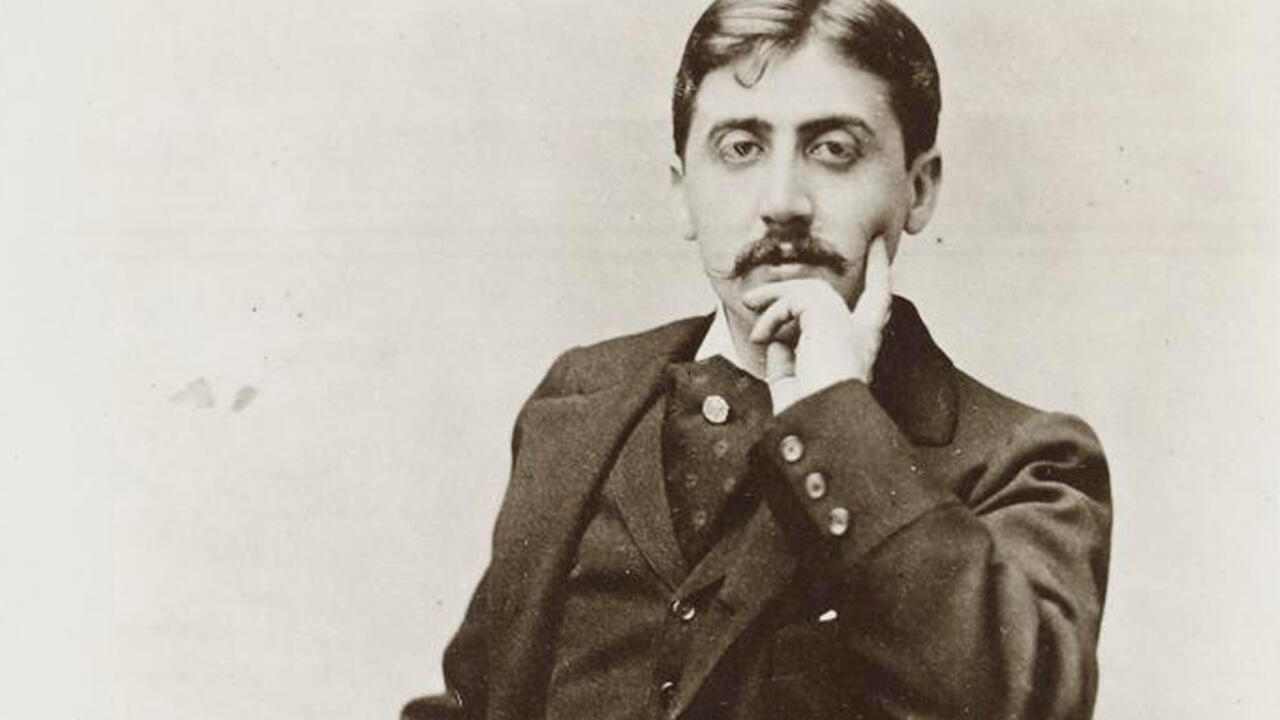
France’s Marcel Proust, who died 100 years ago this week, is regarded as one of the greatest novelists of all time. To mark the anniversary, the Bibliothèque Nationale de France is hosting a major exhibition in Paris, where some of the secrets of Proust’s 2,400-page novel “In Search of Lost Time” are revealed.
In 1907 Marcel Proust, then 36 years old, embarked on what would become his masterpiece, a novel about memory and the essence of art. The project grew from one book to a second in 1912 and a third the following year.
“In Search of Lost Time” eventually grew to seven volumes – four published in Proust’s lifetime and three after his death at the age of 51 in 1922.
Unwanted masterpiece
“For a long time, I went to bed early…”, is how “In Search of Lost Time” begins, and it’s also how the story ends for many readers, who may find Proust’s prose to have soporific qualities.
Poetic and dreamy, sprinkled with dashes and parentheses, his sentences are exceptionally long – on average 30 words, twice that of most novelists.
After receiving three rejections for the first volume, “Swann’s Way”, Proust decided to self-publish.
Nobel-winning novelist André Gide, who was an editor at the time at NRF publishing house (which later became Gallimard), was among those who decided against Proust’s dense prose.
“The rejection of this book will remain the NRF’s greatest mistake,” Gide later wrote to Proust, calling it “one of the most bitter regrets of my life”.
Gallimard managed to lure Proust back for his second novel in 1916, “The Shadow of Young Girls in Flower”, which won the Goncourt Prize, France’s top literary award.
Paris exhibition
The Bibliothèque Nationale de France (BnF) in Paris is devoting a major new exhibition to Proust, which reveals the secrets of the writing of “In Search of Lost Time”.
“What will strike the visitor is the extent to which Proust works, corrects, writes in the margins, in the spaces between lines. He sticks papers in when he doesn’t have enough space. These are the famous ‘paperolles’, large strips of paper,” Nathalie Mauriac Dyer, Director of the Institute of Modern Manuscripts at CNRS, told RFI.
In “In Search of Lost Time”, we also find Proust’s famous madeleine – which started life as a humble piece of toast, as early drafts of the scene discovered in Proust’s notebooks reveal.
The mini sponge cake that has become the most famous detail in all seven volumes makes its appearance early in the first book.
For the protagonist, Marcel, “the taste of the madeleine dipped in lime-blossom tea that my aunt used to give me” releases a flurry of vivid memories, giving him access to the “lost time” he is searching for.
“This is the Proustian theory of involuntary memory caused by a sensation that recalls events that may have taken place years before. It brings back or recovers lost time,” explains Guillaume Fau, head of the manuscript department at the BnF.
Severe asthma
Proust suffered most of his life with severe asthma, and although he liked to socialise – he had some torturous secret homosexual love affairs – he also spent long stretches in bed, writing with a tray on his knees.
“He was a very sick man. He often had asthma attacks that were not treated at the time. But when he worked, he worked in a Herculean, heroic, relentless way,” says Nathalie Mauriac Dyer.
His neurologist father urged his sickly son to get out in the fresh air and play sport, noting that asthma was not contagious.
But Proust’s mother was prone to mollycoddling, and from 1906 he followed her counsel, staying cloistered inside with a steady supply of caffeine and aspirin.
His respiratory problems would finally get the better of him. He died on 18 November 1922.
Source: France’s national library celebrates Proust 100 years after his death
 Pas De Merde