
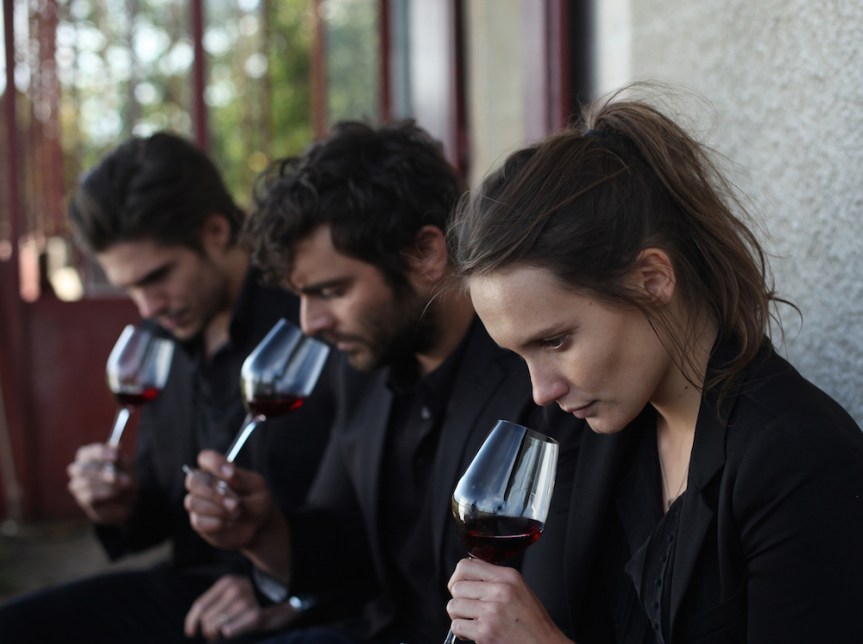
 As rich and full-bodied as a fine French wine, Cédric Klapisch’s Burgundy-set family drama draws character from the soil on which it’s set.
[VARIETY] When I was 13 years old, my great-aunt arranged for me to visit a vineyard in France’s Loire valley, where I was allowed to spend an afternoon planting grape vines with the family who had worked those fields for centuries. Together, we visited the facilities where the harvest was crushed and fermented, and tasted the wine these artisans had produced from previous years. An experience like that forever changes one’s perspective on wine, from something that comes from a bottle to a living, breathing thing, originating from the earth, planted and harvested by hand, shaped by the attitudes and sensibility of those who cultivate it.
Cédric Klapisch’s “Back to Burgundy” is the closest any film has come to expressing that special symbiotic relationship between real people, the soil they tend, and the ineffably personal concoction that results from that connection.
Though not a documentary, this gorgeous French family saga benefits enormously from Klapisch’s natural curiosity, informed by research (he participated in a harvest in order to observe its nuances) and elevated by his insistence that they film over the course of a full year, so as to capture the impact of the seasons on both viticulture and its human stewards.
Best known for the sparkling romantic-comedy trilogy that began with “L’Auberge Espagnole,” writer-director Klapisch crafts vibrant, lived-in movies brimming with characters who feel well-rounded enough (flaws and all) to exist in the real world. Here, he concentrates on three semi-estranged siblings — Jean (Pio Marmaï), Juliette (Ana Girardot), and Jérémie (François Civil) — reunited by their father’s imminent death. Several years earlier, Jean left the family’s winemaking estate and set off on a walkabout of sorts; he returns now with family problems of his own back in Australia, where he now lives.
When their father passes, the three kids — adults, really, though none has quite found his/her footing yet in the world — meet with the family lawyer to review the will, learning that in order to keep the family vineyards, they must pay off a steep inheritance tax of half a million Euros. Jérémie is engaged to marry the daughter of a wealthy winemaker (Jean-Marie Winling), who looms like a potential villain over the fix in which they find themselves: He’s condescending and almost crassly business-minded, whereas the siblings and their father (Èric Caravaca, seen in flashback) represent a more genuine connection to the grounds on which they were raised.
As with wine, the terroir flavors the end result. Shooting on actor Jean-Marc Roulot’s Burgundy estate, Klapisch and DP Alexis Kavyrchine (who typically alternates between nonfiction and narrative features) collaborate well together, bringing her documentary eye to scenes that don’t feel as if they are conventionally scripted: There’s a looseness to their approach that manages to avoid the generic, templatized feel of so many American movies. It doesn’t feel as if Klapisch and co-writer Santiago Amigorena mapped out the plot on index cards tacked to a giant bulletin board; rather, we can almost believe the cast spent a full year in character, living among the vines (which could only be accomplished by dividing the shoot across the four seasons).

 Pas De Merde